

Thursday 23 January 2025
The humble smartphone and tablet may seem like unlikely heroes in the world of vehicular networking, but a recent study has shown that they can indeed play a crucial role in connecting cars on the road.
Researchers at the University of Málaga have been experimenting with using these devices to enable vehicle-to-vehicle (V2V) communication, which could revolutionize traffic management and improve safety on the roads. The team set up a testbed in the city of Málaga, Spain, where they equipped vehicles with smartphones, tablets, and laptops running various wireless protocols.
The results were impressive: even though these devices are not specifically designed for V2V communication, they were able to transmit data reliably over short distances – up to 75 meters for smartphones and 125 meters for tablets. This is significant because it means that a standard smartphone or tablet could potentially be used as a makeshift V2V device in emergency situations.
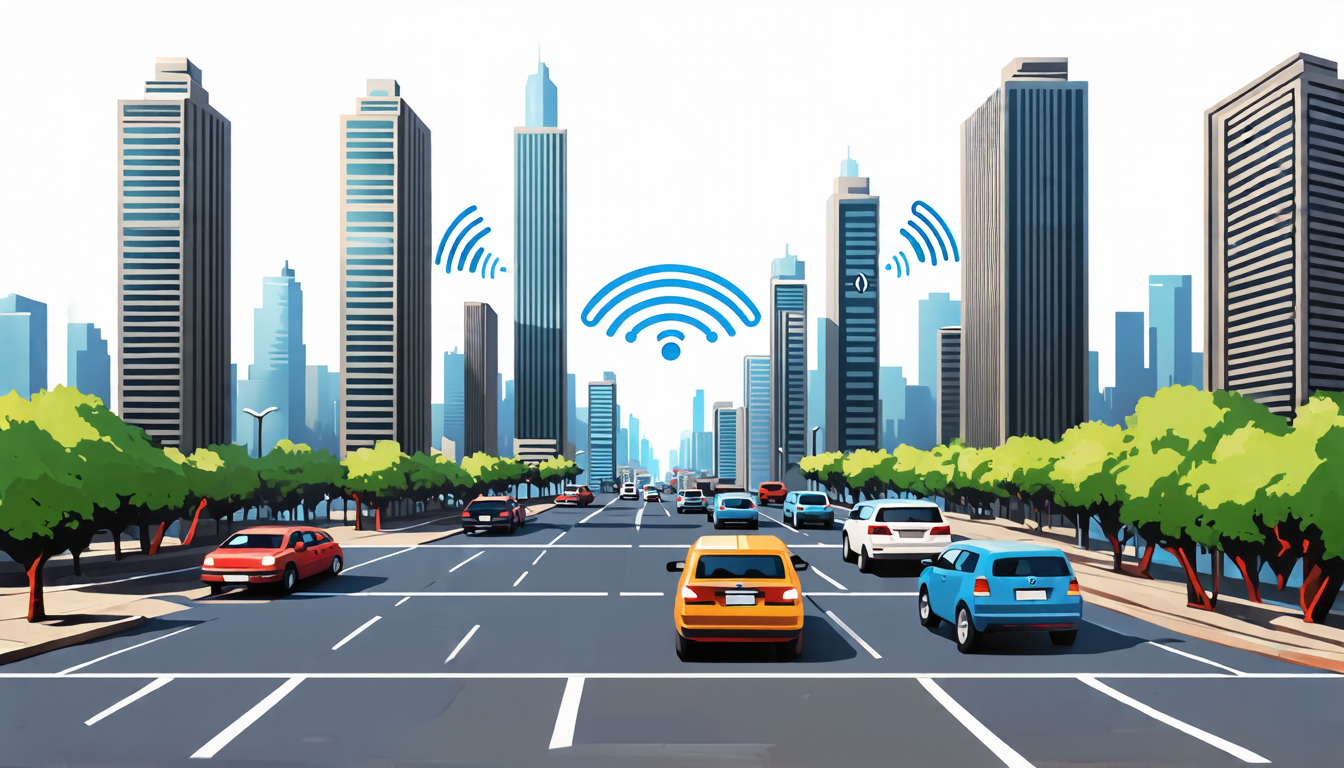
The researchers also found that the performance of the devices was influenced by factors such as road traffic density, building construction, and even the presence of other wireless networks in the area. For example, they discovered that dense urban areas with many tall buildings can significantly reduce the range of V2V communication.
One surprising finding was that laptops equipped with powerful wireless interfaces outperformed smartphones and tablets in terms of data transfer rates and reliability. This is because laptops have more advanced antennas and are better suited for outdoor use. However, even these devices were not able to achieve the same level of performance as dedicated V2V devices, which are specifically designed for this purpose.
The study’s findings have significant implications for the development of V2V technology. For one, it suggests that standard consumer devices could be repurposed as temporary V2V solutions in emergency situations or areas with limited infrastructure. It also highlights the importance of considering real-world factors such as road traffic and building construction when designing V2V systems.
The research team plans to continue exploring the potential of consumer devices for V2V communication, as well as developing new technologies and protocols that can improve the performance and reliability of these systems. As the world becomes increasingly connected, it’s exciting to think about what other unexpected applications these devices might have in store for us.
Cite this article: “Smartphones and Tablets Take the Wheel: Enabling Vehicle-to-Vehicle Communication”, The Science Archive, 2025.
V2V Communication, Smartphone, Tablet, Laptop, Wireless Protocols, Traffic Management, Safety Roads, Vehicle-To-Vehicle, Emergency Situations, V2V Technology





