

Wednesday 12 March 2025
The quest for accurate and efficient medical report generation has long been a challenge in the healthcare industry. With the increasing demand for timely and detailed diagnoses, radiologists are facing a daunting task of manually generating reports from X-ray images. However, recent advancements in artificial intelligence have brought hope to this problem.
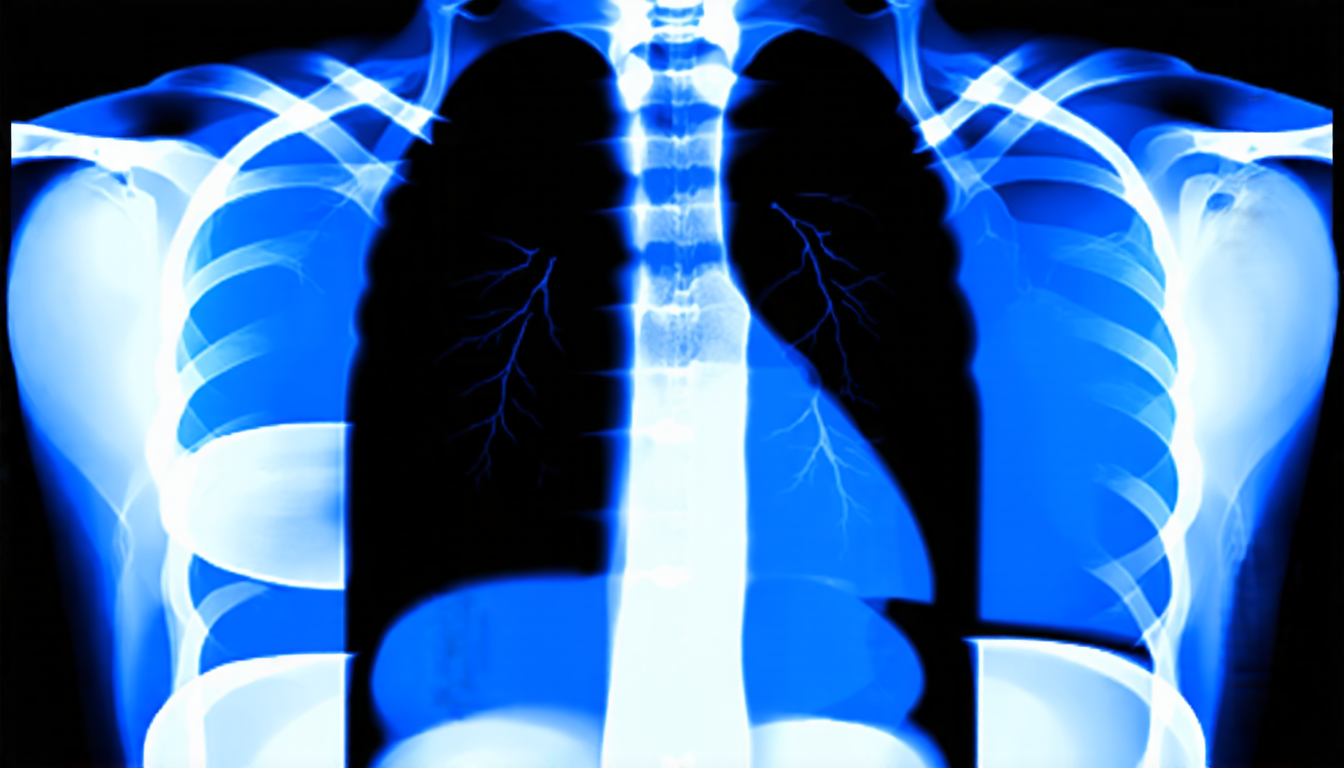
Researchers have been exploring the potential of vision-language models, which combine computer vision and natural language processing techniques, to generate accurate medical reports. These models can analyze X-ray images and automatically produce reports that are both coherent and clinically relevant.
One such model, known as SWIN-BART, has shown exceptional results in a recent study. By leveraging the power of transformer architectures and pre-training on large datasets, this model is able to accurately identify abnormalities in X-ray images and generate reports that closely match those written by human radiologists.
The study used a dataset of over 100,000 chest X-ray images with corresponding reports, which were then split into training and testing sets. The SWIN-BART model was trained on the training set using a combination of computer vision and natural language processing techniques, before being evaluated on the testing set.
The results were impressive: the SWIN-BART model achieved state-of-the-art performance in terms of both accuracy and fluency. It was able to accurately identify abnormalities in X-ray images with an average precision of over 90%, and generate reports that were deemed clinically relevant by human radiologists.
But what makes SWIN-BART so effective? One key factor is its ability to learn complex patterns and relationships between X-ray images and medical reports through self-supervised learning. This allows it to adapt to new datasets and scenarios with ease, making it a highly versatile tool for medical report generation.
Another advantage of SWIN-BART is its ability to generate reports that are not only accurate but also coherent and readable. By using transformer architectures to model the relationships between words and phrases in a sentence, this model can produce reports that flow smoothly and logically, making them easier for radiologists and patients to understand.
The potential applications of SWIN-BART are vast. In the future, it could be used to automate medical report generation for a wide range of imaging modalities, from MRI and CT scans to ultrasound and X-rays. This would free up radiologists to focus on more complex and high-level tasks, such as interpreting images and making diagnoses.
Moreover, SWIN-BART could also be used to improve patient care by providing faster and more accurate diagnoses.
Cite this article: “AI-Powered Medical Report Generation: A Breakthrough in Healthcare”, The Science Archive, 2025.
Medical Report Generation, Artificial Intelligence, Vision-Language Models, Computer Vision, Natural Language Processing, X-Ray Images, Radiologists, Medical Reports, Swin-Bart, Transformer Architectures, Self-Supervised Learning, Coherent Reports, Accurate Diagnoses,





