

Wednesday 12 March 2025
Mathematicians have long been fascinated by the properties of oriented matroids, complex geometric structures that can be used to model a wide range of real-world phenomena. A recent paper has shed new light on these structures, revealing surprising insights into their behavior and potential applications.
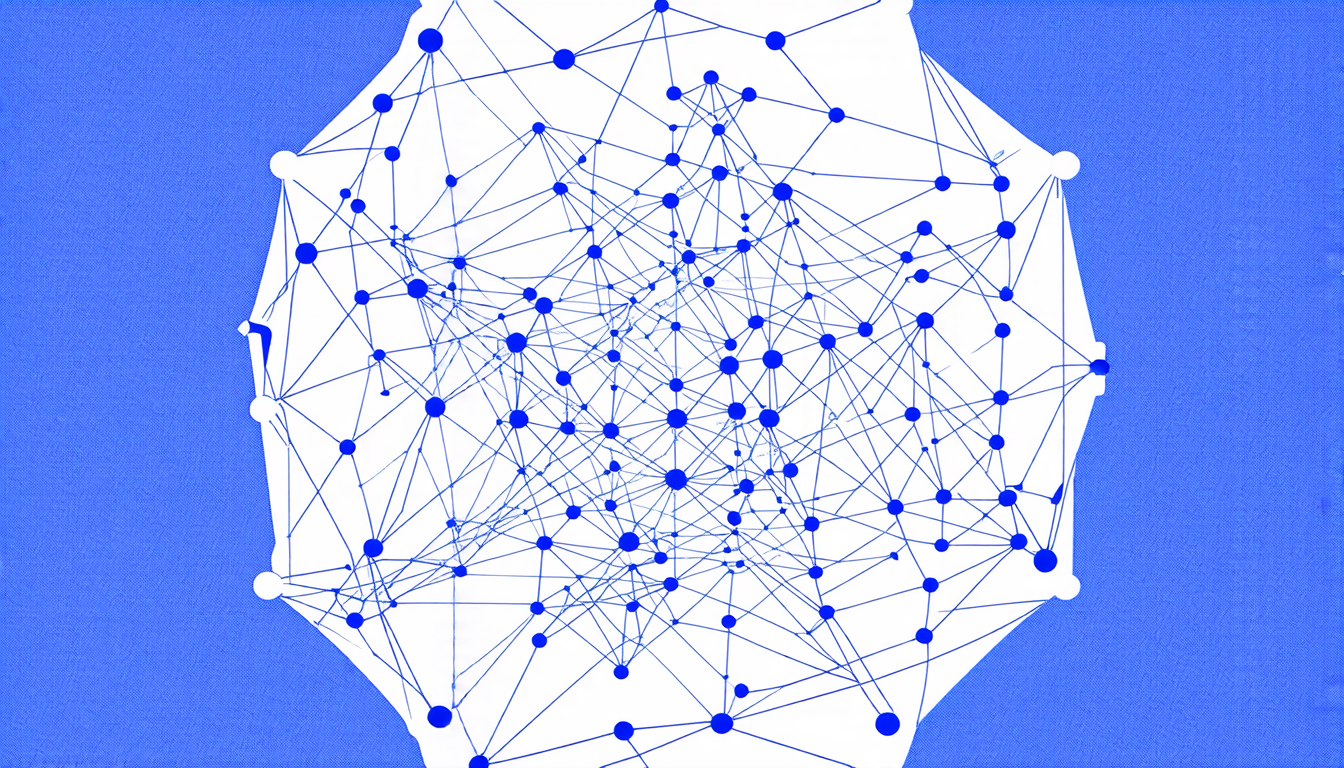
Oriented matroids are essentially combinatorial objects that describe how sets of points in space are connected. They’re like a map that shows the relationships between different locations, but instead of being drawn on a piece of paper, they exist as a mathematical construct.
The researchers behind this latest study focused on a specific type of oriented matroid called Mandel matroids, named after the mathematician Arnaldo Mandel who first described them. These matroids have some unique properties that make them particularly interesting to scientists and engineers.
One key finding is that Mandel matroids are more resilient than previously thought. In other words, they can withstand changes to their underlying structure without losing their essential characteristics. This property makes them useful for modeling complex systems that need to adapt to changing conditions.
Another important discovery is that certain types of oriented matroids, including Mandel matroids, have a fixed number of mutations. A mutation in this context refers to a specific type of change that can occur within the matroid’s structure. By understanding these mutations, scientists may be able to develop new strategies for manipulating and analyzing complex systems.
The researchers also explored the relationship between oriented matroids and another mathematical concept called Euclidean geometry. It turns out that certain types of oriented matroids are inherently Euclidean, meaning they can be represented as a set of points in space with specific relationships between them. This connection has potential implications for fields like computer graphics and geographic information systems.
One of the most intriguing aspects of this research is its potential to shed light on some long-standing open questions in mathematics. For example, scientists have been trying to determine whether certain types of oriented matroids are realizable, meaning they can be represented as a set of points in space. The findings from this study may help answer these questions and provide new insights into the nature of complex systems.
Overall, this research represents an important step forward in our understanding of oriented matroids and their potential applications. By exploring the properties and behavior of these complex structures, scientists can develop new tools and strategies for analyzing and manipulating real-world phenomena.
Cite this article: “New Insights into Oriented Matroids: Resilience, Mutations, and Euclidean Geometry”, The Science Archive, 2025.
Oriented Matroids, Mandel Matroids, Combinatorial Objects, Complex Systems, Resilience, Mutations, Euclidean Geometry, Computer Graphics, Geographic Information Systems, Realizable Structures
Reference: Michael Wilhelmi, “Mutations and (Non-)Euclideaness in oriented matroids” (2025).





