
Wednesday 12 March 2025
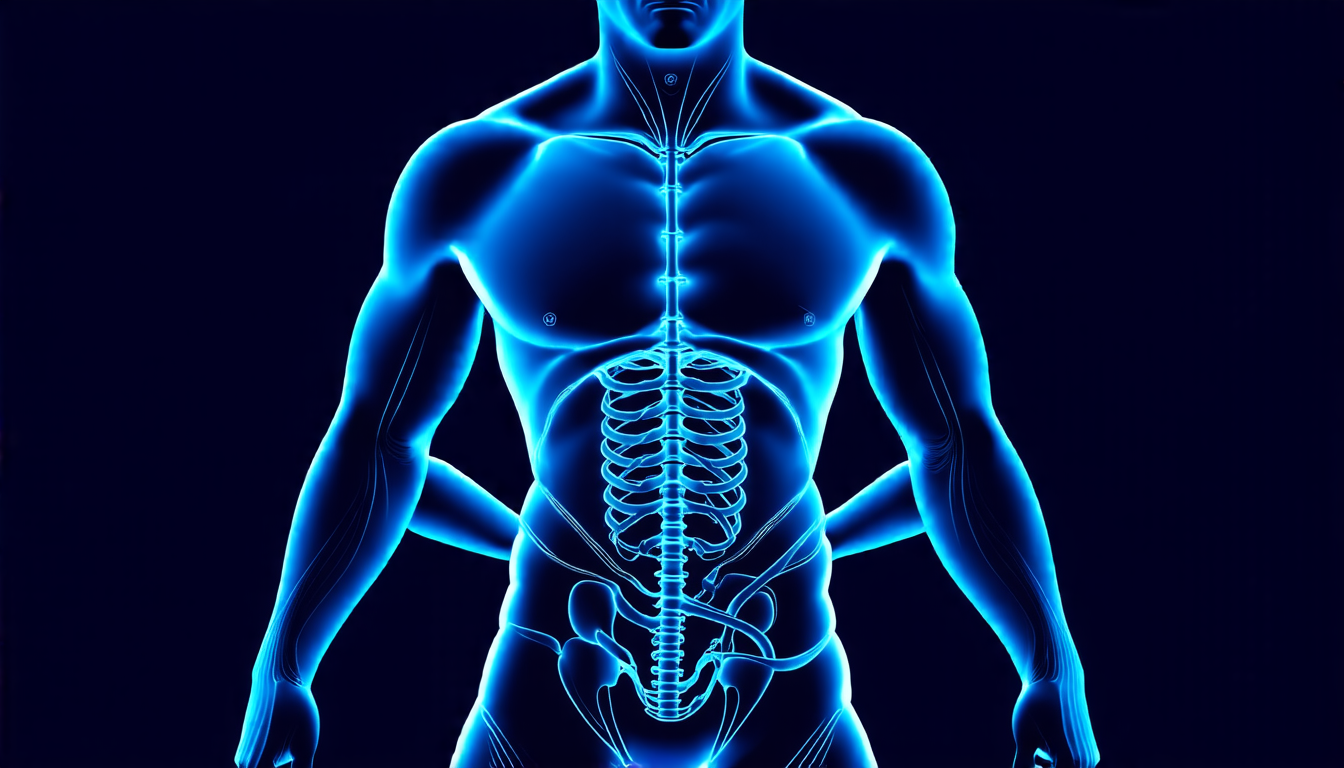
A detailed analysis of the Linea Alba, a structure in the abdominal wall that has been poorly understood until now. Researchers have long debated its shape, size and function, but a new study provides a comprehensive overview of this enigmatic region.
The Linea Alba is a thin band of connective tissue that runs along the midline of the abdomen, separating the two rectus abdominis muscles. It’s a crucial structure, playing a vital role in maintaining abdominal pressure and preventing hernias. Despite its importance, however, it has been shrouded in mystery.
Previous studies have described the Linea Alba as being flat and narrow, but these findings were based on limited data and relied on static imaging techniques. The new study uses advanced 3D reconstruction methods to create detailed models of the Linea Alba from CT scans of 117 patients. This approach allows researchers to visualize the structure in a way that was previously impossible.
The results are startling. Rather than being flat, the Linea Alba is revealed to be a complex, three-dimensional structure with a rhombus-like shape. Its width varies significantly along its length, with the maximum width occurring at the umbilicus (belly button). The study also shows that the Linea Alba’s curvature, measured by a new parameter called the sagitta, increases with age and body mass index.
These findings have significant implications for our understanding of abdominal wall anatomy and function. They suggest that the Linea Alba plays a more important role in maintaining abdominal pressure than previously thought, and that its shape and size may be influenced by factors such as age, sex and body composition.
The study’s authors also highlight the potential clinical applications of their findings. For example, they suggest that the sagitta could be used as a biomarker for predicting the risk of hernia recurrence after surgery. This could help clinicians tailor their treatment approaches to individual patients’ needs, leading to better outcomes and reduced costs.
In addition to its practical implications, this study demonstrates the power of advanced imaging techniques in revealing new insights into human anatomy. By combining cutting-edge technology with a rigorous scientific approach, researchers can gain a deeper understanding of complex biological structures like the Linea Alba.
This research has significant potential to improve our understanding of abdominal wall function and disease, and could ultimately lead to better treatments for conditions such as hernias and diastasis recti.
Cite this article: “Unraveling the Enigma: A Comprehensive Study of the Linea Alba”, The Science Archive, 2025.
Linea Alba, Abdominal Wall, Anatomy, Ct Scans, 3D Reconstruction, Hernias, Diastasis Recti, Biomarker, Sagitta, Body Composition