

Thursday 13 March 2025
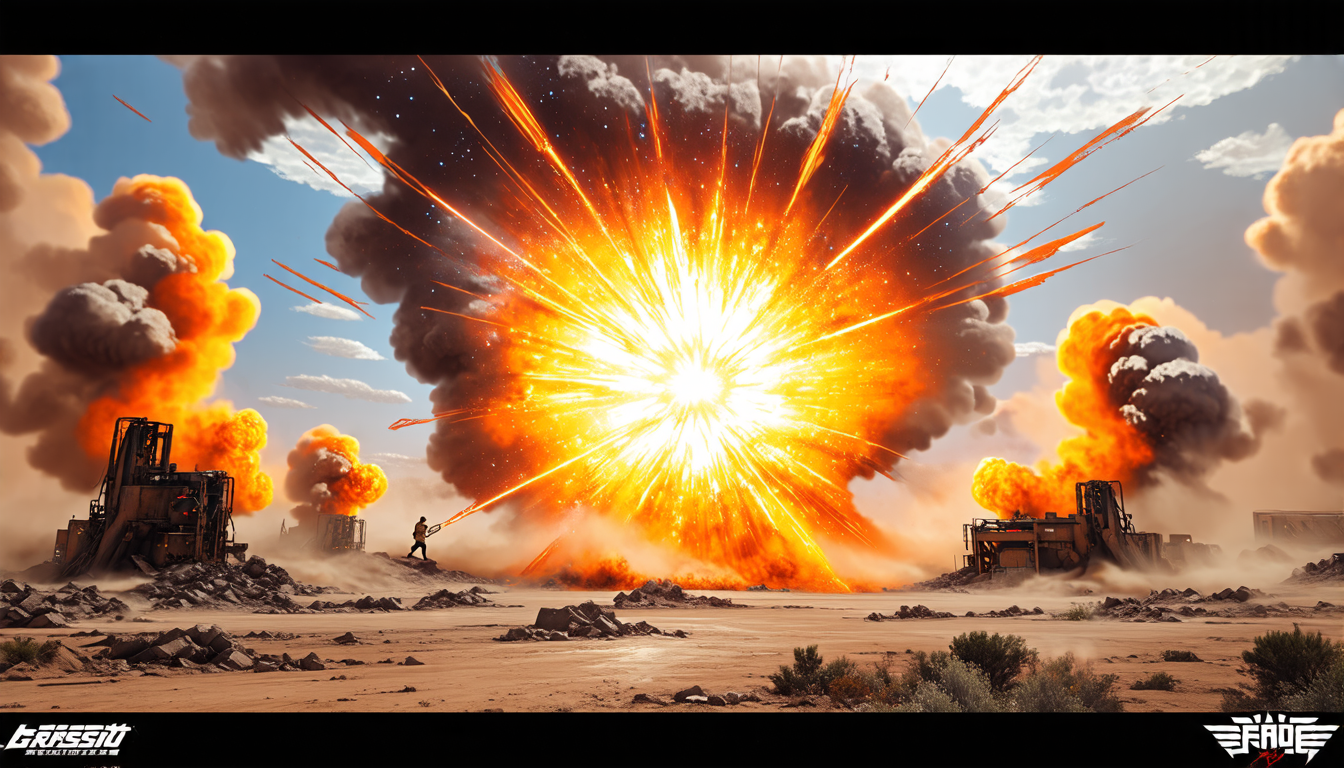
A team of astronomers has made a fascinating discovery about the behavior of explosive astrophysical events, such as supernovae and fast blue optical transients (FBOTs). By studying these transient phenomena, scientists have long sought to understand how they interact with their surroundings. Now, researchers have developed sophisticated computer simulations that reveal the intricate dance between these explosions and the dusty environments in which they occur.
The simulations, conducted using the Athena++ radiation transport code, show that when a massive star explodes, it can become shrouded in dust. This dust can absorb and scatter light from the explosion, making it difficult for astronomers to observe the event directly. However, as the explosion continues to shine brighter, it can slowly clear away the surrounding dust, revealing its true nature.
The researchers found that the timing of this dust clearing is crucial in determining the characteristics of the explosion’s infrared radiation. In some cases, the reprocessed radiation from the dusty environment can dominate the observed light curve, making it seem as if the explosion occurred at a later time than it actually did. This effect can be particularly pronounced for explosions that rise rapidly to their peak brightness.
The team also explored how the geometry of the dust distribution affects the observed light curves. By simulating different shapes and sizes of dusty environments, they found that the infrared radiation emitted by these events can vary significantly depending on the observer’s angle of view. This means that astronomers observing the same event from different locations in space may see different patterns of emission.
These findings have important implications for our understanding of explosive astrophysical phenomena. By accurately modeling the interactions between explosions and dusty environments, scientists can better interpret observations of these events and gain insights into their underlying physics. Moreover, the simulations demonstrate the power of computer modeling in advancing our knowledge of the universe.
In the future, researchers plan to apply this new understanding to a wide range of astrophysical transients, from supernovae and FBOTs to tidal disruption events and luminous red novae. By combining these simulations with observations from space-based telescopes like the James Webb Space Telescope, scientists may uncover even more secrets about the behavior of explosive astrophysical events and their dusty surroundings.
The results also highlight the importance of considering the complex interactions between explosions and dust in our understanding of the universe. As astronomers continue to explore the cosmos, they will need to account for these intricate processes to gain a deeper appreciation of the dynamic and ever-changing nature of the universe around us.
Cite this article: “Unveiling the Intricate Dance Between Explosive Astrophysical Events and Dusty Environments”, The Science Archive, 2025.
Astrophysical Events, Supernovae, Fast Blue Optical Transients, Dust, Radiation Transport, Computer Simulations, Astronomical Observations, Infrared Radiation, Explosive Phenomena, Astrophysical Transients





