

Thursday 13 March 2025
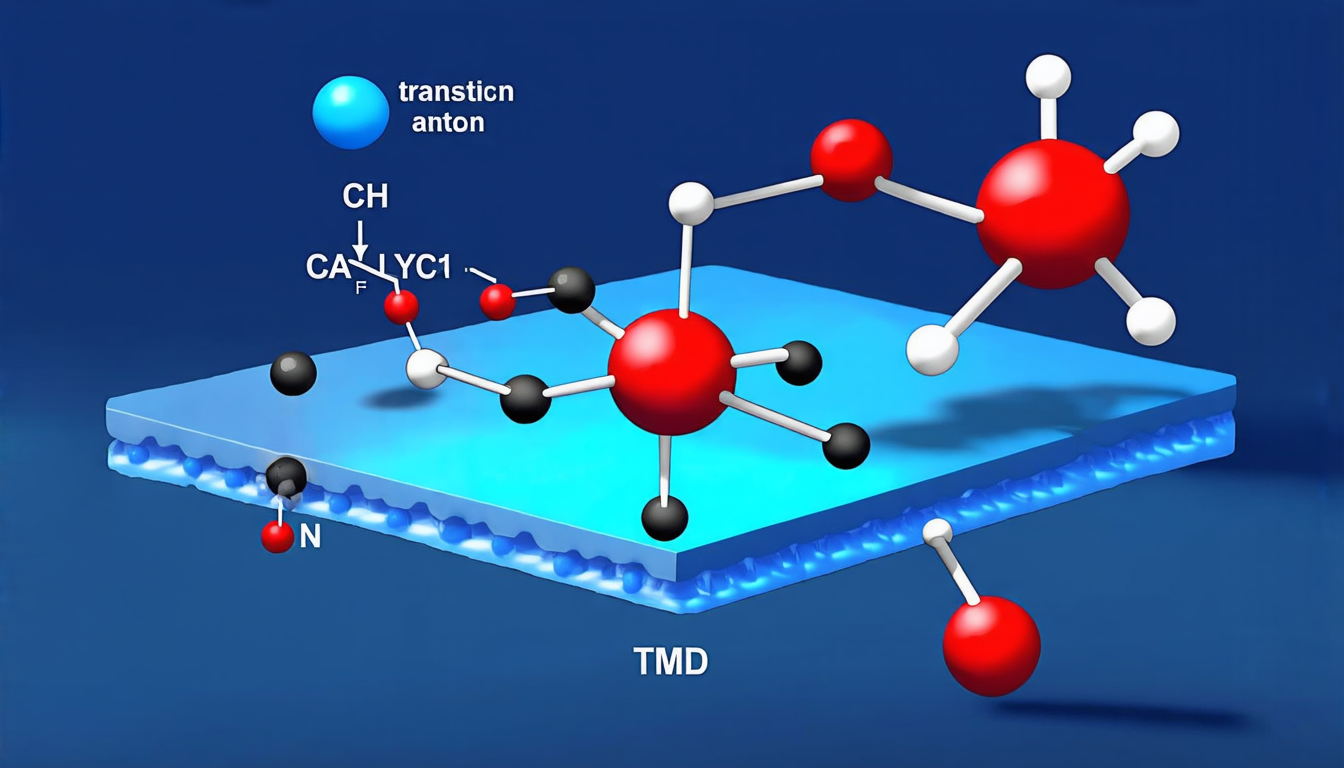
Scientists have made a significant breakthrough in the field of catalysis, discovering ways to stabilize single-atom catalysts on two-dimensional transition metal dichalcogenides (TMDs). This finding has the potential to revolutionize various industries, from energy production to chemical manufacturing.
Catalysts are substances that speed up chemical reactions without being consumed or altered in the process. Single-atom catalysts are particularly effective due to their high surface area and ability to facilitate specific reactions. However, these tiny particles often agglomerate, losing their effectiveness.
The researchers focused on TMDs, which are made up of layers of metal atoms sandwiched between chalcogenide atoms. These materials have gained attention in recent years due to their unique properties and potential applications. The team used first-principles calculations to explore the interactions between single-atom catalysts and TMD substrates.
Their findings revealed that certain substrate phases, such as the 1T and 1T’ phases of MoS2, are more conducive to stabilizing single atoms than others. These metastable phases exhibit stronger binding energies with the single atoms, making them less likely to agglomerate. The researchers also identified specific sites on the TMD surface where single atoms preferentially bind.
The team’s calculations showed that 82 out of a total of 216 systems they examined exhibited stable monomer configurations, resisting dimerization and other unwanted reactions. This means that single-atom catalysts can be designed to operate in a specific manner, optimizing their performance for various applications.
The implications of this breakthrough are far-reaching. For example, it could enable the development of more efficient hydrogen fuel cells or more effective carbon dioxide reduction processes. The researchers believe that their findings could also inspire new approaches to designing and synthesizing single-atom catalysts.
In addition to its potential industrial applications, this study highlights the importance of understanding the interactions between materials at the atomic scale. By using computational models to simulate these interactions, scientists can gain valuable insights into the behavior of complex systems and design new materials with specific properties.
Further research is needed to fully realize the potential of single-atom catalysts on TMD substrates. However, this breakthrough has already opened up new avenues for exploration and could have significant impacts on various fields in the years to come.
Cite this article: “Stabilizing Single-Atom Catalysts on TMD Substrates: A Breakthrough in Catalysis”, The Science Archive, 2025.
Single-Atom Catalysts, Tmds, Catalysis, Energy Production, Chemical Manufacturing, Hydrogen Fuel Cells, Carbon Dioxide Reduction, Materials Science, Computational Models, Nanotechnology.





