

Thursday 13 March 2025
Scientists have long been fascinated by the way water behaves in porous materials, such as sand or soil. Understanding this behavior is crucial for a wide range of applications, from agriculture to environmental science. Recently, researchers made a significant breakthrough in modeling the drying process of granular beds, which could have important implications for fields like food preservation and wastewater treatment.
Granular beds are commonly used in industries where water needs to be removed quickly and efficiently, such as in drying food or cleaning up spills. However, the drying process can be complex and influenced by many factors, including the size and shape of the particles that make up the bed, as well as the properties of the water itself.
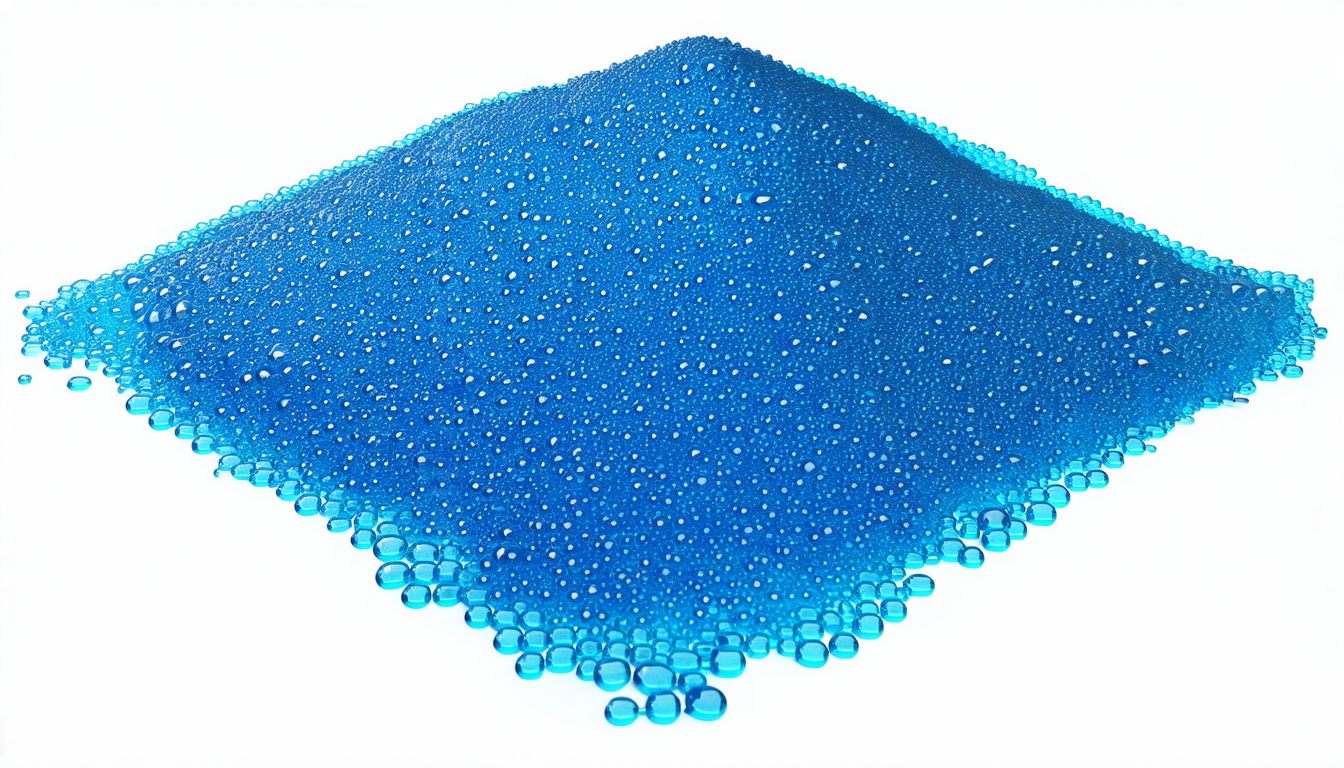
To better understand this process, scientists used a combination of experimental data and mathematical modeling to study the drying behavior of granular beds. They found that the drying rate can be divided into two distinct periods: a constant rate period (CRP) and a falling rate period (FRP).
In the CRP, water is transported through the bed via permeable flow, similar to how water flows through a sponge. During this stage, the drying rate remains relatively constant. However, as the water content of the bed decreases, the drying rate slows down significantly in the FRP. This is because the remaining water molecules become trapped in smaller pores and are no longer able to flow freely.
To model this behavior, researchers developed a simple power law equation that describes the relationship between the water saturation of the bed and the drying rate. They found that this equation accurately predicted the experimental data for granular beds made up of glass beads with different particle sizes.
The findings of this study have important implications for industries that rely on granular beds for drying or cleaning. For example, food manufacturers could use this knowledge to optimize their drying processes and reduce energy consumption. Similarly, wastewater treatment plants could use this information to improve the efficiency of their treatment systems.
This research also highlights the importance of understanding the complex interactions between water and porous materials. By developing more accurate models of these interactions, scientists can better predict how different systems will behave under various conditions. This knowledge can then be used to design more efficient and effective solutions for a wide range of applications.
In addition to its practical implications, this study also sheds light on the fundamental physics of drying processes. The researchers’ use of mathematical modeling to describe the behavior of granular beds provides new insights into the underlying mechanisms that govern these processes.
Cite this article: “Modeling the Drying Process of Granular Beds”, The Science Archive, 2025.
Water, Porous Materials, Granular Beds, Drying Process, Food Preservation, Wastewater Treatment, Mathematical Modeling, Power Law Equation, Water Saturation, Particle Size





