

Thursday 13 March 2025
Scientists have made a breakthrough in the field of animal re-identification, allowing them to accurately identify individual animals in the wild using camera traps and environmental metadata.
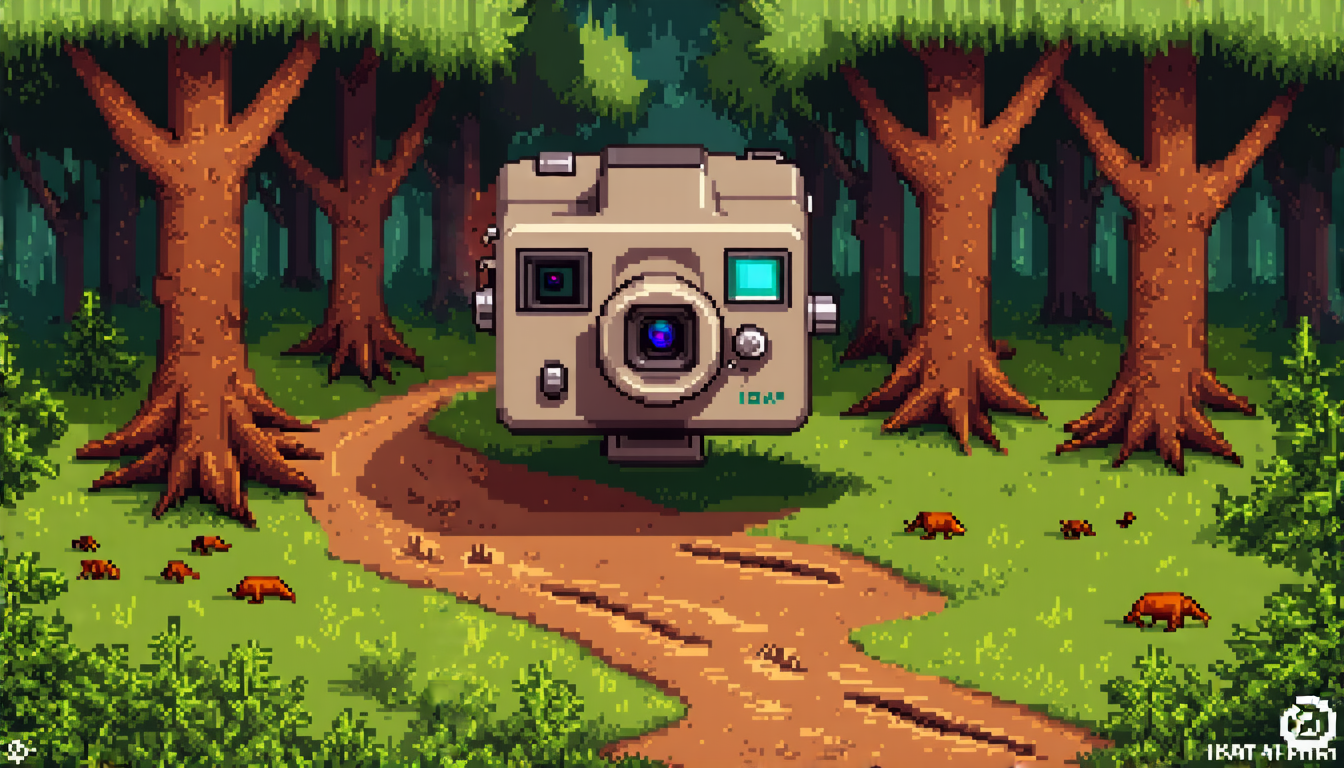
The team used computer vision techniques to analyze images taken by camera traps, which are commonly used in conservation efforts to monitor wildlife populations. However, identifying individual animals from these images has proven challenging due to variations in lighting, angle, and pose.
To overcome this challenge, the researchers developed a module called the Meta-Feature Adapter (MFA), which integrates environmental metadata – such as temperature, humidity, and time of day – into visual data analysis. This allows the system to focus on features that remain distinctive under varying conditions, making identification more accurate.
The MFA was tested on two species of animals in New Zealand: stoats and hares. The results showed a significant improvement in re-identification accuracy when environmental metadata was incorporated into the analysis. In one case, the system was able to correctly identify an individual hare from an image taken at night, where visual features alone would have been insufficient.
The researchers also created a dataset of paired images and environmental metadata, which they hope will aid future research in animal re-identification. This dataset, called Metadata Augmented Animal Re-identification (MAAR), includes six species and provides a valuable resource for scientists working in the field.
This innovation has significant implications for conservation efforts, as it enables more accurate monitoring of wildlife populations and better tracking of individual animals. This can inform decisions about habitat preservation, population management, and disease surveillance.
The MFA is not limited to animal re-identification; its application could extend to other areas where environmental metadata is relevant, such as human behavior analysis or climate modeling. The potential for this technology to improve our understanding of the natural world and inform decision-making is vast.
The use of camera traps and environmental metadata in animal re-identification is a promising approach that has the potential to revolutionize conservation efforts. By combining cutting-edge computer vision techniques with real-world data, scientists can gain a deeper understanding of wildlife populations and make more informed decisions about their management and preservation.
Cite this article: “Revolutionizing Wildlife Monitoring: Camera Traps and Environmental Metadata Combine to Enhance Animal Re-identification”, The Science Archive, 2025.
Animal Re-Identification, Camera Traps, Environmental Metadata, Computer Vision, Conservation Efforts, Wildlife Populations, Meta-Feature Adapter, Mfa, Maar Dataset, Animal Monitoring





