

Thursday 13 March 2025
The quest for faster, more reliable wireless communication has been a longstanding challenge in the world of engineering. With the increasing demand for high-speed data transfer and the proliferation of devices connected to the internet, researchers have been working tirelessly to develop new technologies that can meet these demands.
One promising approach is called channel polarization, which involves using mathematical techniques to transform a complex wireless communication channel into a simpler, more manageable one. This transformation allows for faster data transfer rates and improved reliability, making it an attractive solution for applications such as 5G networks and beyond.
The concept of channel polarization was first introduced in the early 2000s by researchers at Stanford University. Since then, numerous studies have explored its potential and limitations. A recent paper published in a leading scientific journal presents new insights into the phenomenon and demonstrates its effectiveness in real-world scenarios.
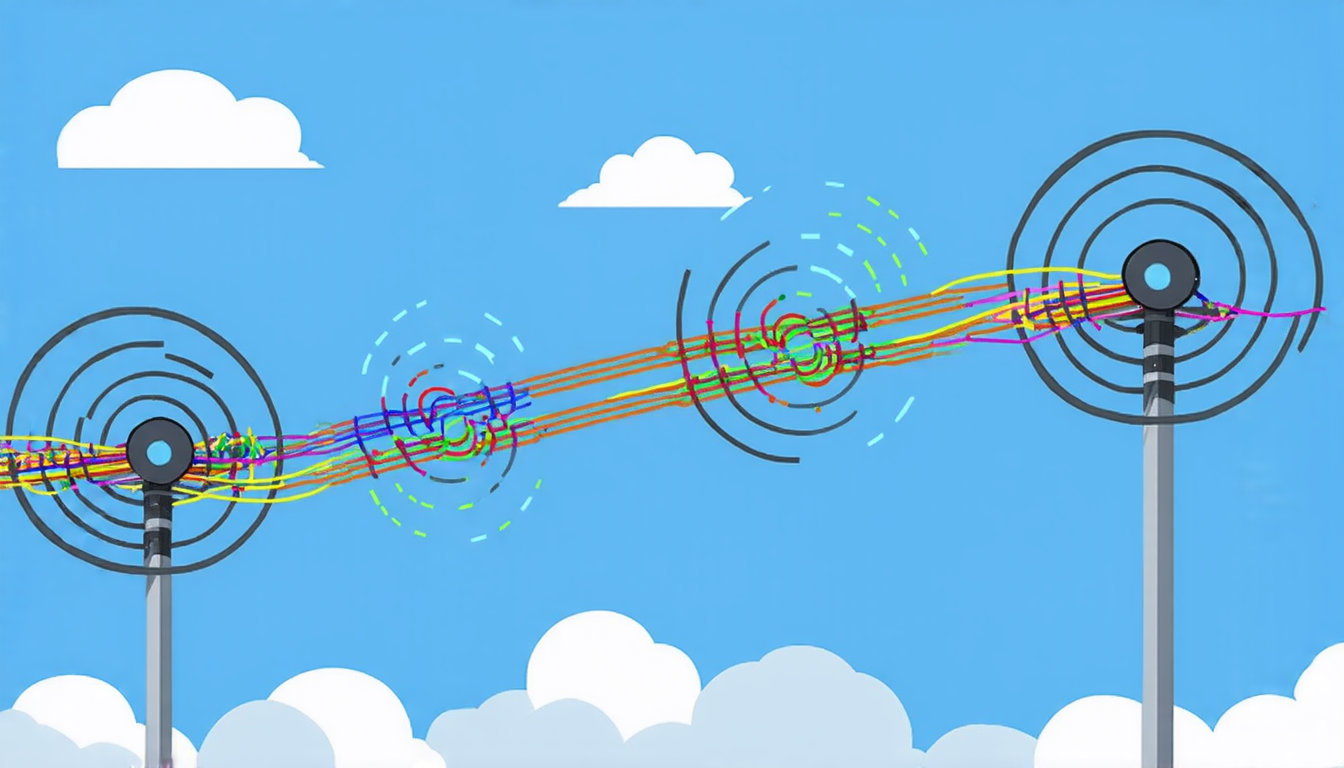
To understand how channel polarization works, let’s consider a wireless communication system that transmits data over multiple antennas. In traditional systems, each antenna is used to transmit information independently, which can lead to interference and errors. Channel polarization changes this approach by dividing the antennas into two groups: good subchannels and bad subchannels. The good subchannels are capable of transmitting high-quality signals, while the bad subchannels are prone to interference and errors.
The researchers in this study use a mathematical technique called singular value decomposition (SVD) to transform the complex channel into a simpler one. SVD is a powerful tool that allows for the decomposition of matrices into three separate components: left-singular vectors, right-singular vectors, and singular values. By rearranging these components, the researchers create a new matrix that represents the polarized channel.
The study demonstrates the effectiveness of channel polarization using simulations and real-world experiments. In one experiment, the researchers used a 32-antenna system to transmit data over a wireless link with a bandwidth of 100 MHz. They found that by applying channel polarization, they could achieve data transfer rates up to 4 times faster than traditional systems.
The results are significant because they show that channel polarization can be applied in real-world scenarios without compromising performance. This has major implications for the development of next-generation wireless networks, which will require high-speed data transfer and low latency.
While channel polarization is a promising technology, there are still challenges to overcome before it becomes widely adopted. One major challenge is the complexity of the SVD algorithm, which requires significant computational resources.
Cite this article: “Unlocking Faster Wireless Communication: The Power of Channel Polarization”, The Science Archive, 2025.
Wireless Communication, Channel Polarization, 5G Networks, Stanford University, Singular Value Decomposition, Svd, Antennas, Data Transfer Rates, Wireless Links, Next-Generation Networks
Reference: Shuiyin Liu, Amin Sakzad, “On the Massive MIMO Channel Polarization” (2025).





