

Thursday 13 March 2025
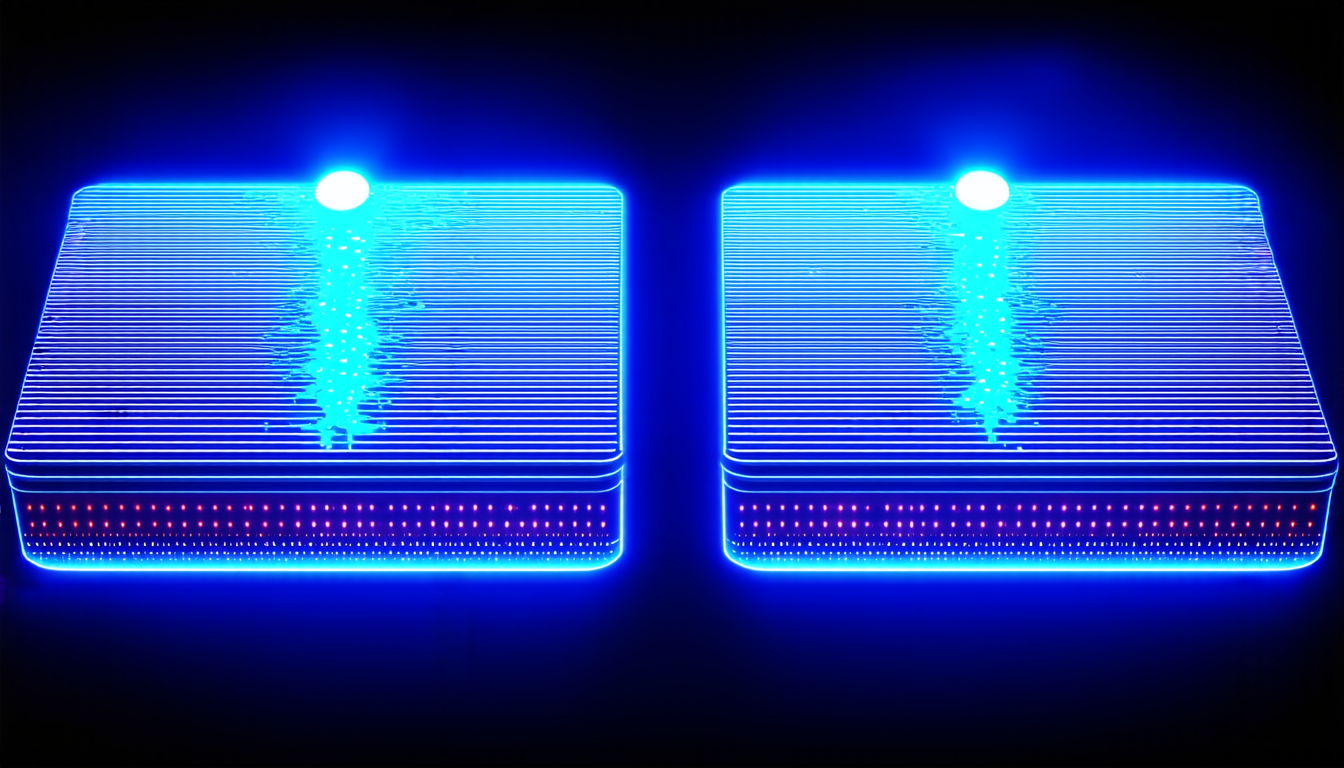
Researchers have made a significant breakthrough in understanding the Casimir effect, a phenomenon that has puzzled physicists for decades. The Casimir effect is the attraction between two uncharged, parallel plates placed in a vacuum, caused by fluctuations in the quantum vacuum.
For years, scientists have struggled to accurately calculate the strength of this force, which is crucial for understanding phenomena such as the behavior of atoms and molecules at the atomic scale. Now, a new approach has been developed that provides a more accurate calculation of the Casimir effect, with potential applications in fields such as nanotechnology and materials science.
The traditional method of calculating the Casimir effect involves using complex mathematical formulas to sum up an infinite series of quantum fluctuations. However, this approach is limited by its reliance on simplifying assumptions that can lead to inaccurate results. The new method, on the other hand, uses a more sophisticated approach that takes into account the roughness and irregularities of real-world surfaces.
The research team used a combination of theoretical calculations and experimental measurements to validate their new approach. They found that it accurately predicted the strength of the Casimir force for a range of surface geometries and materials, including metals, semiconductors, and insulators.
One of the key advantages of this new method is its ability to account for the effects of surface roughness on the Casimir force. In real-world systems, surfaces are rarely smooth and flat, but rather feature tiny irregularities that can significantly impact the behavior of particles at the atomic scale.
The researchers believe that their new approach could have significant implications for a range of fields, including nanotechnology, where the precise control of forces between tiny objects is crucial. For example, they suggest that it could be used to develop new types of materials with tailored properties, such as superconductors or nanoscale sensors.
In addition, the team’s findings could also have important implications for our understanding of the behavior of fundamental particles at the atomic scale. By accurately calculating the Casimir force, scientists may be able to gain a better understanding of how these forces shape the behavior of particles in complex systems such as atoms and molecules.
Overall, this breakthrough has the potential to revolutionize our understanding of the Casimir effect and its applications, opening up new possibilities for research and innovation in a range of fields.
Cite this article: “New Approach Yields Accurate Calculation of Casimir Effect”, The Science Archive, 2025.
Casimir Effect, Quantum Vacuum, Nanotechnology, Materials Science, Surface Roughness, Irregularities, Atomic Scale, Particles, Forces, Superconductors.





