

Thursday 13 March 2025
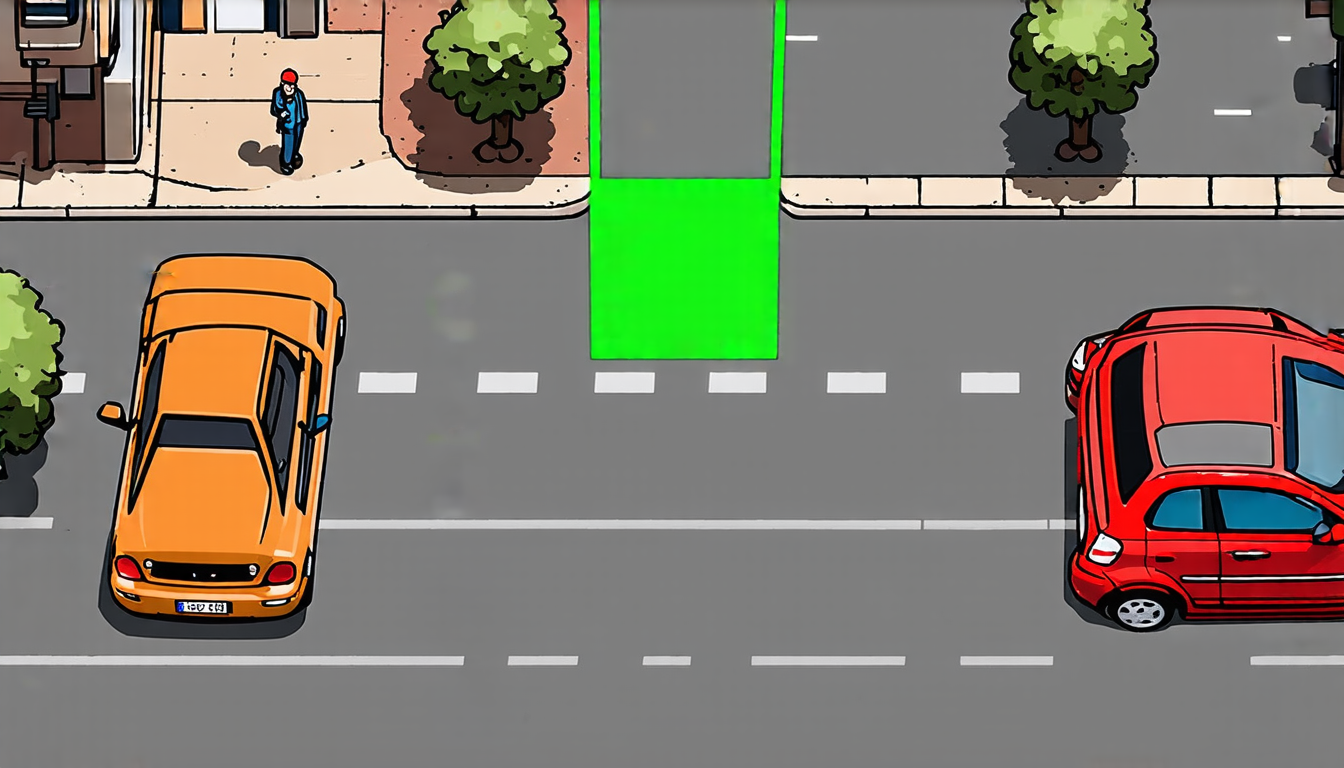
Parking in a crowded city can be a nightmare. You circle around the block, searching for an empty spot that’s willing to part with its precious curb space. But what if your car could do the hard work for you? A new system uses artificial intelligence and deep learning to detect parking spots and alert drivers when one is available.
The team behind this innovation used a combination of computer vision and machine learning algorithms to train a neural network to recognize parking spaces. They fed the network thousands of images of parking lots, each labeled with information about the availability of the spot. The more the network was trained, the better it became at identifying empty spots from a distance.
But how does it work? Essentially, the system uses cameras installed around the city to capture images of parking lots. These images are then sent to a central server where they’re analyzed by the AI-powered algorithm. If the algorithm detects an available spot, it sends a notification to drivers’ smartphones or in-car displays, guiding them to the nearest empty space.
The benefits are clear: reduced traffic congestion, decreased air pollution from idling cars, and a more efficient use of parking infrastructure. And for cities struggling with limited parking options, this technology could be a game-changer.
But what about the technical side? The system uses convolutional neural networks (CNNs), a type of deep learning algorithm that’s particularly well-suited to image recognition tasks. By analyzing patterns in images, CNNs can identify objects like cars and pedestrians, as well as less obvious features like shadows and lighting conditions. This level of detail allows the algorithm to accurately detect parking spaces even when they’re partially obstructed or surrounded by other vehicles.
The researchers also experimented with different camera angles and positions to determine what works best for detecting parking spots. They found that cameras mounted at a 45-degree angle, roughly waist-high, provided the most accurate results. This might seem obvious, but it’s surprising how many factors can affect image quality and algorithm performance.
While this system is still in its early stages, the potential implications are huge. Imagine (but don’t just yet) the possibilities for smart cities, where infrastructure and technology work together to create a more efficient, sustainable urban environment. For now, let’s just say that parking might never be the same again.
Cite this article: “Smart Parking: AI-Powered Solution for City Streets”, The Science Archive, 2025.
Artificial Intelligence, Deep Learning, Computer Vision, Machine Learning Algorithms, Parking Spots, Neural Network, Camera Angles, Image Recognition, Convolutional Neural Networks, Smart Cities





