

Thursday 13 March 2025
Researchers have made a significant breakthrough in understanding how curves and surfaces can be analyzed using discrete mathematics, which has far-reaching implications for fields such as engineering, physics, and computer science.
Traditionally, mathematicians have studied curves and surfaces using continuous methods, which can be challenging to apply to real-world problems. However, with the advent of digital technology, researchers have been able to develop new techniques that involve breaking down these shapes into smaller, discrete units.
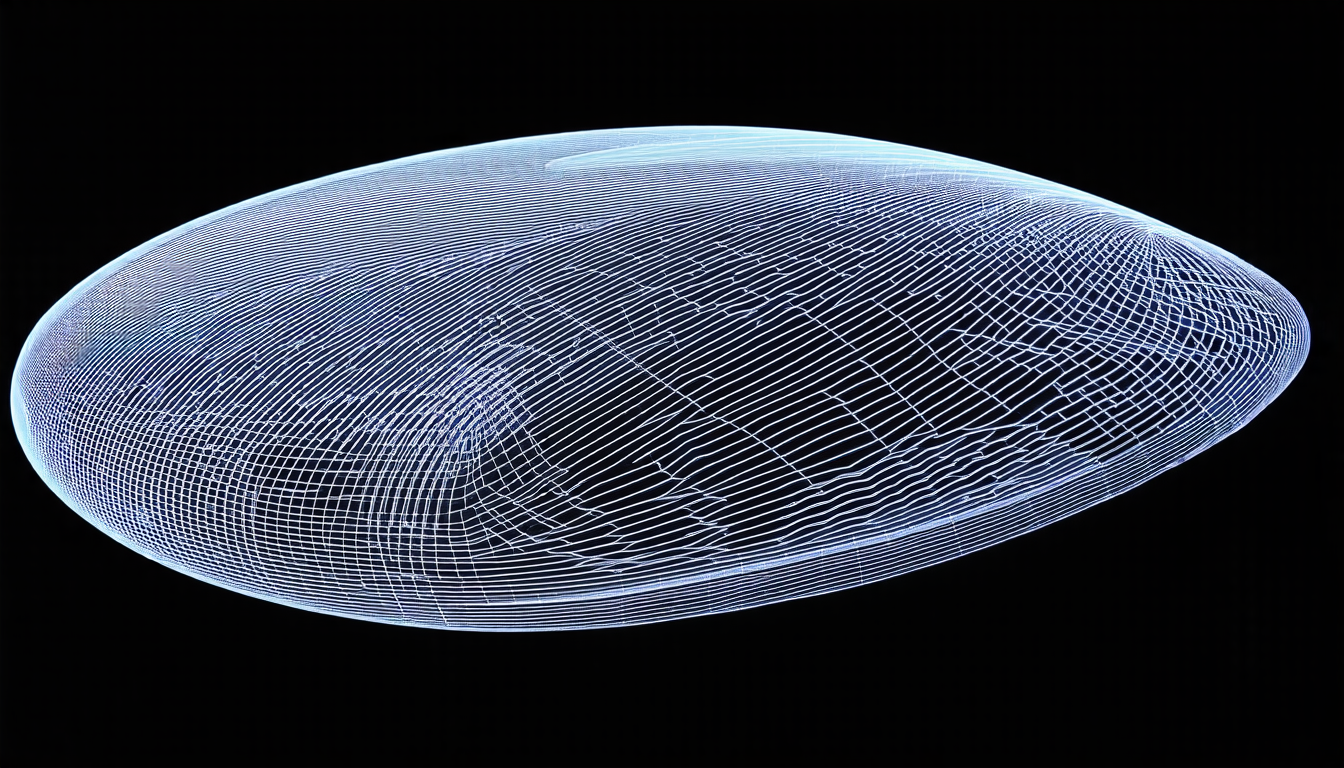
In this study, scientists explored how discrete methods can be used to analyze elastic curves in space forms. Elastic curves are a type of curve that is shaped by external forces, such as tension or compression, and they play a crucial role in many real-world applications, including engineering design and materials science.
The researchers developed new algorithms that allowed them to study these curves using discrete mathematics. This involved dividing the curve into smaller segments and analyzing each segment individually, rather than looking at the entire curve as a whole.
One of the key findings was that the discrete methods could be used to identify certain properties of the elastic curve, such as its curvature and torsion. These properties are important in determining how the curve will behave under different forces or stresses.
The researchers also discovered that the discrete methods could be used to study the behavior of these curves over time. This involved analyzing how the curve changed shape as it was subjected to different forces or stresses, and identifying patterns and trends in its behavior.
This research has significant implications for a range of fields, including engineering design, materials science, and computer graphics. For example, engineers could use these methods to design new structures that are more efficient and durable, while researchers in materials science could use them to study the properties of new materials.
Computer scientists could also use these methods to develop new algorithms for simulating the behavior of curves and surfaces in digital environments. This would be particularly useful in fields such as computer-aided design (CAD) and virtual reality (VR), where accurate simulations are critical.
Overall, this research has opened up new possibilities for analyzing and understanding elastic curves in space forms using discrete mathematics. By developing new algorithms and techniques, researchers can continue to push the boundaries of what is possible in this field, leading to new insights and discoveries that could have a significant impact on our daily lives.
Cite this article: “Analyzing Elastic Curves with Discrete Mathematics: A Breakthrough in Understanding Complex Shapes”, The Science Archive, 2025.
Discrete Mathematics, Curves, Surfaces, Engineering, Physics, Computer Science, Elastic Curves, Algorithms, Computer Graphics, Materials Science.





