

Thursday 13 March 2025
A team of researchers has made a significant breakthrough in the field of optimal control theory, developing a new algorithm that can be used to solve complex problems involving total variation regularization.
Total variation regularization is a technique used to reduce noise and artifacts in images and data signals. It’s commonly employed in fields such as medical imaging, computer vision, and signal processing. The method works by adding a penalty term to the optimization problem, which encourages the solution to have a certain smoothness or continuity property.
The new algorithm, developed by researchers at TU Dortmund University, is designed to solve optimal control problems involving total variation regularization. These types of problems are notoriously difficult to solve, as they require finding the optimal control that minimizes a cost functional subject to constraints on the state variable and the control itself.
The key innovation of the new algorithm is its ability to efficiently solve these problems using a combination of outer approximation and semismooth Newton methods. The outer approximation method involves iteratively solving a sequence of easier subproblems, which are then combined to obtain an approximate solution to the original problem. The semismooth Newton method is used to refine this solution by iteratively solving a sequence of nonlinear equations that arise from the first-order optimality conditions.
The algorithm has been tested on several examples, including a control problem involving the minimization of total variation regularization in image denoising. In each case, the algorithm was able to produce accurate and efficient solutions.
The implications of this work are significant, as it opens up new possibilities for solving complex optimal control problems that involve total variation regularization. This could have important applications in fields such as medical imaging, where total variation regularization is often used to denoise medical images and improve their quality.
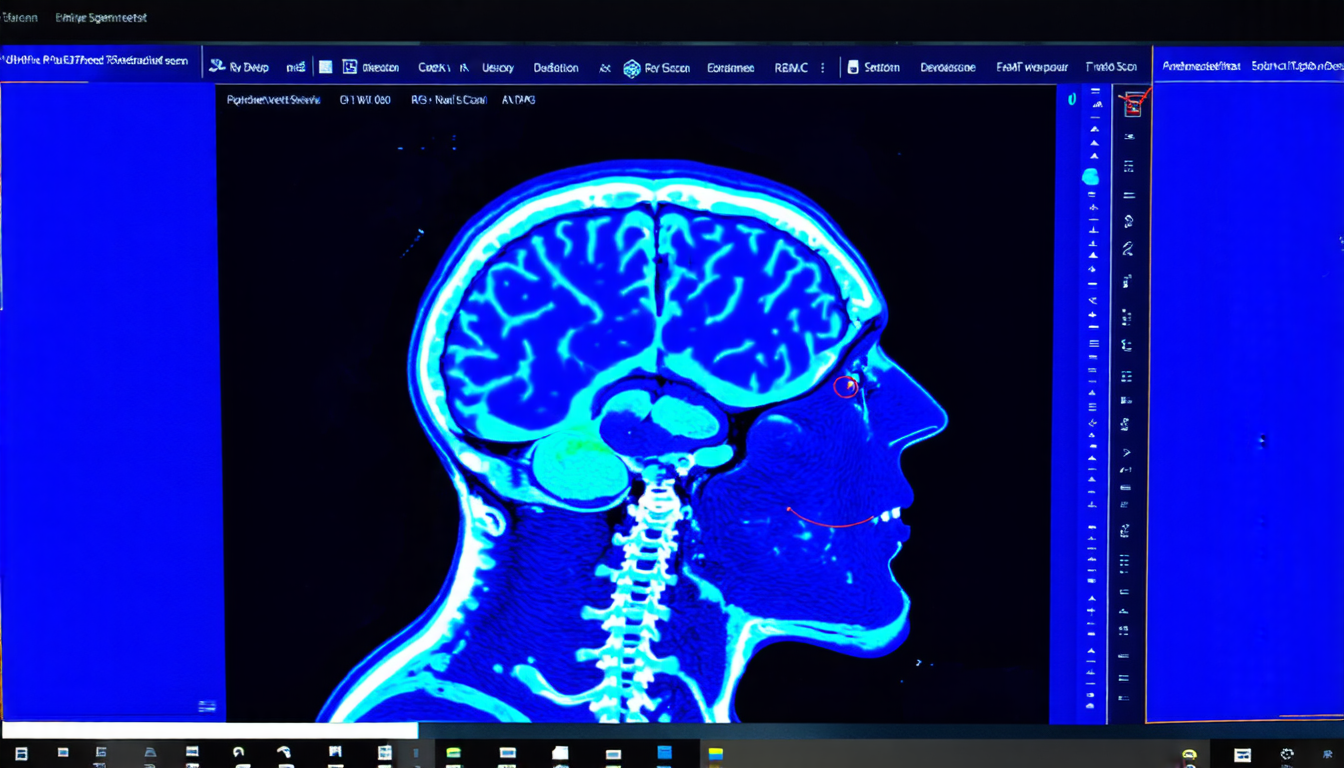
One potential application of the algorithm is in the development of new image processing techniques for medical imaging modalities such as MRI and CT scans. By using the algorithm to optimize the control parameters for these techniques, researchers may be able to develop more efficient and effective methods for noise reduction and artifact suppression.
Another potential application is in the field of computer vision, where total variation regularization is often used to improve image segmentation and object recognition algorithms. The new algorithm could be used to optimize the control parameters for these algorithms, leading to improved performance and accuracy.
Overall, the development of this new algorithm represents an important advance in the field of optimal control theory, with significant potential implications for a wide range of applications.
Cite this article: “Breakthrough Algorithm Solves Complex Optimal Control Problems”, The Science Archive, 2025.
Optimal Control Theory, Total Variation Regularization, Image Denoising, Medical Imaging, Computer Vision, Signal Processing, Outer Approximation, Semismooth Newton Methods, Nonlinear Optimization, Algorithm Development





