

Thursday 13 March 2025
The way our brains process information is still a mystery, but scientists have made significant progress in understanding how neurons work together to create complex patterns of activity. A recent study published in an academic journal has shed new light on this process by developing a novel approach to encoding continuous signals into spike-based representations.
Neurons are incredibly efficient at processing information, able to transmit vast amounts of data through simple spikes in electrical activity. But how do they manage to do this? The answer lies in the unique properties of neurons, which can be thought of as tiny computers that operate on different principles than our own digital devices.
The researchers behind this study used a type of neural network called an adaptive exponential integrate-and-fire (AEIF) neuron, which is designed to mimic the behavior of real neurons. These neurons are capable of producing complex patterns of activity in response to continuous signals, such as sounds or images. But how do they manage to do this?
The key lies in the way these neurons process information. Each neuron receives input from other neurons and produces an output based on that input. The output is then transmitted to other neurons, creating a cascade of activity that can spread across the entire network.
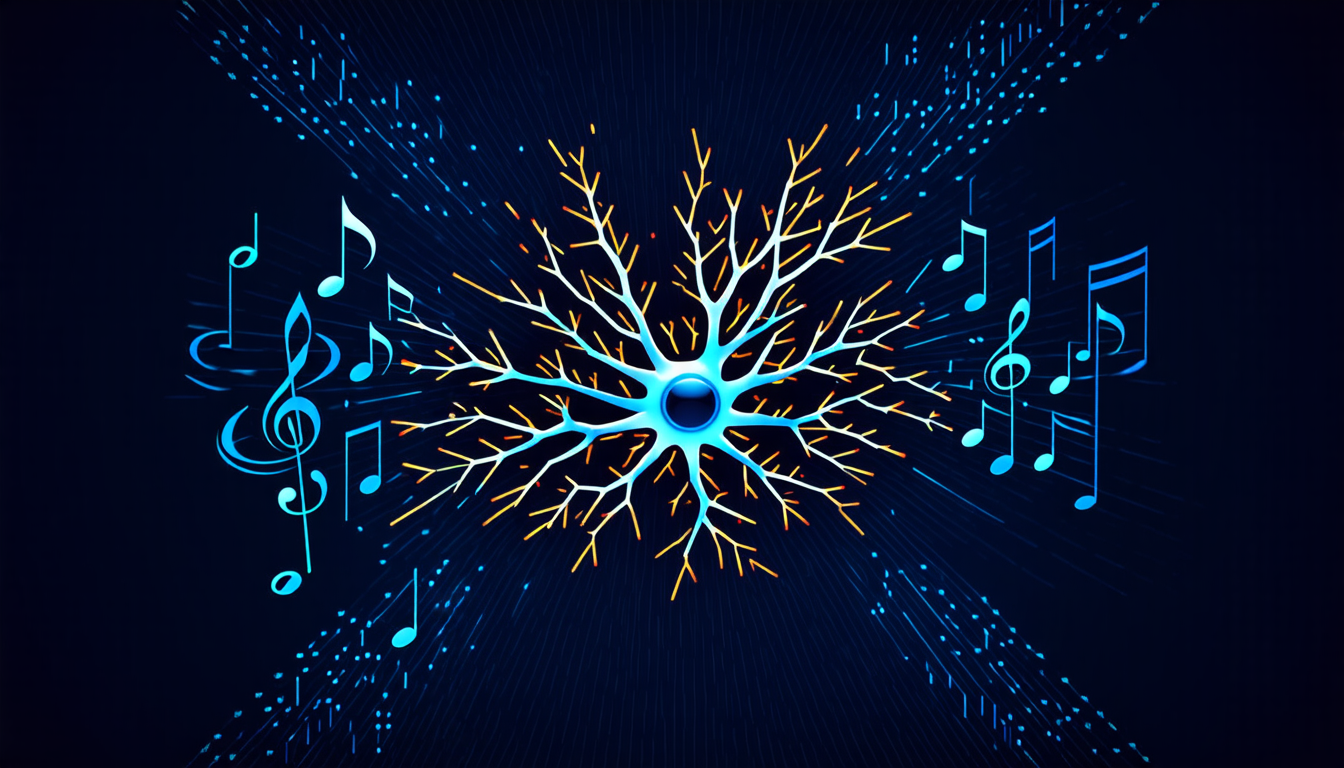
To understand how this works, let’s consider an example. Imagine you’re listening to your favorite song for the first time. At first, it may be difficult to pick out individual notes or melodies, but as you continue to listen, your brain begins to recognize patterns and structures within the music. This is similar to what happens in a neural network, where neurons work together to create complex patterns of activity.
The researchers behind this study developed a novel approach to encoding continuous signals into spike-based representations using an AEIF neuron. They found that by adjusting the properties of the neurons, such as their time constants and synaptic weights, they could control the type of patterns that emerged in the network.
For example, if they wanted to create a pattern that resembled a specific melody, they could adjust the time constants of the neurons to ensure that the output spikes occurred at specific intervals. This would allow the network to recognize the pattern and transmit it to other neurons, creating a cascade of activity that spreads across the entire network.
The implications of this research are significant, as it has the potential to revolutionize our understanding of how the brain processes information.
Cite this article: “Unraveling the Mysteries of Neural Networks: A Novel Approach to Encoding Continuous Signals”, The Science Archive, 2025.
Neural Networks, Neurons, Spike-Based Representations, Continuous Signals, Adaptive Exponential Integrate-And-Fire, Brain Processing, Neural Coding, Information Transmission, Complex Patterns, Artificial Intelligence





