

Thursday 13 March 2025
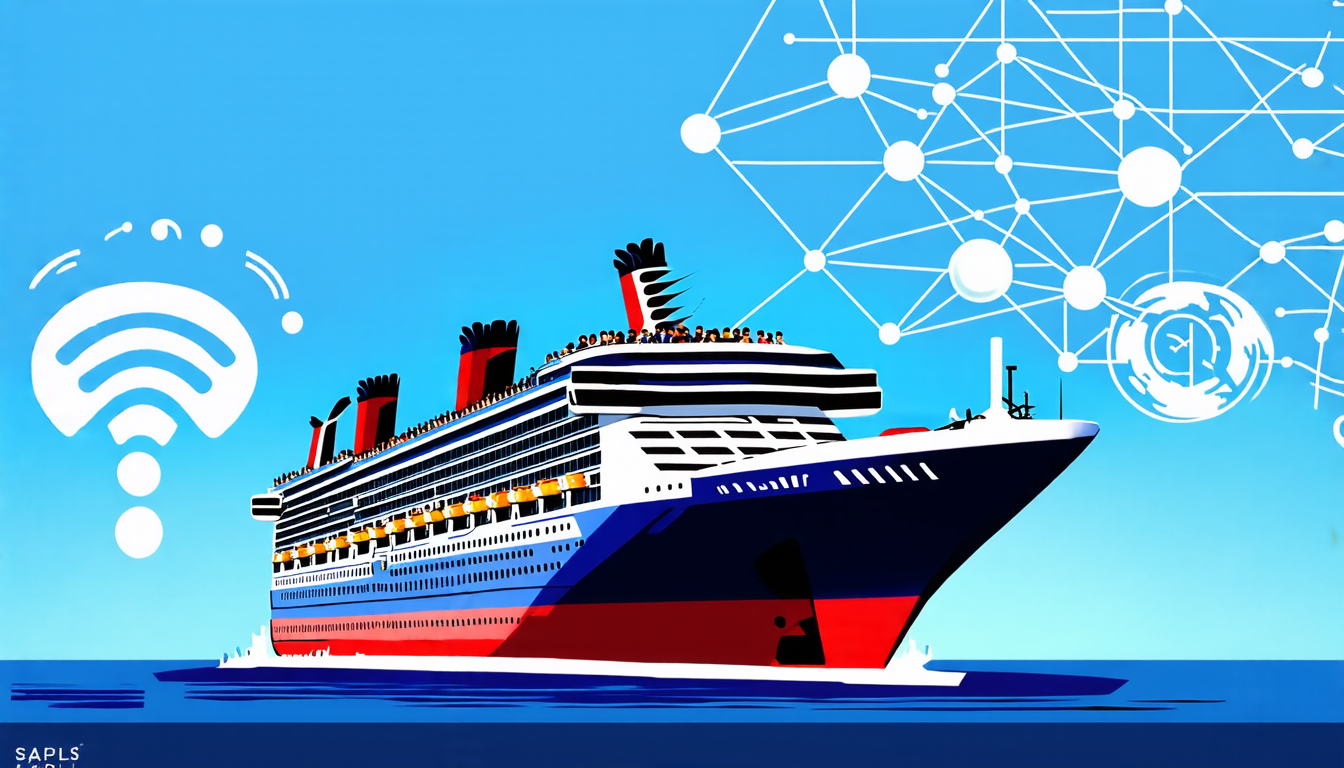
In a bid to improve emergency evacuation procedures, researchers have been exploring the impact of communication system delays on navigation advice provided to evacuees during ship emergencies. The study, published in a recent issue of the journal Sensors, highlights the importance of considering these delays when designing evacuation systems.
The research team created a simulation framework that models the evacuation process on a cruise ship, taking into account various parameters such as the layout of the ship, the number of passengers, and the communication system’s performance. They found that even small delays in receiving navigation advice can significantly prolong the evacuation time, leading to increased risks for evacuees.
The study suggests that these delays are due to the inherent limitations of wireless communication systems, which can be affected by factors such as interference, congestion, and damage to infrastructure during an emergency. As a result, evacuees may receive incorrect or outdated navigation advice, making it more difficult for them to navigate safely to safety zones.
To mitigate this issue, the researchers propose the development of decentralized evacuation systems that can pre-compute and store navigation data locally on intermediate nodes in the communication network. This would enable evacuees to receive accurate navigation advice even if the main communication system is disrupted.
The study’s findings have significant implications for emergency response planning and evacuation strategies. By acknowledging the potential delays in communication systems, authorities can develop more effective evacuation procedures that take into account the limitations of these systems.
In addition to improving emergency response protocols, the research highlights the importance of considering the human factor in evacuation simulations. The team notes that evacuees’ behavior and decision-making processes are critical factors in determining the success of an evacuation, and that incorporating these elements into simulation models can help improve the accuracy of evacuation predictions.
The study’s authors emphasize the need for further research on decentralized evacuation systems and the development of more realistic simulation models that incorporate human behavior. By continuing to explore these topics, researchers hope to contribute to the development of safer and more effective emergency response strategies.
The findings of this study demonstrate the importance of considering the complex interactions between communication systems, navigation advice, and human behavior in emergency situations. As research continues to advance our understanding of evacuation procedures, it is clear that a multidisciplinary approach will be essential for developing effective solutions that prioritize evacuees’ safety and well-being.
Cite this article: “Optimizing Emergency Evacuation Procedures: The Role of Communication System Delays and Human Behavior”, The Science Archive, 2025.
Emergency Evacuation, Communication Systems, Navigation Advice, Simulation Framework, Wireless Communication, Interference, Congestion, Decentralized Evacuation Systems, Human Behavior, Emergency Response Planning.
Reference: Yuting Ma, Erol Gelenbe, Kezhong Liu, “IoT Performance for Maritime Passenger Evacuation” (2025).





