

Thursday 13 March 2025
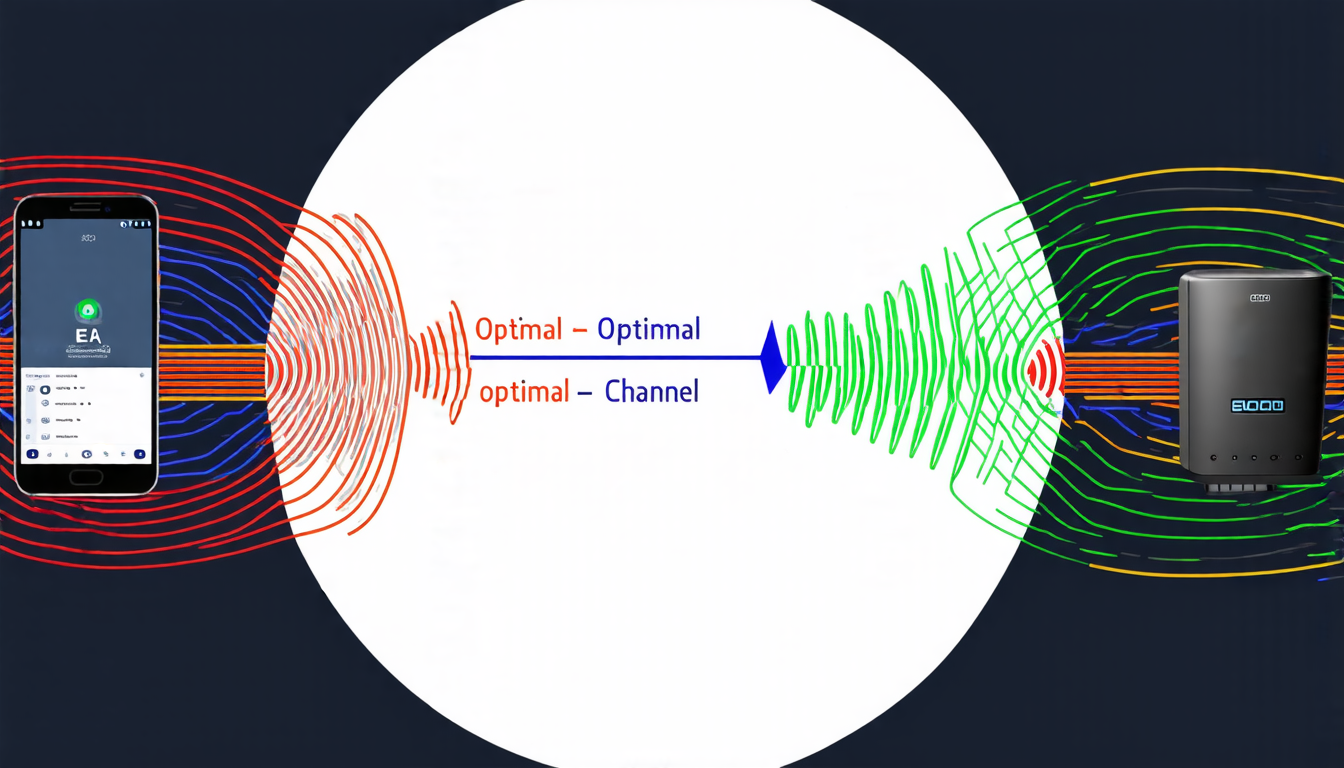
Wireless communication networks are becoming increasingly important in our daily lives, but they can be plagued by issues such as congestion and delays. A team of researchers has been working on a solution to this problem, developing an algorithm that can optimize channel selection and minimize queue length regret.
The algorithm is designed for use in wireless communication systems where multiple channels are available and the quality of each channel varies over time. In these situations, selecting the best channel to transmit data through can be a complex task, as it requires balancing the need to quickly adapt to changing channel conditions with the need to minimize delays.
The researchers’ algorithm uses a multi-armed bandit approach, which is commonly used in online learning and decision-making problems. The idea behind this approach is that an agent (in this case, the wireless communication system) must choose from multiple options (channels) without knowing which one will be most beneficial. Over time, the agent learns to adjust its choices based on feedback about their outcomes.
In this context, the algorithm uses a combination of exploration and exploitation strategies to select the best channel for data transmission. Exploration involves randomly trying out different channels to learn about their quality, while exploitation involves choosing the channel with the highest expected quality based on past experience.
The researchers tested their algorithm in simulations using a non-stationary Markovian process to model the wireless channel conditions. They found that it was able to quickly adapt to changing channel conditions and minimize queue length regret, even in situations where the channels were highly variable.
One of the key benefits of this algorithm is its ability to handle bursty traffic patterns, which are common in many wireless communication systems. Bursty traffic refers to periods of high traffic followed by periods of low traffic, and it can be challenging for traditional algorithms to adapt to these changes.
The researchers believe that their algorithm could have a significant impact on the performance of wireless communication networks, particularly in situations where multiple channels are available and channel conditions are highly variable. They plan to continue refining the algorithm and testing its performance in real-world scenarios.
Overall, this research demonstrates the potential of machine learning algorithms to improve the performance of wireless communication systems. By developing more sophisticated algorithms like this one, researchers may be able to overcome some of the challenges associated with these complex systems and create more efficient, reliable networks.
Cite this article: “Optimizing Channel Selection in Wireless Communication Networks using Machine Learning”, The Science Archive, 2025.
Wireless Communication, Channel Selection, Queue Length Regret, Multi-Armed Bandit, Online Learning, Decision-Making, Exploration, Exploitation, Markovian Process, Bursty Traffic Patterns





