
Thursday 13 March 2025
A team of researchers has made a significant breakthrough in understanding how language influences our perception of the world around us. By combining cutting-edge techniques from neuroscience, computer vision, and machine learning, they’ve uncovered new insights into the intricate relationships between brain regions, white matter tracts, and visual processing.
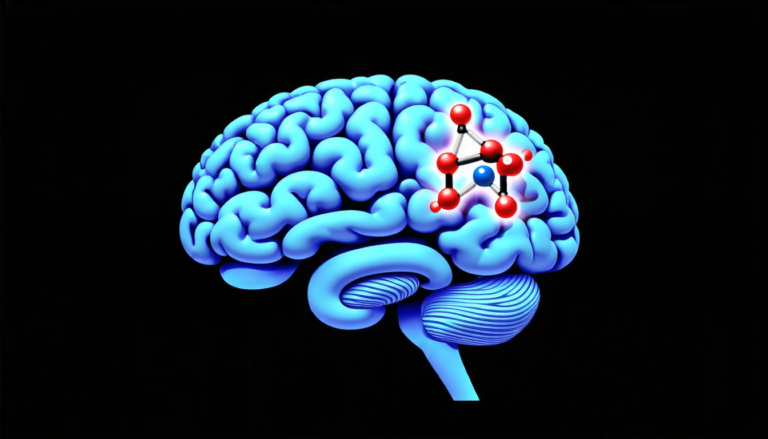
The study focused on the ventral occipitotemporal cortex (VOTC), a region responsible for object recognition and category-based processing. The researchers used functional magnetic resonance imaging (fMRI) to measure neural activity in this area while participants viewed pictures of various objects. They then applied representational similarity analysis (RSA) to compare these brain responses with the output from three different computer vision models: CLIP, ResNet-50, and MoCo.
The results showed that language plays a significant role in shaping our visual perception. Specifically, the sentence description effect – where participants’ neural activity is more similar to the CLIP model’s output when viewing objects described in sentences – was found to be lateralized to the left VOTC. This suggests that language processing is closely tied to object recognition and category-based processing.
The team also investigated the relationship between white matter tracts and visual processing. They discovered that integrity in the left VOTC-language tract, which connects the VOTC to the anterior gyrus (AG), was positively correlated with the sentence description effect. This finding implies that language processing is not only lateralized but also dependent on intact white matter tracts.
To further explore this relationship, the researchers used machine learning models to predict white matter integrity in these tracts based on individual differences in neural activity and lesion volume. They found that the CLIP model’s output was a strong predictor of white matter integrity in the left VOTC-AG tract, even after controlling for total lesion volume.
These findings have significant implications for our understanding of how language influences visual perception. The results suggest that language processing is not a separate module from vision but rather an integral part of the visual system. This challenge to traditional views on modularity has important implications for fields such as cognitive neuroscience, artificial intelligence, and education.
The study’s use of advanced techniques and data analysis also highlights the potential benefits of interdisciplinary collaboration. By combining insights from computer science, psychology, and neuroscience, researchers can develop more nuanced models of human cognition and perception.
Cite this article: “Language Shapes Visual Perception: A Study on the Ventral Occipitotemporal Cortex”, The Science Archive, 2025.
Language, Perception, Brain Regions, White Matter Tracts, Visual Processing, Object Recognition, Category-Based Processing, Fmri, Rsa, Clip