

Thursday 13 March 2025
Scientists have made a significant breakthrough in the field of nanofluidics, developing a tiny reactor that can analyze chemical reactions on a single nanoparticle level. This achievement has far-reaching implications for various fields, including medicine, environmental science, and materials engineering.
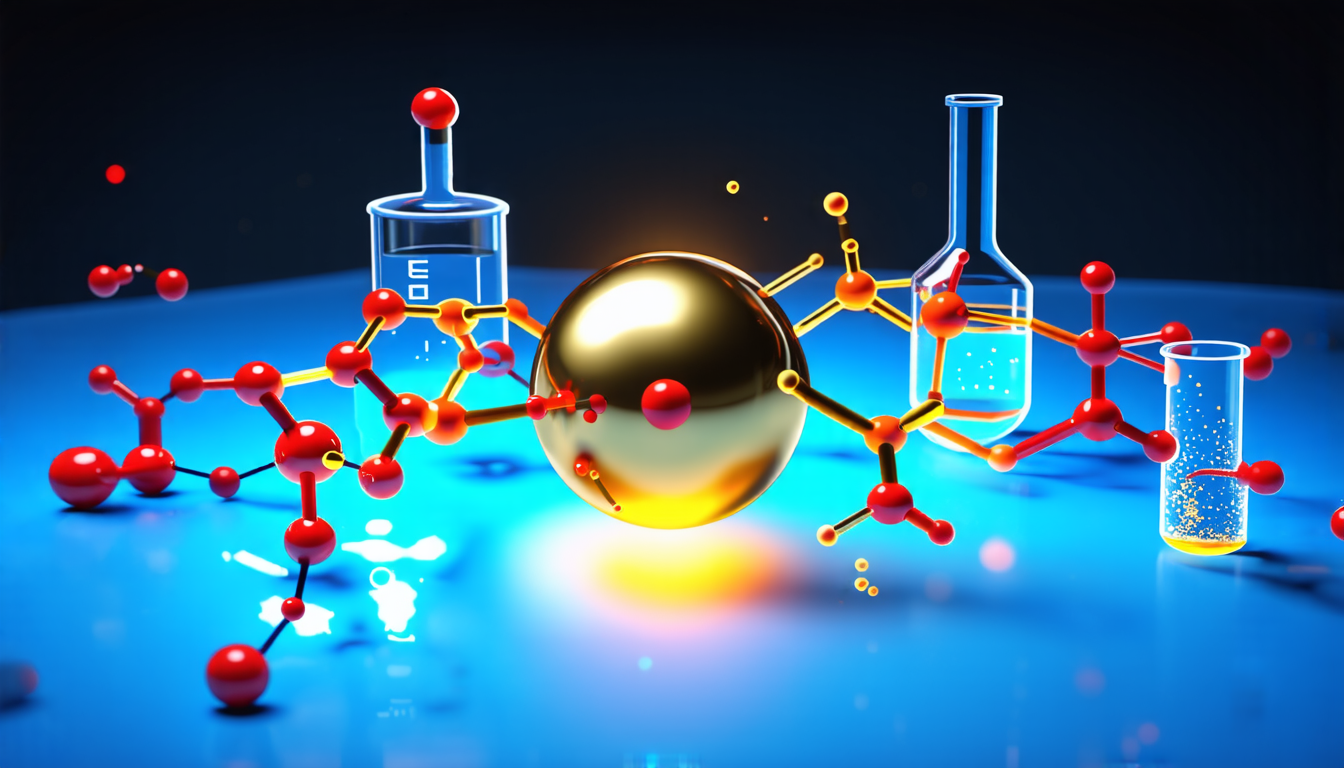
The researchers created a femtoliter-sized batch reactor, which is approximately 1/100th the size of a typical droplet of water. This miniature device consists of a nanochannel system that can trap individual nanoparticles and control the flow of reactants around them. The team used this setup to study a specific chemical reaction involving a gold nanoparticle, fluorescent dye, and sodium borohydride.
The experiment began by filling the reactor with a solution containing the fluorescent dye and sodium borohydride. Next, they added the gold nanoparticle to the mixture and monitored its behavior using a technique called nanofluidic scattering spectroscopy (NSS). This method allowed them to track changes in the chemical reaction in real-time, down to the level of individual nanoparticles.
The results were astonishing. The NSS data revealed that the gold nanoparticle played a crucial role in catalyzing the reaction, converting the sodium borohydride into hydrogen gas and reducing the fluorescent dye. The researchers observed that the reaction rate increased significantly when the gold nanoparticle was present, indicating its high catalytic activity.
One of the most impressive aspects of this study is its ability to analyze chemical reactions at the single-particle level. This allows scientists to better understand how individual nanoparticles behave in different environments and how they interact with each other. This information can be used to design more efficient and targeted catalysts, which could have significant implications for various industries.
The development of this femtoliter batch reactor also opens up new possibilities for studying complex chemical reactions that occur in confined spaces. For example, researchers could use this technology to analyze the behavior of nanoparticles in biological systems or to develop new methods for detecting environmental pollutants.
In addition to its scientific significance, this achievement highlights the incredible progress being made in the field of nanotechnology. The ability to manipulate and control individual particles at the nanoscale has far-reaching implications for many areas of science and engineering.
This breakthrough has the potential to transform our understanding of chemical reactions and catalysis, enabling scientists to design more efficient and targeted catalysts for various industries. It also represents a significant step forward in the development of nanofluidic technology, which could have numerous applications across various fields.
Cite this article: “Tiny Reactor Yields Big Insights: Scientists Achieve Breakthrough in Nanofluidics Research”, The Science Archive, 2025.
Nanofluidics, Nanoparticles, Chemical Reactions, Catalysts, Materials Engineering, Environmental Science, Medicine, Femtoliter, Batch Reactor, Nanotechnology





