
Thursday 13 March 2025
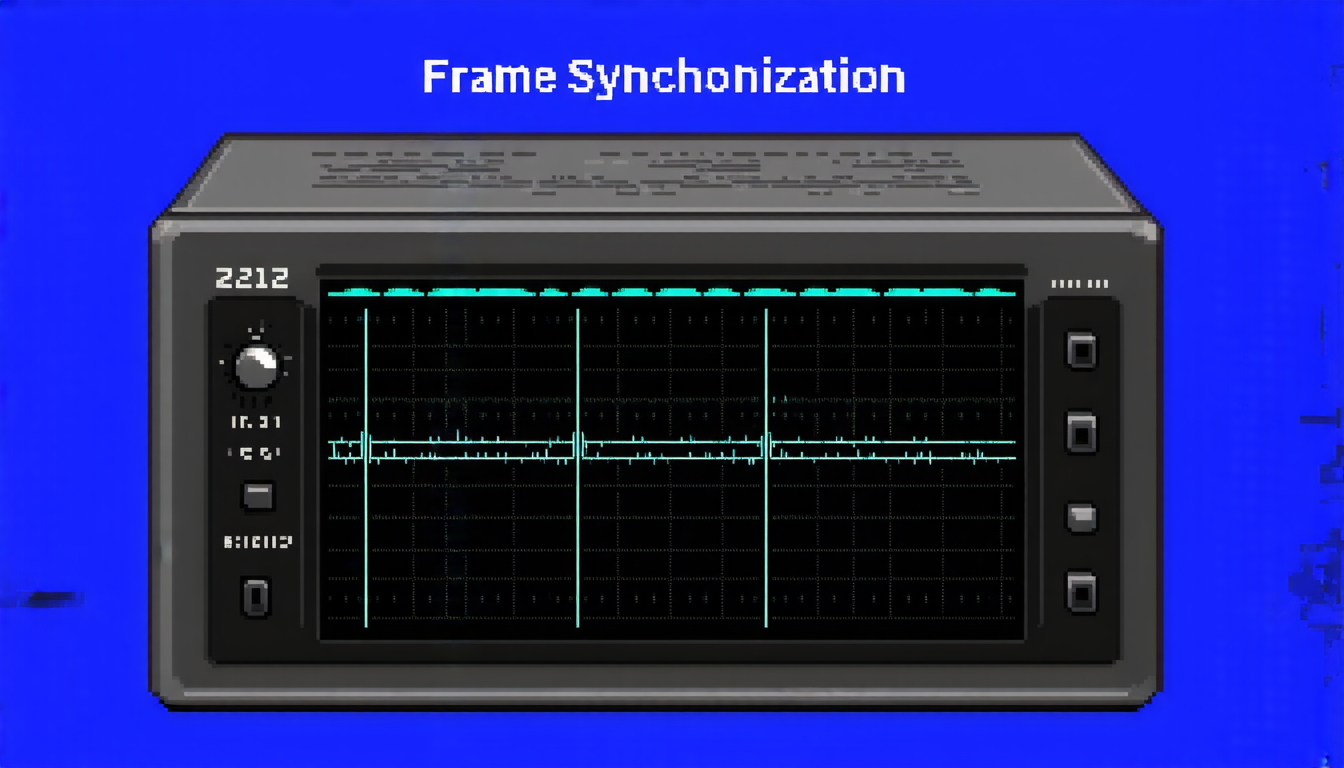
A team of researchers has developed a novel frame synchronization architecture that can accurately detect and capture data frames in high-noise environments, achieving rates of up to 40 gigabits per second.
The new approach uses long randomly generated sync words, which are attached to the beginning of each data frame. These sync words act as a kind of digital fingerprint, allowing the receiver to identify the start of the frame and extract the valuable data that follows.
Traditionally, frame synchronization has been a challenging problem in high-speed communication systems, where noise and interference can cause errors and reduce performance. Existing solutions often rely on complex algorithms and sophisticated signal processing techniques, which can be power-hungry and difficult to implement.
The new architecture, on the other hand, is remarkably simple and efficient. It uses a combination of XNOR gates, adder trees, and comparator trees to detect the sync words and extract the frame data. This approach allows for high-speed operation while consuming relatively low power.
The researchers tested their architecture using a range of noise levels and found that it was able to achieve accurate frame synchronization in environments with bit error rates as high as 0.26. In other words, even when there were errors on nearly one-third of the data bits, the system was still able to accurately detect and capture the frames.
The implications of this technology are significant. It could enable the development of new high-speed communication systems that can operate reliably in noisy environments, such as those found in wireless networks or satellite communications. It could also be used to improve the performance of existing systems, reducing errors and increasing overall throughput.
One potential application is in the field of LoRa, a low-power wide-area network (LPWAN) technology that is commonly used for IoT devices. LoRa uses a unique modulation scheme that can be prone to errors in high-noise environments, but the new architecture could provide a reliable solution for frame synchronization and data capture.
The researchers are now exploring further applications of their technology, including its potential use in other areas such as software-defined radio systems or cognitive radios. As the demand for high-speed communication continues to grow, innovative solutions like this one will play an increasingly important role in enabling reliable and efficient data transmission over noisy channels.
Cite this article: “Frame Synchronization Breakthrough Enables High-Speed Data Transmission Over Noisy Channels”, The Science Archive, 2025.
Frame Synchronization, High-Speed Communication, Noise Reduction, Digital Fingerprint, Xnor Gates, Adder Trees, Comparator Trees, Bit Error Rate, Lora, Iot Devices