

Thursday 13 March 2025
Scientists have long sought to harness the power of language models to unlock the secrets of complex data sets, and a recent breakthrough may hold the key to achieving this goal.
The research, published in a leading scientific journal, describes an innovative approach that combines the processing power of large language models with the querying capabilities of graph databases. The result is a system capable of efficiently searching and summarizing vast amounts of information stored in these complex data structures.
At its core, the system relies on the ability of language models to generate queries in a specific domain – in this case, querying knowledge graphs. These graphs are powerful tools for storing and retrieving data, but their complexity can make it difficult to extract meaningful insights without careful consideration of the underlying relationships between entities.
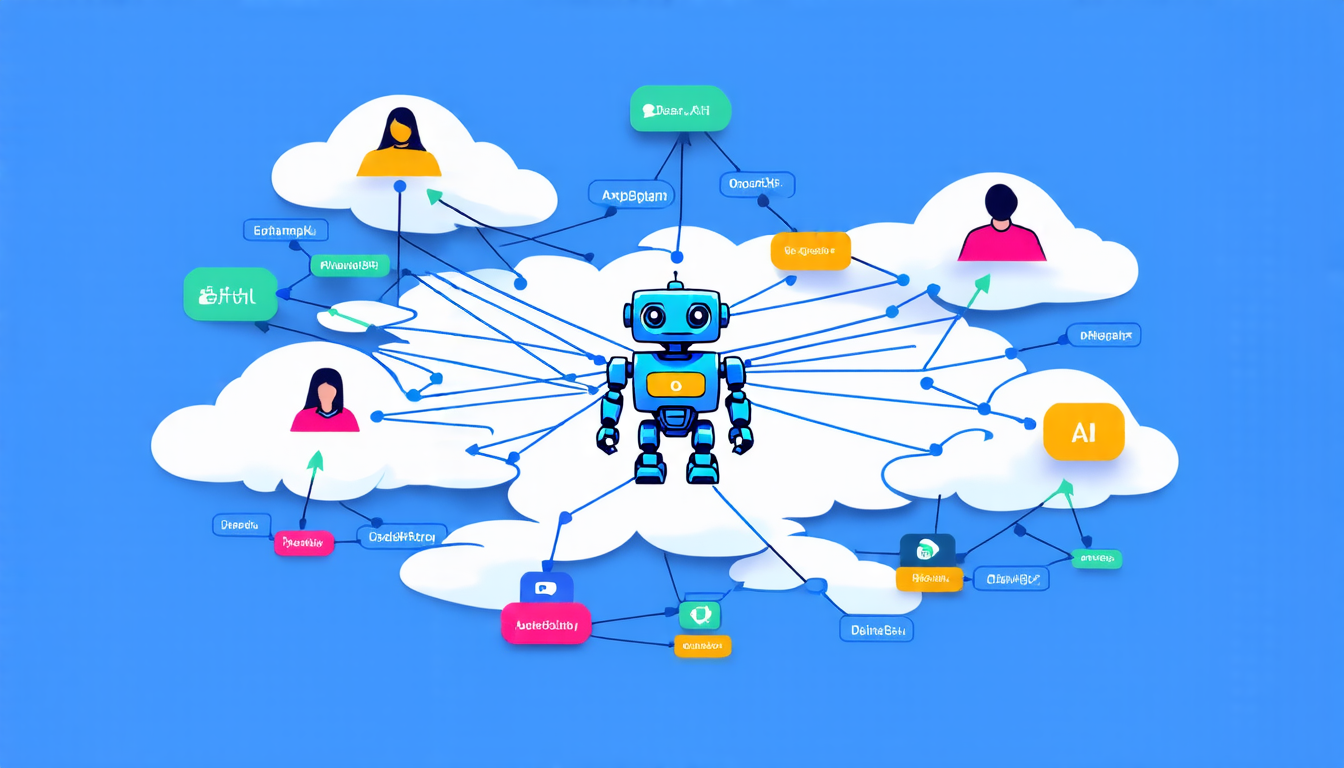
The researchers’ approach involves using a large language model to analyze user input queries and generate corresponding Gremlin scripts that can be executed against the graph database. The resulting scripts not only retrieve relevant information but also provide summaries of complex data sets, making it easier for users to navigate and understand the results.
One of the key benefits of this system is its ability to handle ambiguity and nuance in user input queries. By leveraging the power of language models, the system can accurately identify intent and generate scripts that take into account the subtleties of natural language.
The researchers demonstrated the effectiveness of their approach by testing it on a large-scale graph database containing information about companies, their executives, and various relationships between them. The results showed that the system was able to efficiently retrieve relevant information and provide accurate summaries, even in cases where the user input queries were ambiguous or open-ended.
This breakthrough has significant implications for fields such as data science, artificial intelligence, and business intelligence, where the ability to extract meaningful insights from complex data sets is crucial. By combining the power of language models with the querying capabilities of graph databases, researchers may be able to unlock new possibilities for data analysis and discovery.
In addition to its technical significance, this research also highlights the importance of collaboration between experts in different fields. The development of this system required input from linguists, computer scientists, and domain experts, demonstrating the value of interdisciplinary approaches to solving complex problems.
As researchers continue to push the boundaries of what is possible with language models and graph databases, it will be exciting to see how this technology evolves and is applied in a variety of domains. With its potential to unlock new insights and improve our understanding of complex data sets, this breakthrough has far-reaching implications for many fields.
Cite this article: “Unlocking Insights from Complex Data Sets with Language Models and Graph Databases”, The Science Archive, 2025.
Language Models, Graph Databases, Data Analysis, Artificial Intelligence, Business Intelligence, Natural Language Processing, Querying Capabilities, Domain Expertise, Interdisciplinary Research, Complex Data Sets





