

Thursday 13 March 2025
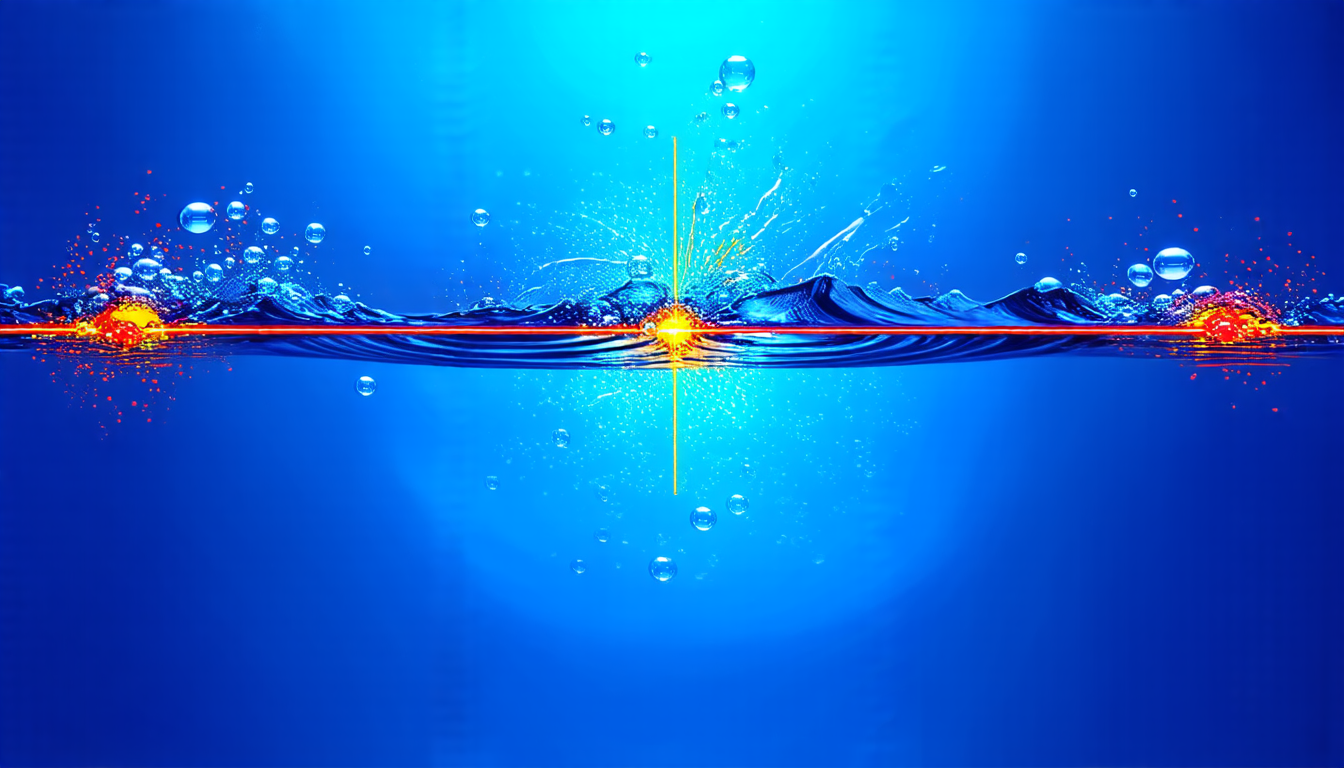
A new study sheds light on the intricacies of laser-induced bubble dynamics, revealing a complex interplay between inertial confinement and energy deposition during ultrashort laser pulse interactions with water.
When a high-powered laser pulse is directed at water, it can create a cavitation bubble that expands rapidly before collapsing violently. This phenomenon has been studied extensively in various fields, including biomedical optics and materials processing. However, the underlying physical mechanisms governing these events are still not fully understood.
The researchers behind this study employed advanced numerical simulations to model the behavior of laser-induced bubbles in water. They found that the degree of inertial confinement, which is the extent to which the bubble’s expansion is slowed by its own inertia, plays a crucial role in determining the final size and shape of the bubble.
When the pulse duration is longer than the time it takes for the bubble to expand, inertial confinement dominates, leading to smaller, more spherical bubbles. In contrast, when the pulse duration is shorter, energy deposition becomes more important, resulting in larger, more irregularly shaped bubbles.
The simulations also revealed that the rate of energy deposition during the laser pulse influences the final state of the bubble. Faster energy deposition leads to greater confinement and smaller bubble sizes, while slower energy deposition results in less confinement and larger bubble sizes.
These findings have significant implications for various applications, including biomedical optics, where precise control over bubble dynamics is crucial for delivering therapeutic agents or imaging tissues. The study’s insights could also inform the development of new materials processing techniques that rely on laser-induced bubble formation.
The researchers’ advanced modeling approach allowed them to capture the intricate details of bubble dynamics at the nanosecond timescale, a feat previously difficult to achieve with experimental methods alone. This work demonstrates the power of numerical simulations in advancing our understanding of complex physical phenomena and their applications.
As researchers continue to push the boundaries of laser-induced bubble dynamics, this study provides a valuable foundation for exploring new frontiers in biomedical optics and materials processing. By shedding light on the intricate interplay between inertial confinement and energy deposition, scientists can develop more precise control over these events, paving the way for innovative technologies with far-reaching potential.
Cite this article: “Unraveling the Dynamics of Laser-Induced Bubbles in Water”, The Science Archive, 2025.
Laser-Induced Bubble Dynamics, Inertial Confinement, Energy Deposition, Ultrashort Laser Pulses, Water, Biomedical Optics, Materials Processing, Numerical Simulations, Cavitation Bubbles, Nanosecond Timescale





