

Friday 14 March 2025
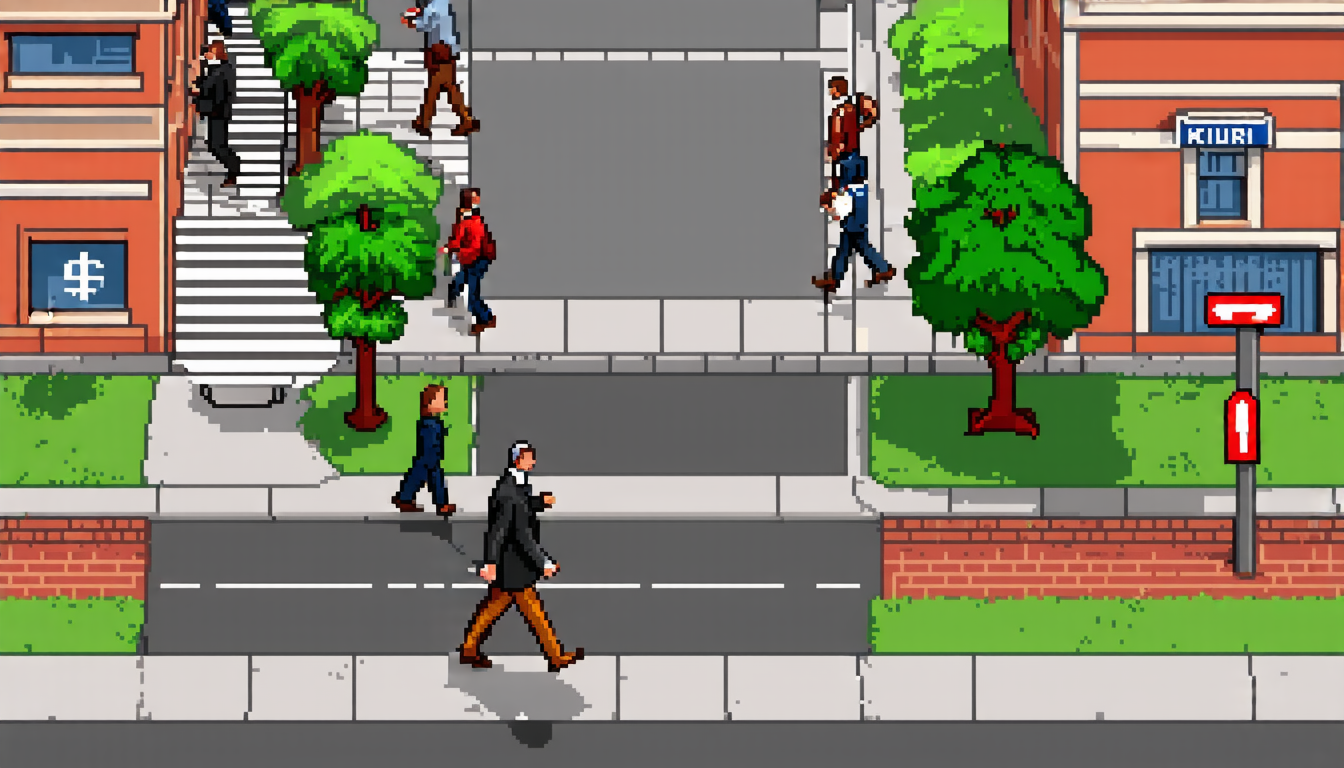
A new approach to predicting pedestrian trajectories has been developed, one that combines social interactions and environmental context to improve accuracy. The researchers behind this work have designed a model that integrates scene features with graph-based models, allowing it to better understand how pedestrians move in crowded spaces.
The key innovation here is the use of semantic segmentation maps, which provide detailed information about the environment, such as obstacles, walkways, and other important features. These maps are generated using advanced image processing techniques and are then integrated into the model’s predictions.
This approach has several advantages over previous methods. For one, it allows the model to take into account a wider range of factors that influence pedestrian movement, including social interactions and environmental context. This is particularly important in crowded areas, where pedestrians need to be able to anticipate and respond to each other’s movements.
The researchers have tested their model on several public datasets, including the ETH and UCY datasets, which contain footage of pedestrians moving through crowded spaces. They found that their model was able to predict pedestrian trajectories with high accuracy, outperforming previous methods in many cases.
One of the most impressive aspects of this work is its ability to handle complex scenarios, such as intersections and narrow pathways. In these situations, pedestrians need to be able to adjust their movements quickly and accurately in response to changing circumstances, and the model’s use of semantic segmentation maps helps it to do just that.
The potential applications of this technology are vast. For example, self-driving cars could use this type of model to better anticipate and respond to pedestrian movements, reducing the risk of accidents. Additionally, urban planners could use this data to design more efficient and safe public spaces.
Overall, this work represents a significant step forward in the field of pedestrian trajectory prediction, and its potential applications are likely to be far-reaching. By combining social interactions and environmental context, the model is able to provide more accurate and robust predictions than previous methods, making it an important tool for a wide range of applications.
Cite this article: “Predicting Pedestrian Trajectories with Social Interactions and Environmental Context”, The Science Archive, 2025.
Pedestrian Trajectory Prediction, Social Interactions, Environmental Context, Graph-Based Models, Semantic Segmentation Maps, Image Processing, Pedestrian Movement, Crowd Simulation, Self-Driving Cars, Urban Planning





