

Friday 14 March 2025
The quest for a more efficient way to develop and maintain large complex systems has long been a challenge for scientists and engineers. These systems, such as computer networks or physical equipment, require detailed documentation and maintenance to function properly. However, creating and updating this documentation can be a time-consuming and laborious process.
Recently, researchers have turned to artificial intelligence (AI) to help streamline this process. They have developed a system called Retrieval-Augmented Generation (RAG), which uses AI to generate answers to questions about the system based on its documentation.
The RAG system consists of several components: an external knowledge source, an embedding model, a retriever, and a language model. The external knowledge source is where the system’s documentation is stored, such as manuals or technical reports. The embedding model converts the query and local documents into vectors that can be understood by the AI.
The retriever searches through the documentation to find the most relevant information to answer the question. Finally, the language model generates a response based on the retrieved information and the user’s query.
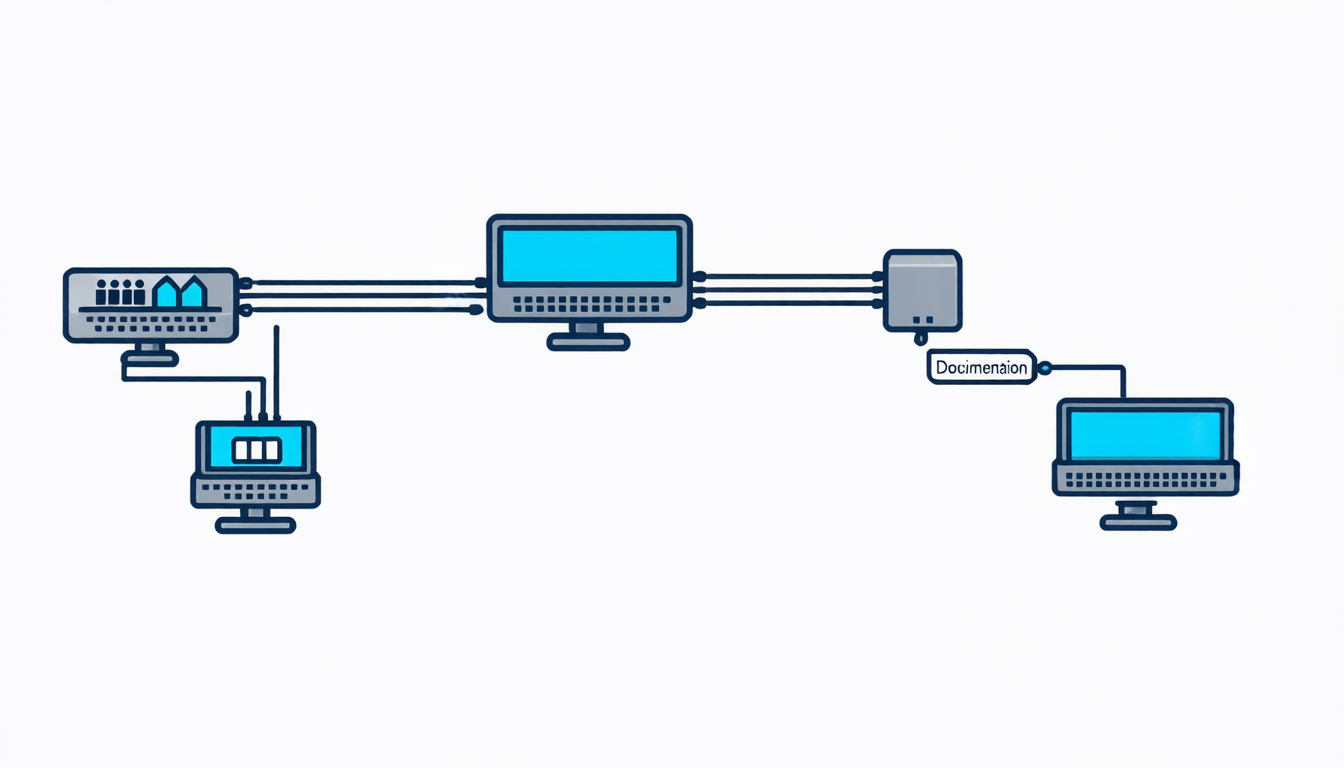
To test the RAG system, researchers used it to generate answers to questions about a computer network segment (CNS). They found that the system was able to provide accurate answers to many of the questions, but sometimes struggled with incomplete or unclear documentation.
The team then refined their approach by refining the documentation and adjusting the prompt given to the language model. This improved the accuracy of the answers significantly.
The RAG system has several potential benefits for large complex systems. For example, it can help developers create consistent and up-to-date documentation, making it easier to involve new team members or maintain the system over time. It can also assist administrators by providing real-time information about system status, problems, and recommended actions.
In addition, the RAG system can be used to upgrade or modify systems in the future, as it provides a direct feedback loop between the system’s development and its documentation. This could reduce the long-term burden of system maintenance and enhance overall reliability.
The researchers believe that their approach has the potential to become a standard tool for large complex system development and maintenance. With further development, RAG could help streamline this process and make it easier for scientists and engineers to create and maintain these systems.
Cite this article: “Streamlining Large Complex System Development and Maintenance with Artificial Intelligence”, The Science Archive, 2025.
Artificial Intelligence, Retrieval-Augmented Generation, Large Complex Systems, Documentation, Maintenance, Computer Networks, Embedding Model, Language Model, System Development, System Maintenance





