

Friday 14 March 2025
For decades, scientists have struggled to understand how the size of the grains in metals affects their strength and ability to withstand cracks. It’s a problem that has puzzled researchers in materials science, who want to create stronger, more durable materials for everything from aircraft to medical implants.
The challenge lies in the fact that different grains can behave differently under stress, with some being weaker than others. This means that understanding how grains interact with each other is crucial for designing materials that are both strong and resistant to cracking.
Recently, a team of researchers has made significant progress in this area by developing a new computer model that simulates the behavior of metals at the grain level. The model combines two previously separate approaches: phase-field fracture mechanics, which describes how cracks propagate through materials, and crystal plasticity, which explains how grains deform under stress.
The result is a powerful tool that can predict how different grain sizes will affect the strength and toughness of a metal. This information is crucial for designing new materials with specific properties.
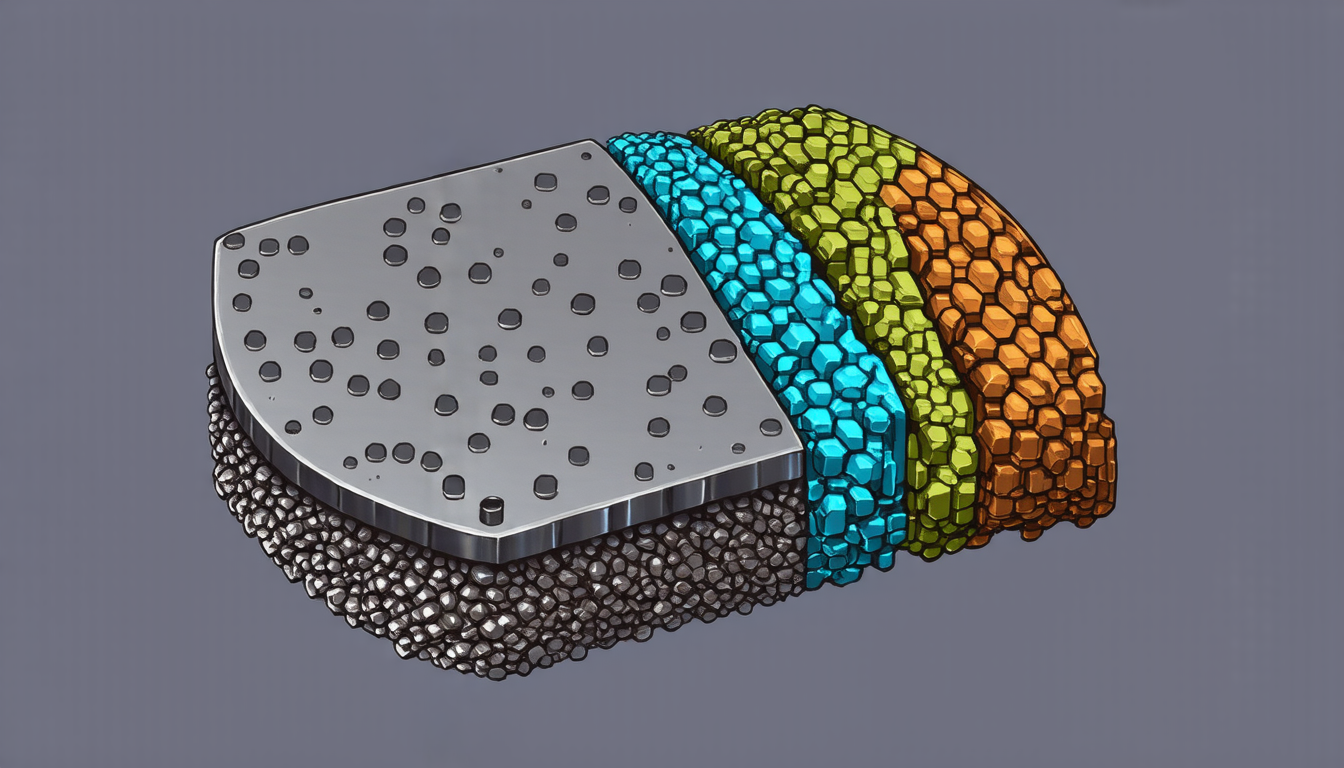
One of the key findings from the study is that there are two mechanisms at play when it comes to grain size effects on fracture toughness. The first is related to the nucleation of failure, where smaller grains can lead to a higher failure stress due to the increased likelihood of defects and impurities. This is in line with the classic Hall-Petch relationship, which suggests that smaller grains are stronger.
However, there’s another mechanism at play: the resistance to crack propagation. Here, larger grains can be beneficial because they provide more obstacles for cracks to propagate through. This leads to an inverse Hall-Petch effect, where larger grains result in higher toughness.
The researchers used their model to simulate different grain sizes and predict how they would affect the fracture toughness of a metal. They found that the competition between these two mechanisms leads to non-monotonic behavior, with smaller grains initially providing benefits but ultimately being outperformed by larger grains at certain scales.
This work has significant implications for materials science and engineering. By better understanding how grain size affects material properties, researchers can design new materials with specific strengths and toughnesses. This could lead to the creation of stronger, lighter aircraft or more durable medical implants.
The study also highlights the importance of considering multiple mechanisms when designing materials. Simply relying on one approach, such as the Hall-Petch relationship, is not enough. Instead, researchers need to take a holistic view that incorporates both nucleation and propagation effects.
Cite this article: “Unlocking the Secrets of Grain Size Effects on Metal Strength and Toughness”, The Science Archive, 2025.
Materials Science, Grain Size, Fracture Toughness, Crystal Plasticity, Phase-Field Fracture Mechanics, Hall-Petch Relationship, Materials Engineering, Mechanical Properties, Metals, Computer Modeling.





