

Friday 14 March 2025
The article presents a novel approach to cross-lingual aspect sentiment triplet extraction, a task that has been notoriously challenging in natural language processing. The authors propose a framework that leverages code-switching to bridge the gap between bilingual training data and monolingual test inputs.
The problem of cross-lingual aspect sentiment triplet extraction arises when attempting to apply machine learning models trained on one language to another language with limited annotated data. This is due to the differences in linguistic structures, vocabulary, and cultural nuances between languages. To address this issue, the authors introduce a code-switching framework that enables the model to recognize and translate terms from one language to another while maintaining their semantic meaning.
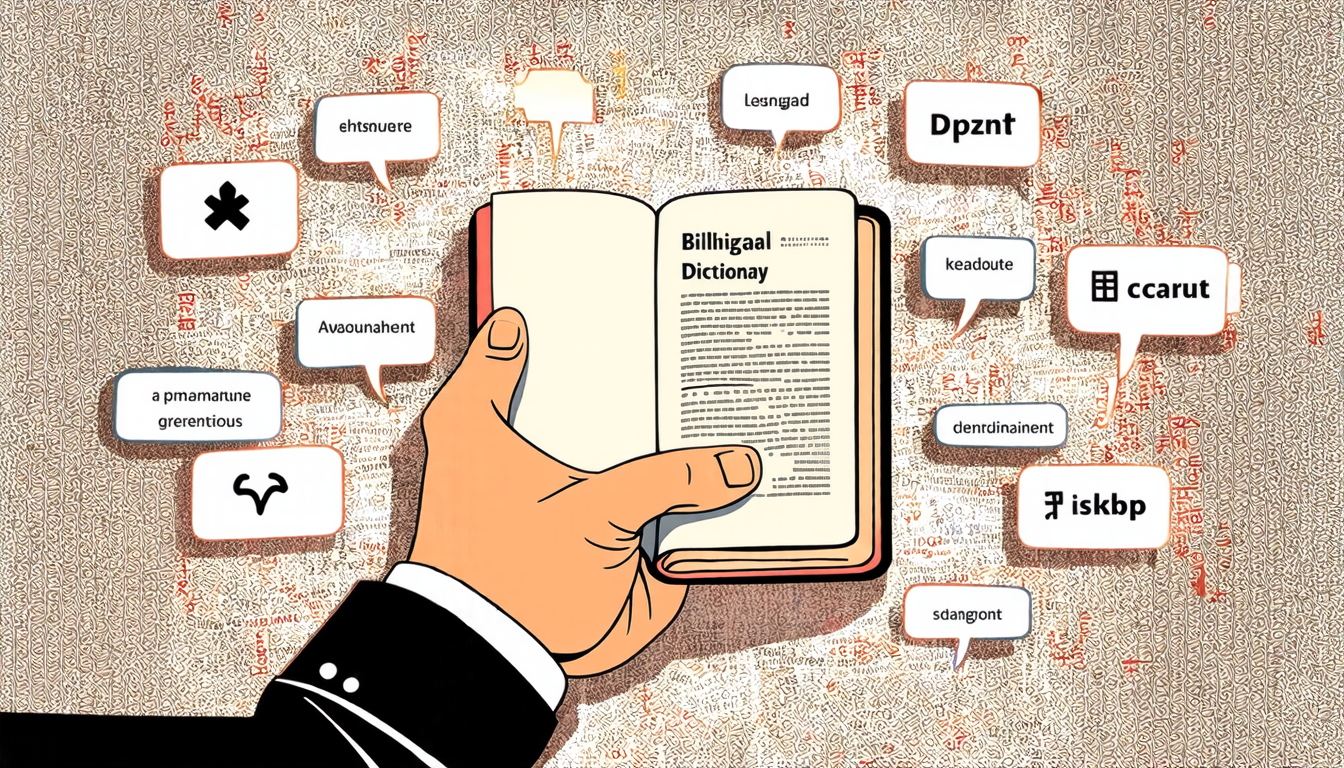
The proposed framework consists of two main components: a bilingual dictionary and a test-time augmentation mechanism. The bilingual dictionary is pre-trained on a large corpus of parallel texts in both languages, allowing the model to learn the relationships between words and phrases across languages. During training, the model is presented with code-switched input sentences, which are generated by switching words or phrases from one language to another.
In the testing phase, the model is given a monolingual input sentence and must predict the corresponding aspect sentiment triplet. To facilitate this process, the authors introduce a test-time augmentation mechanism that generates multiple augmented inputs for each original input sentence. These augmented inputs are created by code-switching words or phrases from the original input sentence to the target language.
The results of the experiments demonstrate that the proposed framework significantly outperforms state-of-the-art methods in cross-lingual aspect sentiment triplet extraction. The model achieves an average improvement of 3.7% in weighted F1-score across four different languages, including English, Spanish, French, and Chinese.
Furthermore, the authors show that even smaller generative models fine-tuned with their proposed framework can surpass larger pre-trained language models like ChatGPT and GPT-4 by 14.2% and 5.0%, respectively. This suggests that the code-switching approach can be effective in leveraging limited annotated data to improve model performance.
The article presents a novel and innovative solution to the challenging problem of cross-lingual aspect sentiment triplet extraction. The proposed framework has the potential to enable more accurate and efficient natural language processing applications across languages, particularly for languages with limited annotated data.
Cite this article: “Code-Switching Framework for Cross-Lingual Aspect Sentiment Triplet Extraction”, The Science Archive, 2025.
Cross-Lingual, Aspect Sentiment, Triplet Extraction, Code-Switching, Bilingual Dictionary, Test-Time Augmentation, Natural Language Processing, Machine Learning, Parallel Texts, Linguistic Structures, Vocabulary, Cultural Nuances.





