

Friday 14 March 2025
Scientists have long been fascinated by the phenomenon of synchronization, where multiple oscillating systems work in harmony with one another. This can be seen in everything from fireflies flashing their lights to neurons firing in our brains. Recently, researchers have made a major breakthrough in understanding how to achieve synchronization on a larger scale, using a technique called non-hermitian global synchronization.
In traditional synchronization methods, the systems being synchronized must be identical and connected in a specific way. However, this approach has its limitations. For instance, it can be difficult to create large-scale systems where every component is identical, and the connections between them are uniform. Non-hermitian global synchronization offers a solution to these problems by allowing for the synchronization of different types of oscillators, even if they’re not identical.
The key to non-hermitian global synchronization lies in the use of non-reciprocal couplings, which allow energy to flow in only one direction between the oscillators. This means that each oscillator can be tailored to its specific needs and characteristics, rather than being forced into a uniform mold. The researchers used a combination of theoretical modeling and experimental testing to demonstrate the effectiveness of this approach.
One of the most promising applications of non-hermitian global synchronization is in the field of photonics, where it could be used to create complex networks of optical fibers that can transmit data with unprecedented speed and efficiency. This has significant implications for fields such as telecommunications and data storage.
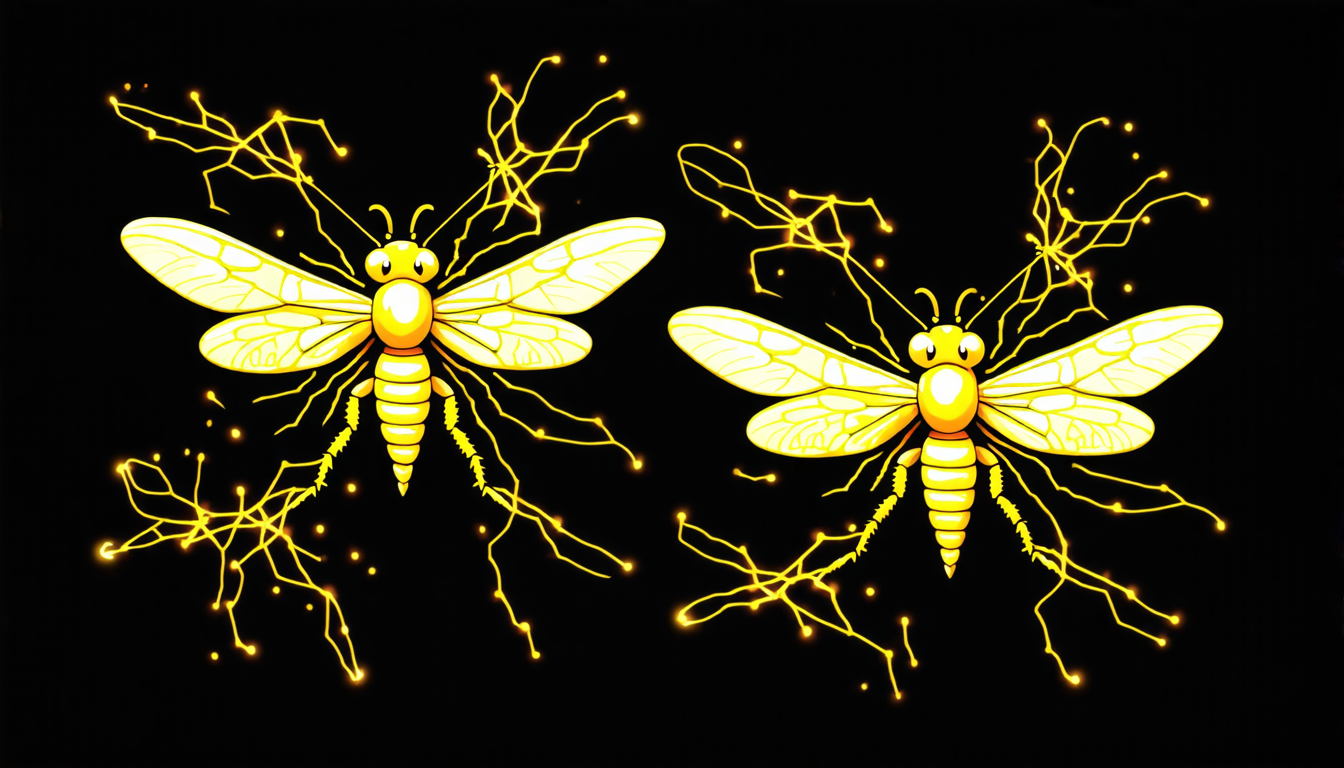
The researchers also explored the potential uses of non-hermitian global synchronization in other areas, including electrical engineering and biology. For example, they demonstrated how it could be used to create more efficient power grids by synchronizing the oscillations of different generators and motors. They also showed how it could be applied to biological systems, such as the synchronized flashing of fireflies, to better understand their behavior.
The study’s findings have significant implications for our understanding of complex systems and how they interact with one another. By allowing for the synchronization of diverse components, non-hermitian global synchronization opens up new possibilities for designing and controlling complex networks and systems.
As researchers continue to explore the potential applications of this technique, it’s clear that we’re on the verge of a major breakthrough in our understanding of how complex systems work together in harmony.
Cite this article: “Synchronizing Complexity: A Breakthrough in Non-Hermitian Global Synchronization”, The Science Archive, 2025.
Synchronization, Non-Hermitian, Global Synchronization, Oscillators, Photonics, Telecommunications, Data Storage, Electrical Engineering, Biology, Complex Systems.
Reference: Weixuan Zhang, Fengxiao Di, Xiangdong Zhang, “Non-Hermitian global synchronization” (2025).





