

Friday 14 March 2025
Researchers have made a significant breakthrough in the field of quantum illumination, a protocol used to detect low-reflectivity targets using entangled photons. By extending the two-mode qubit states to three-mode qubits, scientists have discovered that the performance is enhanced by entanglement between signal and idler qubits.
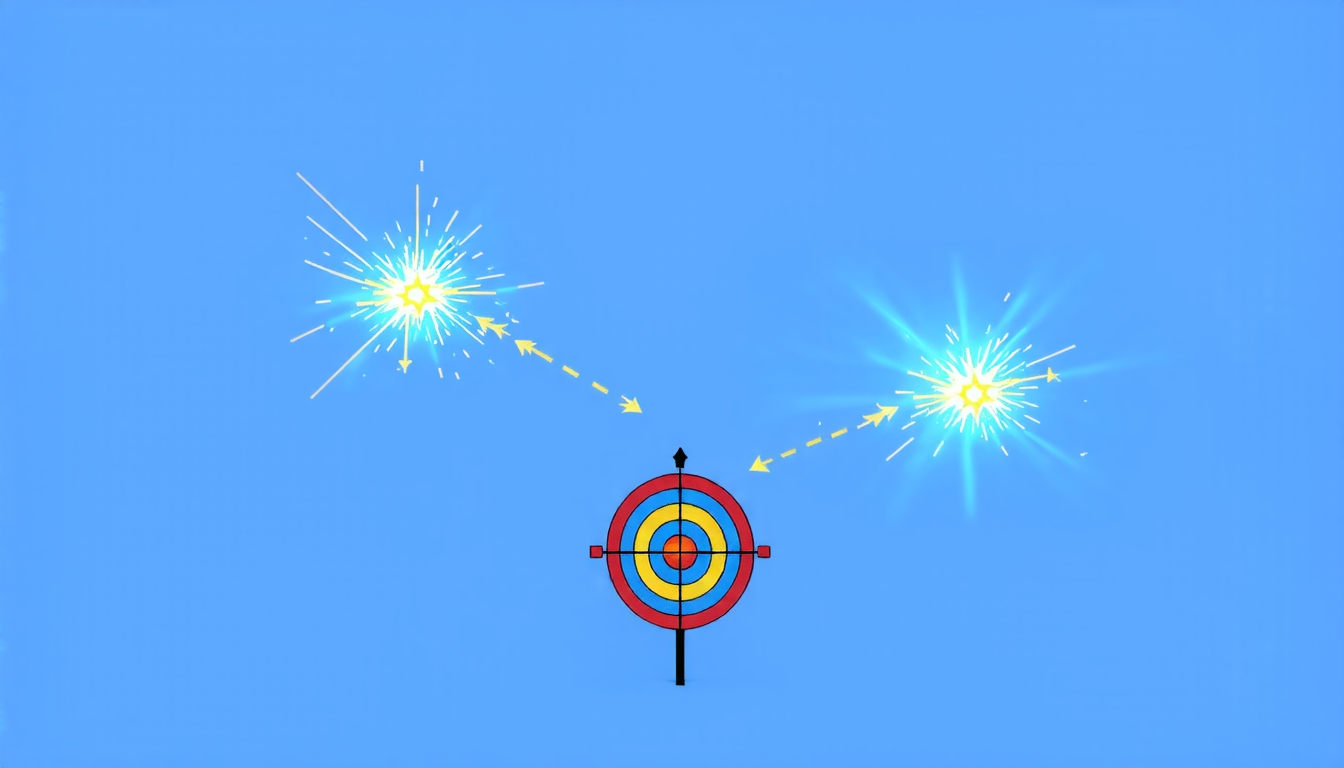
Quantum illumination is a technique that uses entangled photons to detect objects in the presence of background noise. The protocol works by creating a pair of entangled photons, known as signal and idler photons, which are then separated and sent towards the target. If the target reflects one or both of the photons, it can be detected, allowing for the identification of the object.
The researchers used three-mode qubits, which consist of two signal photons and one idler photon, to test the performance of quantum illumination. They found that by entangling the signal photons with each other, they were able to significantly improve the detection probability compared to using unentangled photons.
The team also explored the use of different probe states, including GHZ states, W states, bipartite entangled states, and product states. They discovered that the optimal probe state depends on the reflectivity of the target and the prior probability of its presence.
One of the key findings is that the performance of quantum illumination is sensitive to the order in which the measurements are made. The researchers found that if the measurements are made in a specific order, the detection probability can be significantly improved.
The results have important implications for various applications, including radar technology and optical communication systems. In these fields, the ability to detect low-reflectivity targets or signals is crucial for accurate operation.
The study also highlights the importance of understanding the underlying physics of quantum illumination. By gaining a deeper understanding of the protocol, scientists can develop new methods for improving its performance and expanding its applications.
Overall, this research demonstrates the potential of three-mode qubits in enhancing the performance of quantum illumination. The results have significant implications for various fields and highlight the need for further research into the underlying physics of the protocol.
Cite this article: “Enhancing Quantum Illumination with Three-Mode Qubits”, The Science Archive, 2025.
Quantum Illumination, Entangled Photons, Three-Mode Qubits, Signal Photons, Idler Photons, Detection Probability, Probe States, Radar Technology, Optical Communication Systems, Quantum Physics





