

Friday 14 March 2025
As our world becomes increasingly data-driven, managing and analyzing vast amounts of information has become a major challenge. To tackle this issue, researchers have been working on developing new types of databases that can efficiently store and query large-scale graph data.
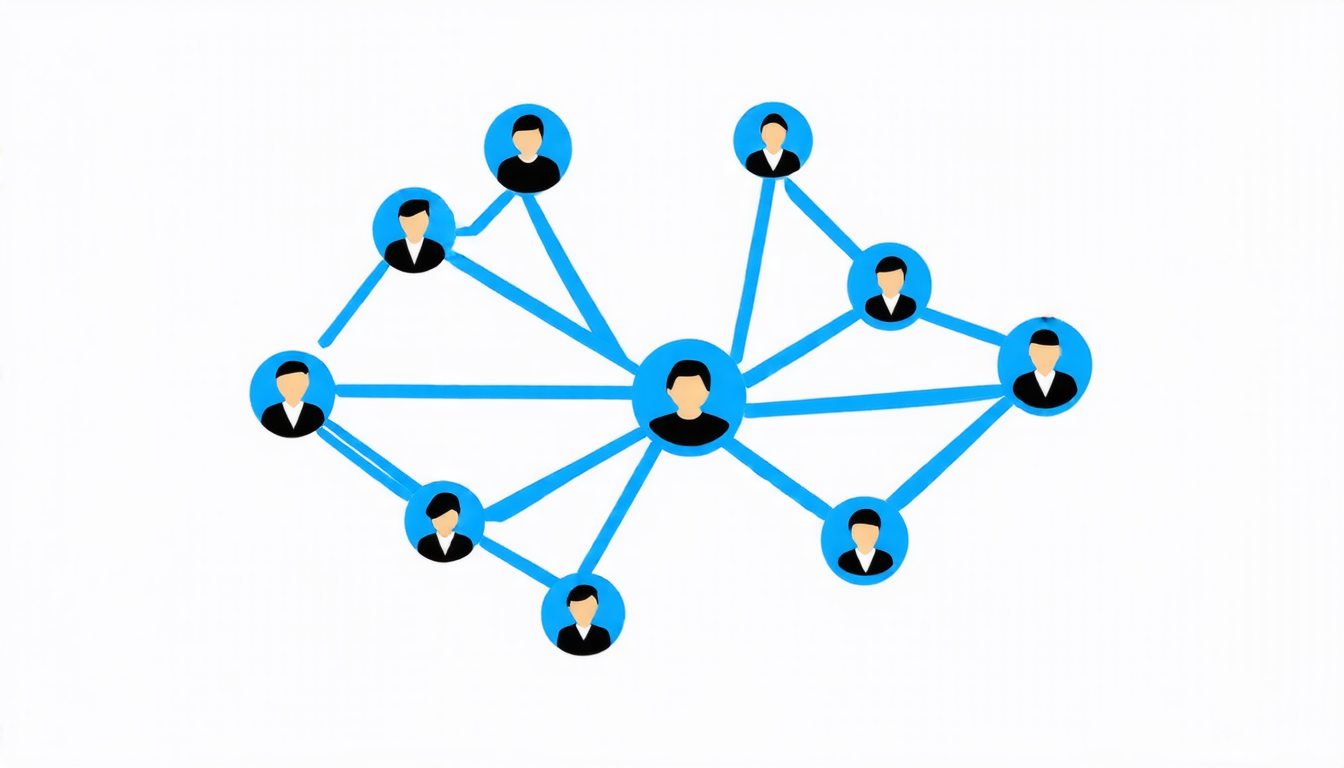
Graph databases are designed to handle complex relationships between entities, such as social networks or molecular structures. They allow us to capture the intricate connections between different pieces of data, making it easier to identify patterns and trends. However, traditional graph databases have limitations when dealing with massive amounts of data, which can lead to performance issues and scalability problems.
To overcome these challenges, scientists have been exploring the integration of neural networks with graph databases, giving birth to a new field known as Neural Graph Databases (NGDBs). NGDBs aim to combine the strengths of both worlds: the ability of neural networks to learn complex patterns from large datasets and the power of graph databases to efficiently store and query relationships.
One of the key innovations in NGDBs is the use of graph neural networks, which are designed specifically for processing graph data. These networks can learn representations of nodes and edges that capture their structural and semantic properties, allowing for more accurate predictions and recommendations.
Another major advantage of NGDBs is their ability to handle incomplete or noisy data, a common issue in real-world datasets. By leveraging the strengths of neural networks, NGDBs can impute missing values and correct errors, ensuring that the analysis is based on reliable and consistent information.
The development of NGDBs has far-reaching implications for various fields, including social network analysis, recommender systems, and natural language processing. For instance, researchers have used NGDBs to analyze large-scale social networks and identify influential individuals or communities.
In addition, NGDBs have been applied to recommendation systems, allowing for more personalized and accurate suggestions based on user behavior and preferences. This has significant potential benefits for industries such as e-commerce, entertainment, and healthcare.
The integration of neural networks with graph databases also opens up new possibilities for natural language processing, enabling the analysis of complex relationships between words, concepts, and entities in text data.
While NGDBs hold tremendous promise, there are still several challenges to overcome before they can be widely adopted. For instance, scaling up these systems to handle massive datasets while maintaining performance is a significant challenge.
Despite these hurdles, researchers continue to push the boundaries of what is possible with NGDBs.
Cite this article: “Neural Graph Databases: A New Frontier in Data Analysis”, The Science Archive, 2025.
Neural Networks, Graph Databases, Big Data, Data Analysis, Scalability, Natural Language Processing, Recommendation Systems, Social Network Analysis, Machine Learning, Data Mining





