

Friday 14 March 2025
A team of researchers has made a significant breakthrough in the field of computer vision, developing a new framework for reconstructing 3D scenes from multiple images. The approach, known as Dense-SfM (Structure from Motion), uses a combination of machine learning and computer graphics techniques to create highly accurate and detailed 3D models.
The problem of reconstructing 3D scenes from 2D images is a challenging one, as it requires identifying corresponding points across multiple images and then using those points to calculate the camera positions and movements. Traditional methods for solving this problem, such as structure from motion (SfM), rely on sparse matching between images, which can lead to incomplete and inaccurate reconstructions.
Dense-SfM addresses these limitations by using a deep learning-based approach to detect and match dense features across multiple images. This allows the framework to produce highly accurate and detailed 3D models, even in scenes with complex geometry and texture.
One of the key innovations behind Dense-SfM is its use of a novel matching module that combines transformer and Gaussian Process architectures. This module enables the framework to learn long-range dependencies between features across images, leading to more accurate and robust matches.
Another important aspect of Dense-SfM is its ability to handle scenes with varying levels of texture and geometry complexity. The framework can adapt to these challenges by using a hierarchical approach to feature extraction and matching, which allows it to focus on the most informative regions of each image.
The researchers tested Dense-SfM on several challenging datasets, including the ETH3D and Texture-Poor SfM datasets. The results showed significant improvements over state-of-the-art methods in terms of accuracy and completeness, demonstrating the effectiveness of the new framework.
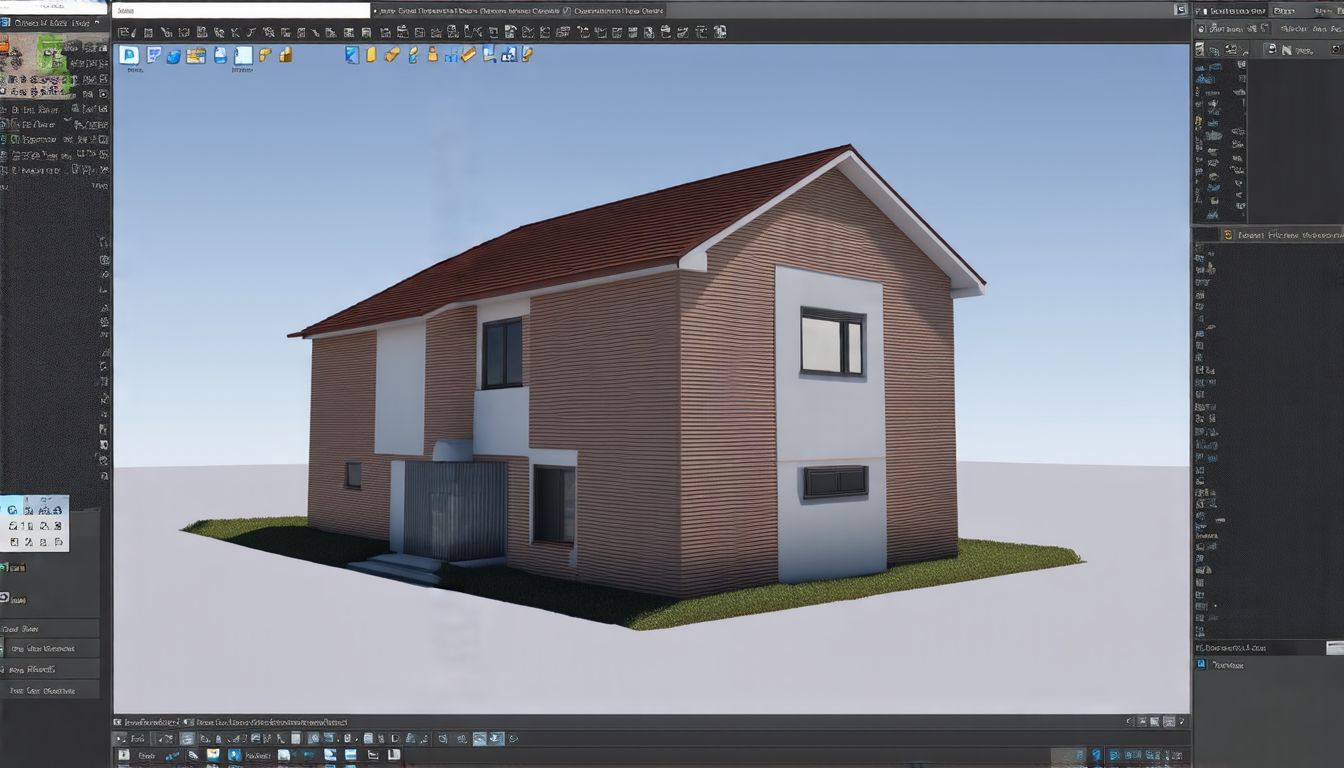
In addition to its technical advancements, Dense-SfM also has practical applications in fields such as computer-aided design (CAD), virtual reality (VR), and robotics. For example, the framework could be used to create detailed 3D models of complex structures or environments, which could then be used for simulation, visualization, or even autonomous navigation.
Overall, Dense-SfM represents a major step forward in the field of computer vision, enabling the creation of highly accurate and detailed 3D scenes from multiple images. Its innovative approach and impressive results make it an exciting development that has the potential to transform various fields and industries.
Cite this article: “Groundbreaking Computer Vision Framework Enables Accurate 3D Scene Reconstruction”, The Science Archive, 2025.
Computer Vision, 3D Reconstruction, Structure From Motion, Dense-Sfm, Machine Learning, Computer Graphics, Deep Learning, Transformer Architecture, Gaussian Process, Hierarchical Feature Extraction.
Reference: JongMin Lee, Sungjoo Yoo, “Dense-SfM: Structure from Motion with Dense Consistent Matching” (2025).





