

Friday 14 March 2025
A team of researchers has made a significant breakthrough in the field of snapshot multi-spectral imaging, a technology that allows for the capture of high-quality images of objects or scenes across multiple spectral bands simultaneously. This approach has numerous applications in various fields, including medicine, agriculture, and environmental monitoring.
The key innovation lies in the development of a new algorithm called the Multi-Spectral Fourier Imager Network (mFIN), which can accurately reconstruct multi-spectral images from monochrome sensor data. This is achieved by leveraging the inherent chromatic aberration of wavelength-dependent defocusing as a natural source of physical encoding of multi-spectral information.
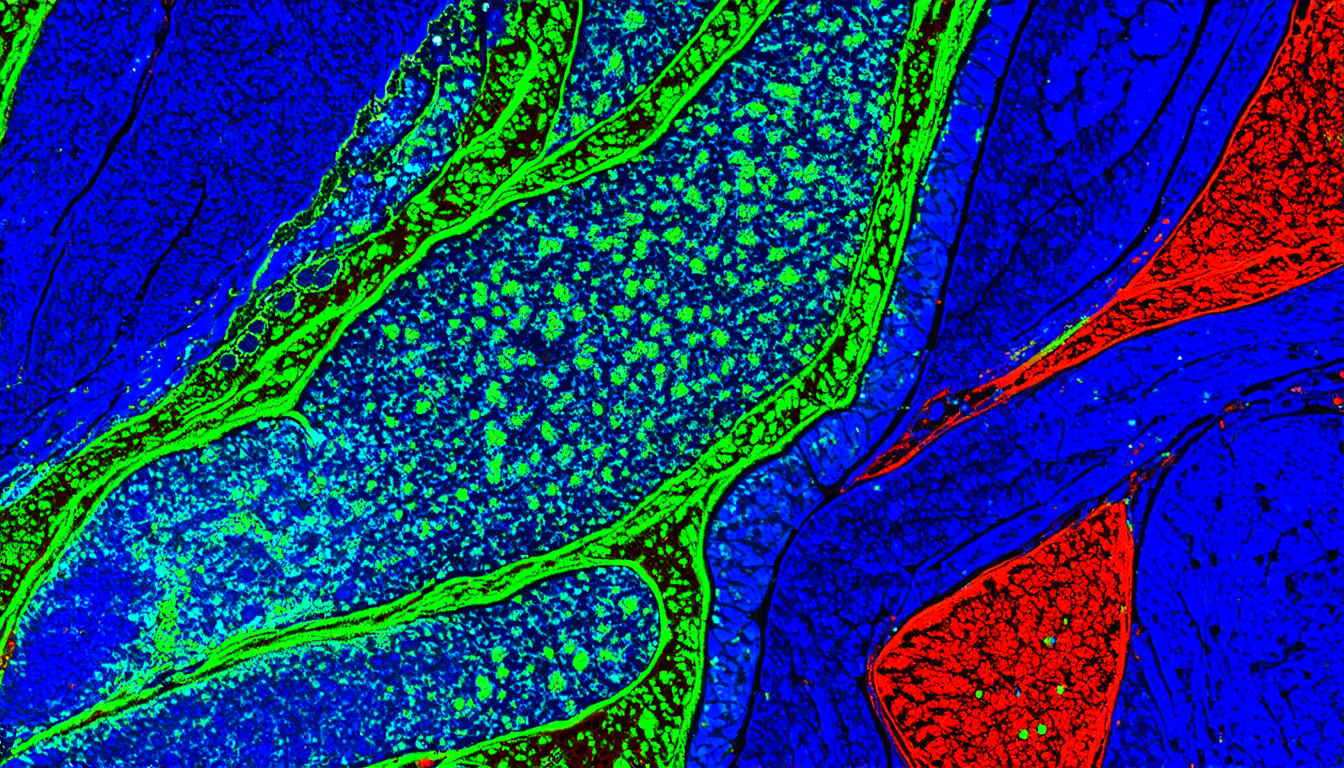
To demonstrate the effectiveness of this approach, the researchers designed and built a custom-LED array that emits light across six distinct wavelengths, ranging from blue to red. The array was then used in conjunction with a monochrome image sensor and a digital micromirror device (DMD) to capture images of lung tissue samples.
The resulting images were then processed using the mFIN algorithm, which successfully reconstructed high-quality multi-spectral images. These images showed remarkable detail and accuracy, allowing researchers to distinguish between different types of tissues and detect subtle changes in spectral signatures.
This technology has significant implications for various fields where high-precision imaging is crucial. In medicine, it could enable more accurate diagnoses and improved patient outcomes. In agriculture, it could help farmers monitor crop health and detect early signs of disease or pests. Environmental monitoring applications include tracking ocean health, detecting pollution, and studying climate change.
The team’s achievement is notable not only for its technical prowess but also for its potential to democratize access to multi-spectral imaging technology. By leveraging existing monochrome sensors and DMDs, this approach could make high-quality multi-spectral imaging more affordable and accessible to researchers and practitioners worldwide.
As the field continues to evolve, it will be exciting to see how this technology is applied in various domains and what new discoveries are made possible by its power.
Cite this article: “Breakthrough in Snapshot Multi-Spectral Imaging Enables High-Quality Images Across Multiple Spectral Bands”, The Science Archive, 2025.
Snapshot Multi-Spectral Imaging, Multi-Spectral Fourier Imager Network, Mfin Algorithm, Chromatic Aberration, Wavelength-Dependent Defocusing, Monochrome Sensor Data, Digital Micromirror Device, Dmd, Lung Tissue Samples, High-





