

Friday 14 March 2025
Scientists have made a significant breakthrough in the development of a new material that could revolutionize the field of quantum computing. Researchers at Hunan University have discovered that a type of carbon-nitrogen compound, known as g-C3N4, can be used to trap and stabilize tiny particles called color centers.
These color centers are essential for creating robust qubits, which are the fundamental units of quantum information processing. Qubits rely on the ability of atoms or molecules to exist in multiple states simultaneously, allowing them to perform complex calculations that are beyond the capabilities of classical computers.
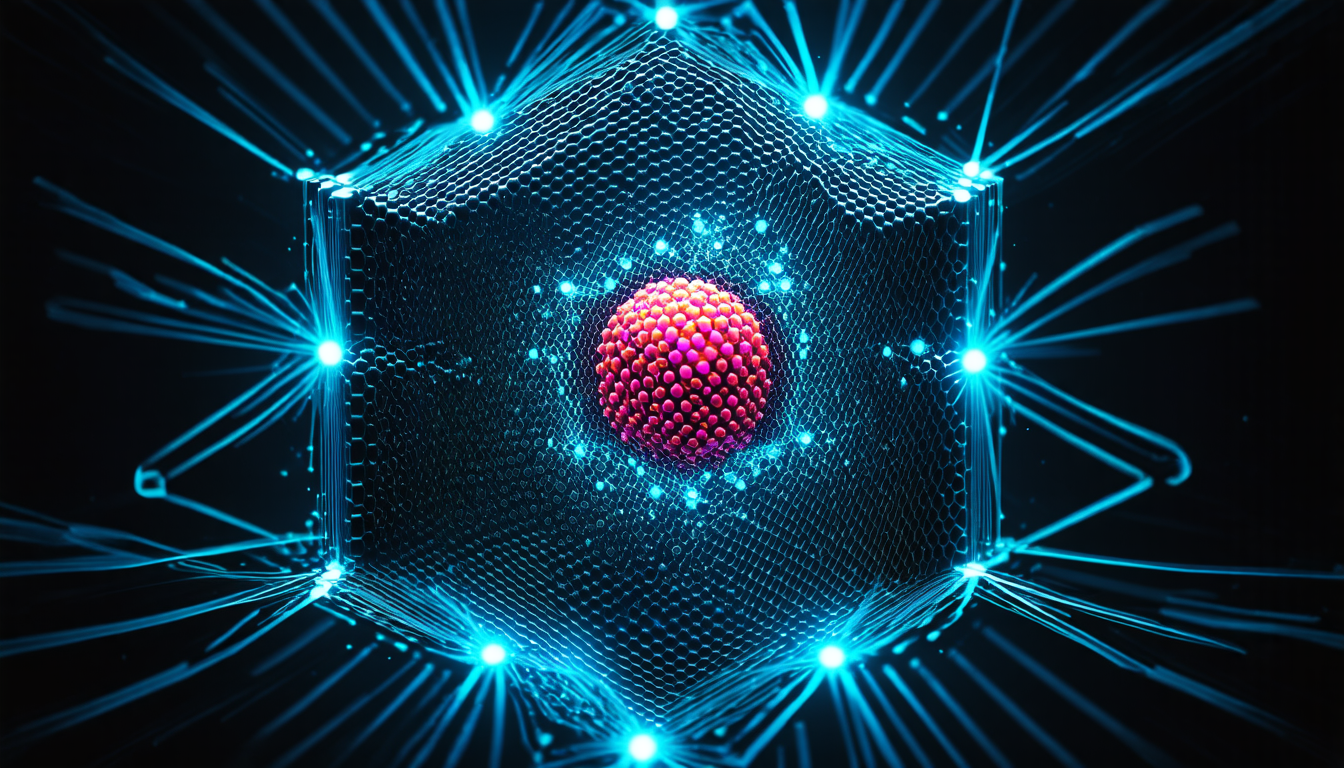
The researchers found that g-C3N4 has a unique structure that allows it to trap and stabilize color centers with high efficiency. The material’s natural vacancies, which are regions where atoms are missing from the crystal lattice, provide a perfect environment for these particles to reside.
When foreign atoms such as boron or carbon are introduced into the vacancies, they form stable defect states that can be used as qubits. These defects have specific electronic properties that allow them to interact with light in a way that is crucial for quantum computing applications.
One of the key advantages of g-C3N4 is its ability to trap and stabilize color centers at room temperature. This means that the material can be easily integrated into existing technology, making it more practical for widespread use.
The researchers used advanced computational methods to simulate the behavior of the color centers in g-C3N4. They found that the defects have a range of electronic properties that are tunable by changing their charge state. This allows them to be tailored for specific applications, such as quantum computing or sensing.
The team also investigated the properties of the material using advanced experimental techniques. They found that the color centers exhibit strong absorption and emission properties in the mid-infrared range, which is ideal for many quantum computing applications.
Furthermore, the researchers calculated the zero-field splitting and hyperfine coupling parameters of the defects, which are essential for understanding their behavior under different conditions. This information will be crucial for developing practical devices based on these materials.
The discovery of g-C3N4 as a viable material for trapping and stabilizing color centers has significant implications for the development of quantum computing technology. It provides a new platform for creating robust qubits that can operate at room temperature, making it more practical for widespread use.
The potential applications of this technology are vast, from developing ultra-secure communication systems to improving medical imaging techniques.
Cite this article: “Breakthrough Material for Quantum Computing Discovered”, The Science Archive, 2025.
Quantum Computing, G-C3N4, Color Centers, Qubits, Carbon-Nitrogen Compounds, Quantum Information Processing, Defect States, Room Temperature Operation, Mid-Infrared Range, Zero-Field Splitting





