

Friday 14 March 2025
The art of generating levels for video games has long been a challenging problem, requiring a delicate balance between creativity and constraint. Traditional methods often rely on manual design or procedural generation techniques that can result in repetitive or unengaging environments. Enter Punch Out Model Synthesis (POMS), an innovative algorithm that uses stochastic boundary erosion to create level realizations from tile constraints.
At its core, POMS is a grid-based level generator that takes into account the relationships between individual tiles to produce coherent and aesthetically pleasing levels. The algorithm starts by setting the entire grid to an indeterminate state, then applies setup restrictions and tile constraints to gradually resolve the grid. This process is repeated until the grid is fully resolved or a maximum iteration count is reached.
One of the key innovations in POMS is its ability to handle long-range correlations between tiles, which can be difficult for traditional procedural generation techniques to capture. The algorithm achieves this through the use of a weighted diagonal block choice scheduler, which preferentially selects cells that are likely to lead to successful realizations.
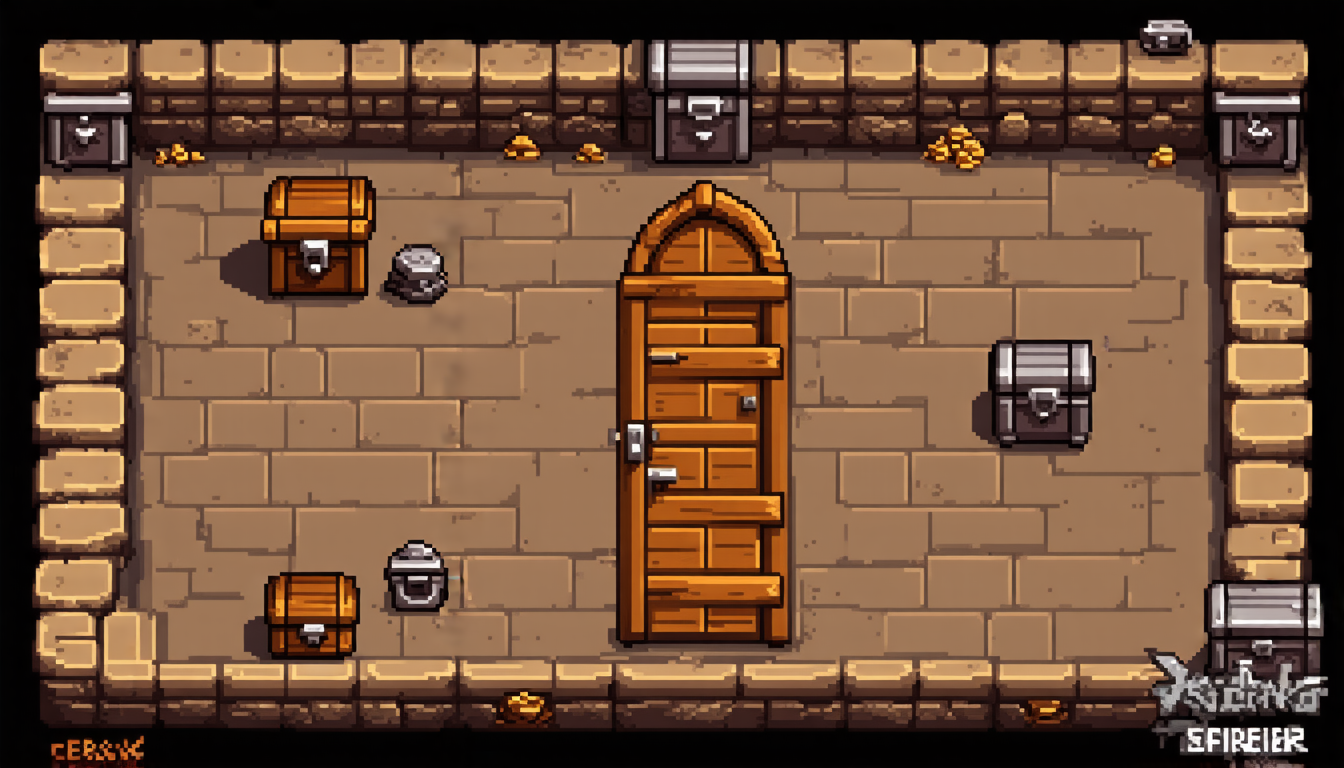
In practice, POMS has been shown to produce high-quality levels with diverse and engaging environments. For example, the algorithm was able to generate an overhead action RPG overworld with a realistic sense of geography and varied terrain features. Similarly, it produced a micro tileset with detailed dungeon environments that would be at home in any fantasy RPG.
Despite its successes, POMS is not without its limitations. The algorithm can struggle with tile constraints that have unbounded correlation lengths, which can lead to failed realizations or biased results. Additionally, the maximum iteration count can be reached before the grid is fully resolved, requiring manual intervention to recover from such failures.
To address these challenges, the authors of POMS propose a range of potential solutions and heuristics for improving the algorithm’s performance. These include using tile weightings to influence the block choice scheduler and incorporating additional constraints to guide the level generation process.
As video games continue to evolve and become increasingly complex, the need for innovative level generation techniques will only grow more pressing. POMS represents a significant step forward in this area, offering a flexible and powerful tool for generating high-quality levels that can be used in a wide range of game genres. While further refinement is still needed to overcome its limitations, the algorithm’s potential is undeniable, and it is likely to have a lasting impact on the world of video game development.
Cite this article: “Punch Out Model Synthesis: A Novel Approach to Level Generation in Video Games”, The Science Archive, 2025.
Level Generation, Procedural Generation, Tile Constraints, Stochastic Boundary Erosion, Grid-Based, Level Realization, Game Development, Algorithm, Video Games, Game Design.





