

Friday 14 March 2025
Artificial intelligence has come a long way in recent years, with advancements in machine learning and deep learning enabling machines to perform tasks that were previously thought to be the exclusive domain of humans. One area where AI has shown remarkable progress is in its ability to learn from human demonstrations, a skill known as imitation learning.
In traditional reinforcement learning, an AI agent learns by trial and error, receiving rewards or punishments for its actions. However, this approach can be slow and inefficient, especially when the task requires complex skills that are difficult to learn through trial and error.
Imitation learning, on the other hand, allows the AI agent to learn from human demonstrations, which can speed up the learning process significantly. The agent observes a human expert performing a task, and then tries to mimic their actions. This approach has been shown to be particularly effective in tasks that require precise motor control, such as playing video games or operating complex machinery.
However, imitation learning is not without its challenges. One of the main issues is that the AI agent may not fully understand the underlying rules and principles of the task, which can lead to errors and inconsistencies in its performance. Additionally, the human expert’s demonstrations may contain errors or biases that need to be corrected.
To address these challenges, researchers have developed a new approach called Noise-Conditioned Energy-Based Annealed Rewards (NEAR). NEAR uses a combination of noise injection and energy-based models to learn a reward function from human demonstrations. The noise injection helps to smooth out the reward function and reduce its sensitivity to errors in the human expert’s demonstrations.
The energy-based model is trained on the noisy data, which allows it to learn a more robust representation of the task that is less sensitive to errors. The annealed rewards are then used to train an AI agent to perform the task, using a combination of imitation learning and reinforcement learning.
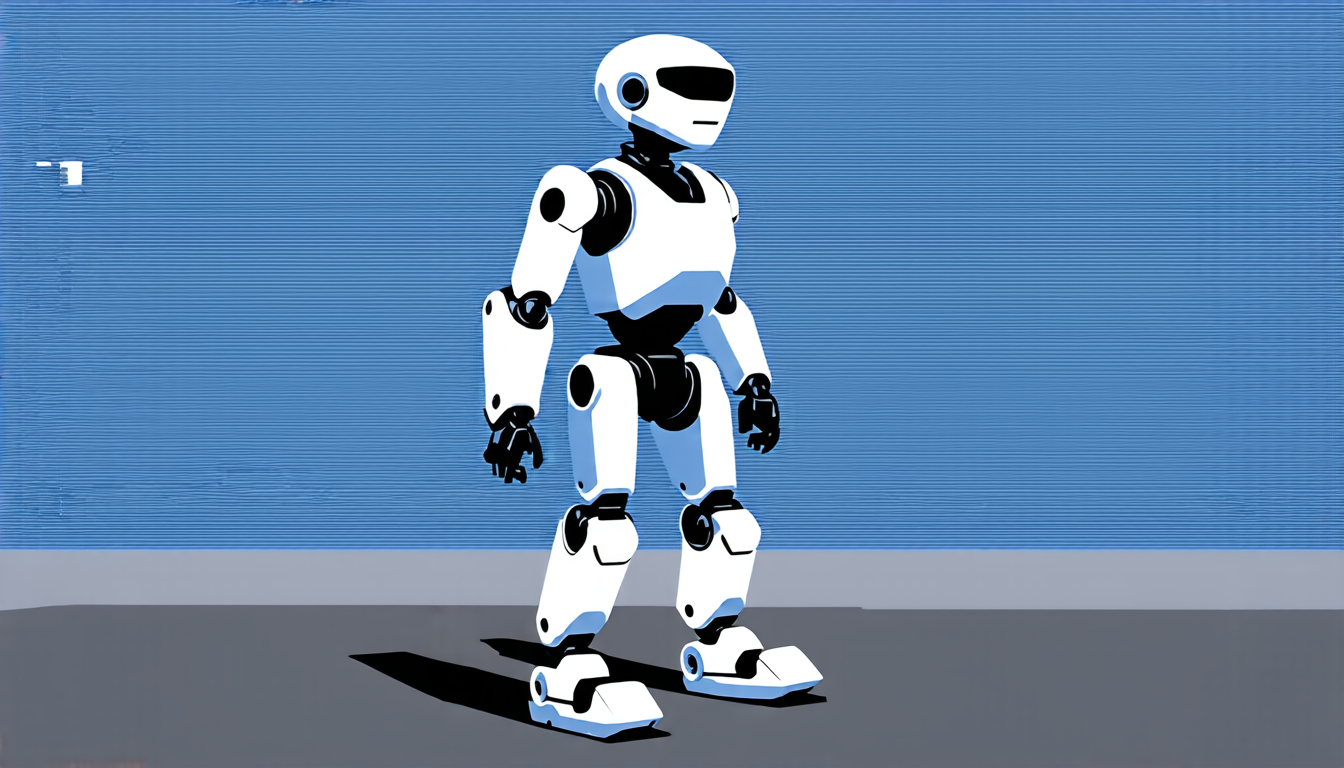
Researchers have tested NEAR on several tasks, including humanoid walking and martial arts. In each case, the results were impressive, with the AI agents able to learn complex skills quickly and accurately. The approach also showed significant improvements in performance over traditional imitation learning methods.
One of the key advantages of NEAR is its ability to handle noisy or incomplete data. This makes it particularly well-suited for tasks that involve real-world data, such as robotics or autonomous vehicles. Additionally, the approach can be easily adapted to a wide range of applications, from healthcare to finance.
Cite this article: “Advances in Imitation Learning: A New Approach to Fast and Accurate Skill Acquisition”, The Science Archive, 2025.
Artificial Intelligence, Machine Learning, Deep Learning, Imitation Learning, Reinforcement Learning, Noise Injection, Energy-Based Models, Annealed Rewards, Humanoid Walking, Martial Arts





