

Friday 14 March 2025
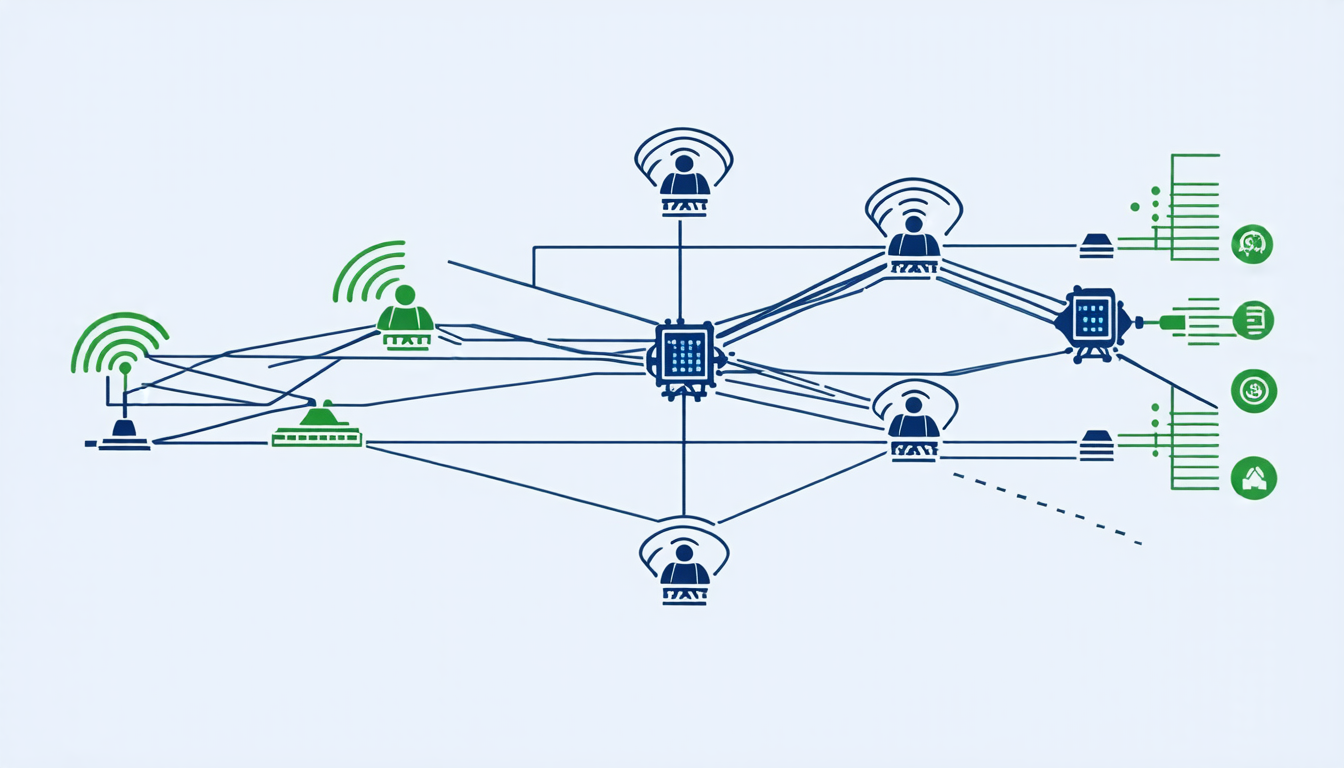
The quest for a faster and more efficient way to detect signals in massive multiple-input multiple-output (MIMO) systems has led researchers to develop an innovative new approach that combines deep learning and classical algorithms.
Massive MIMO systems, which are used in wireless communication networks such as 5G, rely on complex signal processing techniques to separate multiple signals transmitted simultaneously over the same frequency band. However, these techniques can be computationally intensive and power-hungry, making them unsuitable for widespread adoption.
The new approach, known as deep- unfolding-assisted Gram-Block Coordinate Descent (GBCD), uses a combination of machine learning and classical signal processing to detect signals in MIMO systems. The algorithm is designed to work efficiently on low-power devices and can be used in a variety of applications, including wireless networks, radar, and sonar.
The key innovation behind GBCD is its use of deep neural networks to learn the optimal parameters for a classical signal processing algorithm called Gram-Block Coordinate Descent (GBCD). This allows the algorithm to adapt to different scenarios and environments, making it more robust and efficient than traditional approaches.
In addition to its efficiency, GBCD also offers improved performance compared to existing algorithms. Simulations have shown that GBCD can achieve better error rates and higher throughput in massive MIMO systems than traditional algorithms.
The development of GBCD is a significant breakthrough in the field of signal processing and has the potential to revolutionize wireless communication networks. With its ability to adapt to different scenarios and environments, GBCD is poised to play a key role in the development of 6G and beyond.
In the future, researchers plan to continue refining the algorithm and exploring new applications for it. As the demand for high-speed and low-power communication systems continues to grow, the need for efficient and effective signal processing algorithms will only become more pressing. With GBCD, researchers have taken a significant step towards meeting this challenge and paving the way for future innovations in wireless communication.
Cite this article: “Efficient Signal Detection in Massive MIMO Systems Using Deep Learning”, The Science Archive, 2025.
Massive Mimo, Signal Processing, Deep Learning, Classical Algorithms, Gram-Block Coordinate Descent, Wireless Communication, Neural Networks, 5G, 6G, Radar, Sonar





