
Friday 14 March 2025
A team of researchers has made significant progress in developing a new method for clustering functional data, which is characterized by its inherent infinite-dimensional nature. Functional data can take many forms, such as signals, images, or time series, and it’s used to describe complex phenomena in fields like medicine, finance, and climate science.
Traditionally, clustering methods have been applied to traditional multivariate data, where each observation is represented by a fixed number of variables. However, functional data requires specialized approaches that can handle its unique characteristics. For instance, the measurement errors associated with functional data are often complex and heterogeneous, making it challenging to identify meaningful clusters.
The researchers developed a two-stage approach to tackle this problem. In the first stage, they used clustered mixed effects models to adjust for measurement error bias and then applied cluster analysis to the measurement error-adjusted curves in the second stage. This novel strategy allowed them to effectively identify clusters within functional data despite the presence of complex heteroscedastic measurement errors.
To evaluate their method, the researchers conducted simulations with varying sample sizes, measurement error magnitudes, and correlation structures. Their results showed that failing to account for measurement errors and correlation structures led to reduced accuracy in identifying true latent groups or clusters. In contrast, their two-stage approach consistently outperformed traditional methods in terms of clustering accuracy.
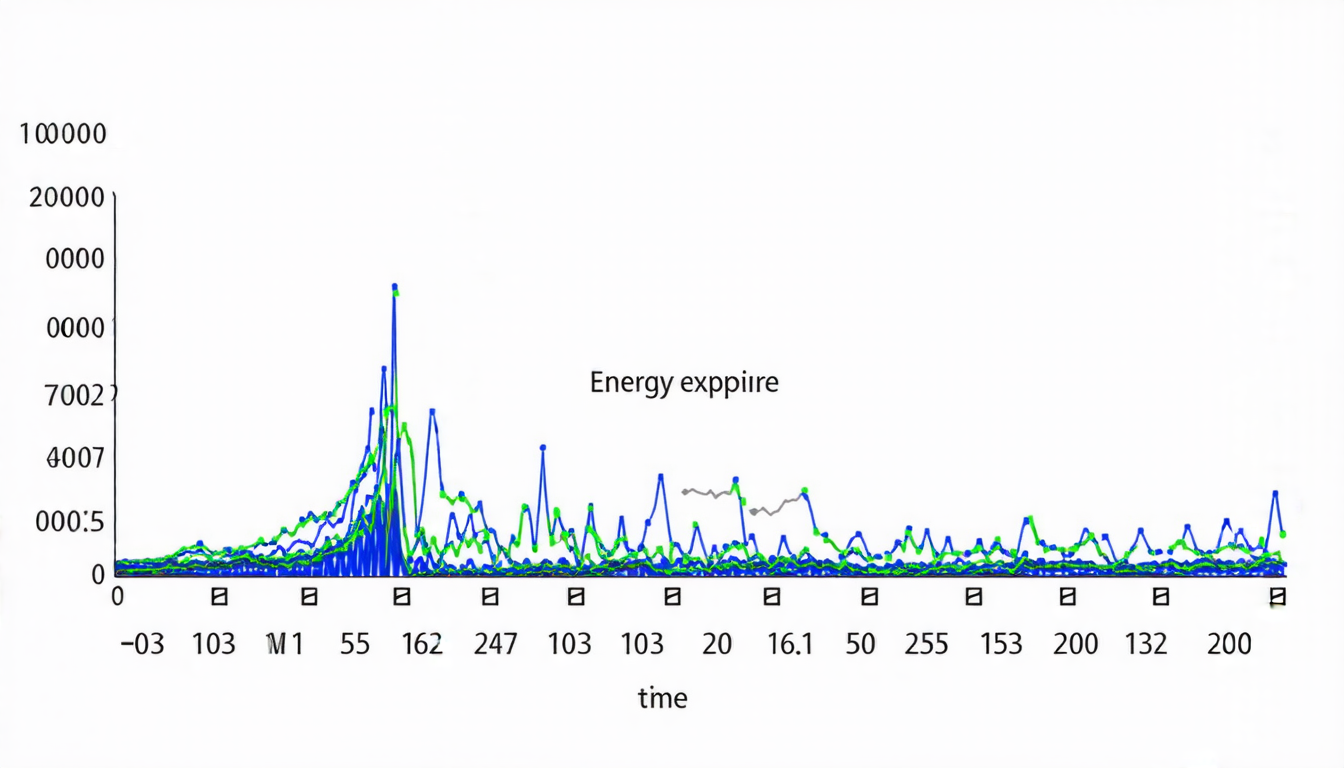
The researchers also applied their method to two real-world datasets: a school-based study on energy expenditure among elementary school-aged children and data from the National Health and Nutritional Examination Survey on participants’ physical activity monitored by wearable devices at frequent intervals. Their results provided valuable insights into the patterns of energy expenditure and physical activity, which can inform public health initiatives.
The development of this new method has significant implications for various fields that rely heavily on functional data analysis. By providing a robust framework for clustering functional data with complex measurement errors, researchers can now more accurately identify meaningful patterns and relationships within their data. This, in turn, can lead to more informed decision-making and improved understanding of complex phenomena.
In the future, the researchers plan to extend their method to handle larger datasets and explore its application in other fields, such as finance and climate science. As functional data continues to play a vital role in various disciplines, the need for advanced methods that can effectively handle its unique characteristics will only continue to grow.
Cite this article: “Clustering Functional Data with Complex Measurement Errors: A Novel Two-Stage Approach”, The Science Archive, 2025.
Functional Data Analysis, Clustering, Measurement Error, Mixed Effects Models, Cluster Analysis, Simulation, Accuracy, Public Health, Physical Activity, Energy Expenditure.