

Friday 14 March 2025
Researchers have developed a new method for analyzing large datasets, allowing them to uncover hidden patterns and correlations between different types of data. The approach, known as graph covariance, uses mathematical techniques to identify relationships between categorical variables – such as gender or country of origin – in vast amounts of data.
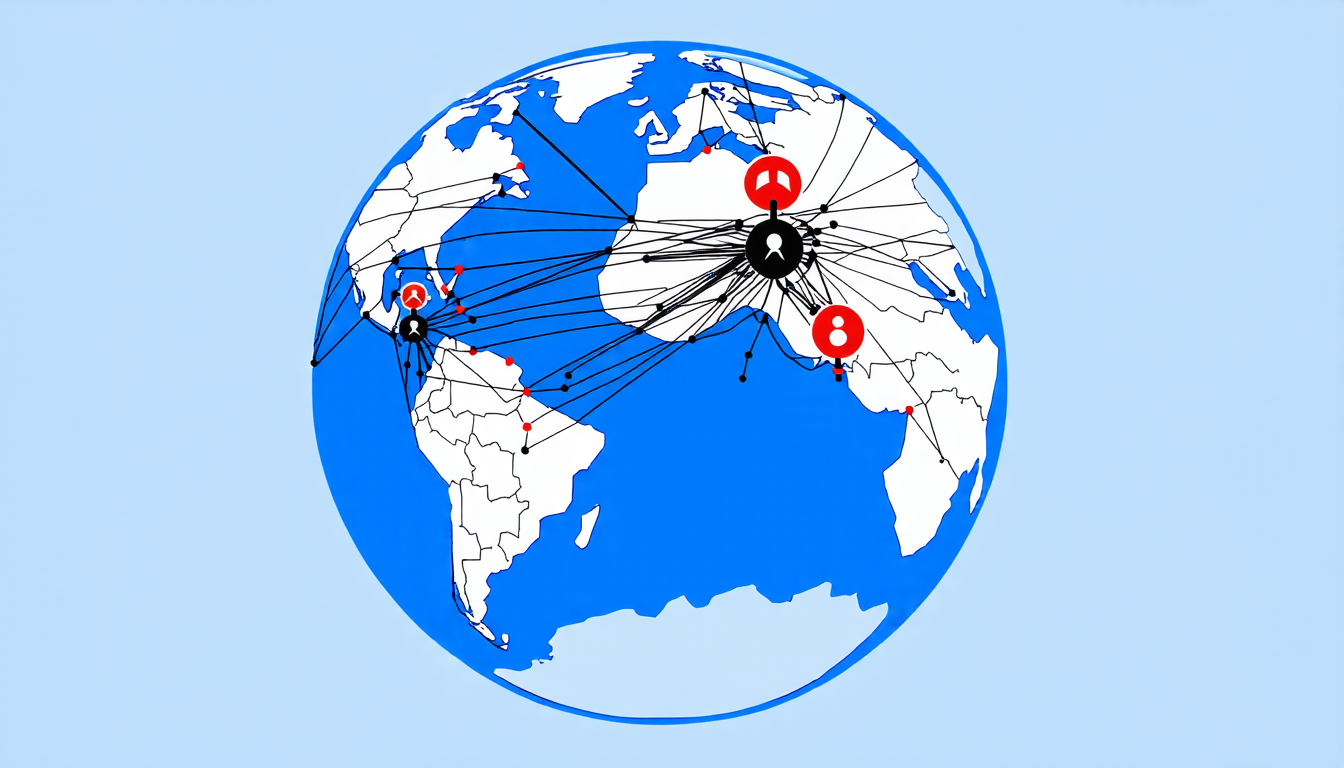
The team behind the research has applied their method to a dataset containing over 200,000 records of human trafficking cases from around the world. By analyzing this data, they were able to identify significant correlations between different factors that contribute to human trafficking, such as economic instability and gender inequality.
One of the key findings was the discovery of a strong correlation between forced labor and sex trafficking in certain regions. The researchers also found that certain countries, such as Ghana and Ukraine, have been more likely to experience high levels of human trafficking due to various factors including poverty and political instability.
The team’s approach uses mathematical techniques to identify relationships between different variables, allowing them to uncover patterns and correlations that may not be immediately apparent through traditional analysis methods. This is particularly useful in complex datasets like the one used in this study, where there are many potential factors that could contribute to human trafficking.
The researchers believe that their method has the potential to be used in a wide range of fields beyond just human trafficking, such as finance and healthcare. By analyzing large datasets using graph covariance, researchers may be able to identify new patterns and correlations that can inform decision-making and improve outcomes.
In addition to its potential applications, this research highlights the importance of data-driven approaches to understanding complex social issues like human trafficking. By leveraging advances in data analysis and machine learning, researchers can gain a deeper understanding of these issues and develop more effective solutions to address them.
The use of graph covariance in this study also underscores the importance of interdisciplinary collaboration between mathematicians, computer scientists, and social scientists. By combining their expertise, researchers can develop innovative methods for analyzing complex datasets and uncovering new insights that may not be possible through a single discipline.
Cite this article: “Uncovering Hidden Patterns in Large Datasets: A New Approach to Analyzing Complex Social Issues”, The Science Archive, 2025.
Data Analysis, Graph Covariance, Human Trafficking, Machine Learning, Data-Driven, Social Issues, Categorical Variables, Mathematical Techniques, Interdisciplinary Collaboration, Pattern Recognition





