

Friday 14 March 2025
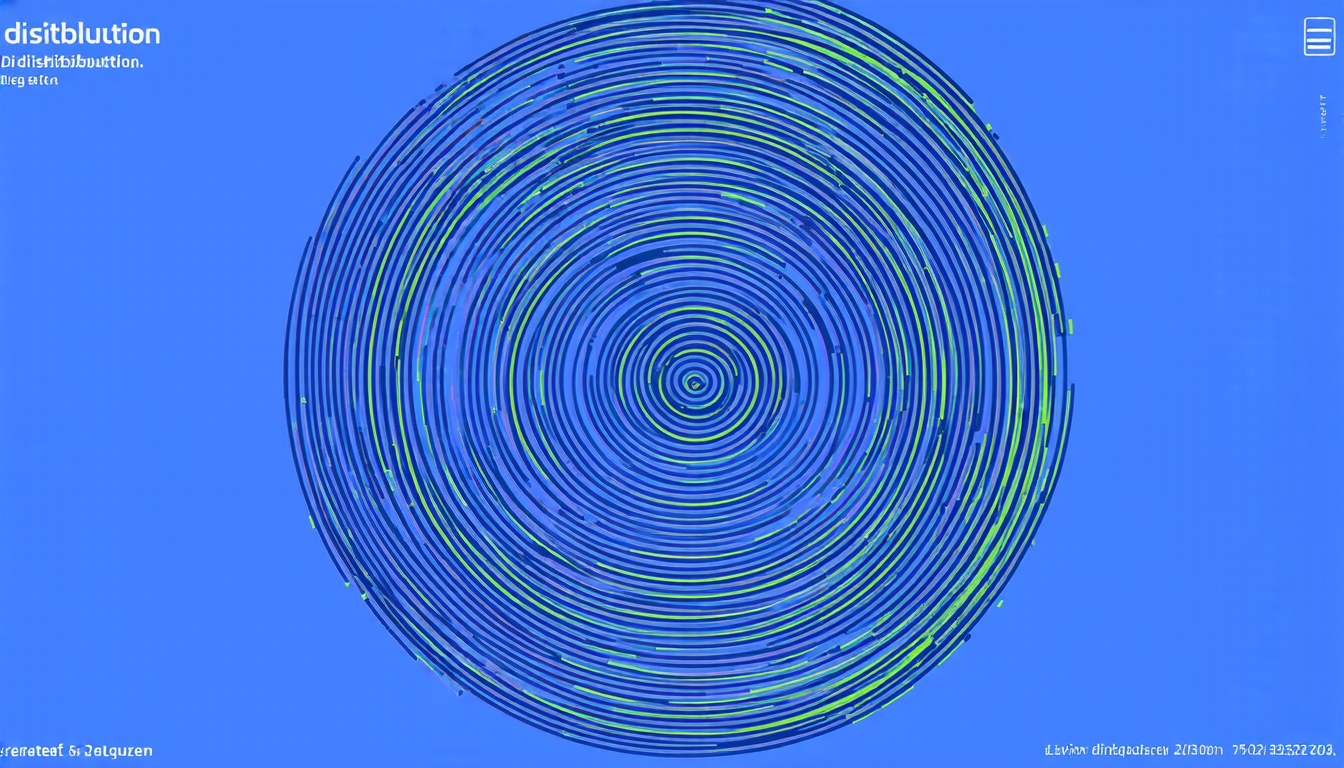
Recently, mathematicians have made significant progress in understanding how random intervals can be used to cover a circle. The circle is a fundamental shape that appears everywhere in nature, and covering it with random intervals has important implications for fields such as physics, engineering, and computer science.
The study of random coverings began over 60 years ago when a mathematician named Aryeh Dvoretzky asked whether it was possible to cover the entire circle using randomly placed arcs. Since then, researchers have made significant progress in understanding the conditions under which this can happen.
One key finding is that the way the intervals are distributed affects the likelihood of covering the entire circle. For example, if the intervals are uniformly distributed, meaning they are all roughly the same size and spaced evenly apart, it is much more likely that the circle will be fully covered. On the other hand, if the intervals are non-uniformly distributed, meaning some are larger or smaller than others, it may not be possible to cover the entire circle.
Another important factor is the length of the intervals themselves. If the intervals are very short, they may not overlap enough to cover the entire circle, while longer intervals may be more likely to do so.
Mathematicians have also discovered that there is a threshold beyond which the probability of covering the entire circle becomes almost certain. This means that if the intervals are long enough and uniformly distributed, it is extremely unlikely that the circle will not be fully covered.
The study of random coverings has important implications for fields such as physics and engineering. For example, in physics, researchers use random coverings to model phenomena such as the movement of particles or the behavior of complex systems. In engineering, random coverings can be used to design more efficient algorithms for tasks such as data compression or network optimization.
The research also has potential applications in computer science, where it could be used to improve the efficiency of algorithms for tasks such as data storage and retrieval. Additionally, the study of random coverings may have implications for fields such as biology, where researchers use mathematical models to understand complex systems such as ecosystems or populations.
In recent years, mathematicians have made significant progress in understanding how random intervals can be used to cover a circle. The findings have important implications for fields such as physics, engineering, and computer science, and may have potential applications in other areas of research.
Cite this article: “Random Coverings: Unraveling the Secrets of Circle Coverage”, The Science Archive, 2025.
Mathematics, Random Intervals, Circle Coverage, Probability, Uniform Distribution, Non-Uniform Distribution, Interval Length, Threshold, Physics, Engineering, Computer Science
Reference: D. Karagulyan, “Certain results on uniform circle random covering problems” (2025).





