

Friday 14 March 2025
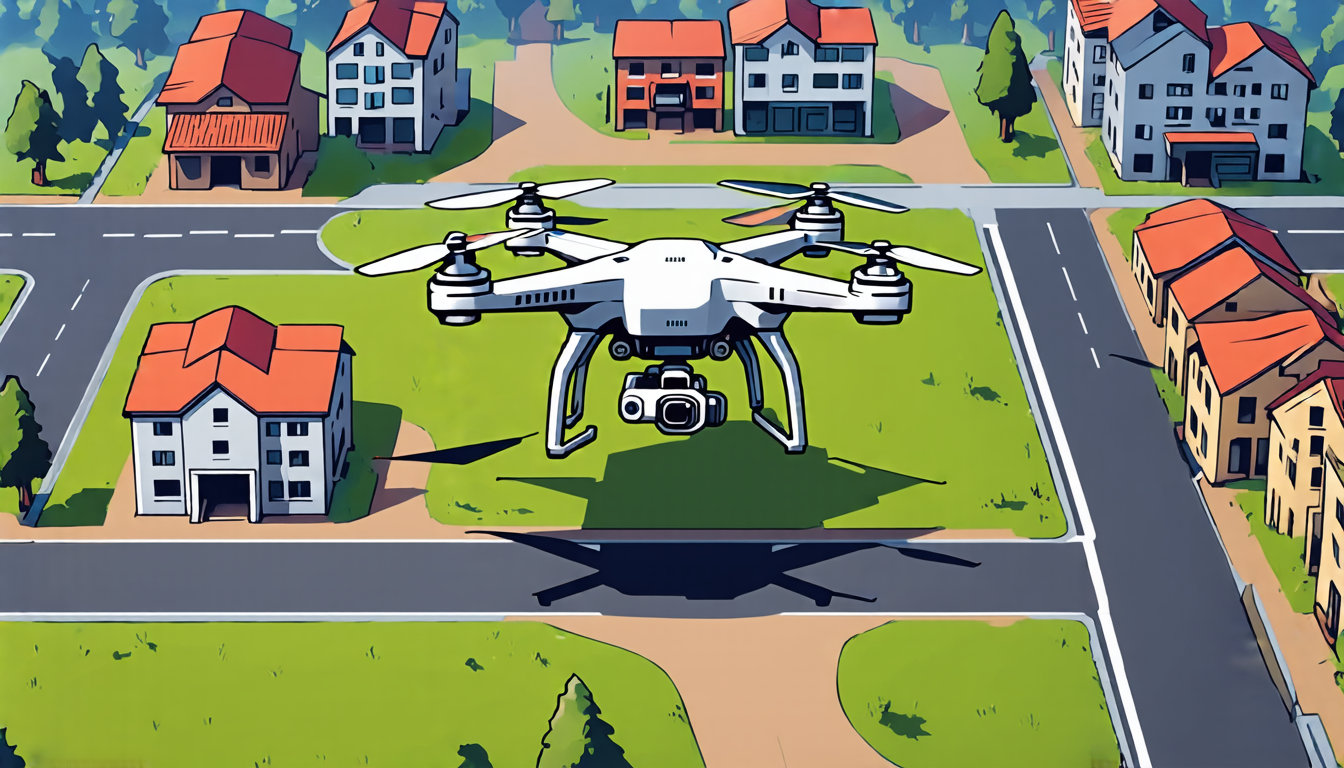
Scientists have been working on a way to improve disaster response efforts by using unmanned aerial vehicles (UAVs) to assist edge computing devices in remote areas. These devices are crucial for collecting and processing data during emergencies, but they often struggle to function effectively due to limited power and communication resources.
Researchers have developed a system that allows UAVs to provide computational offloading and communication relay support to these edge devices. This means that the UAV can take on some of the device’s workload, freeing up resources and allowing it to continue operating even when its battery is running low or it loses communication with other devices.
To test this system, scientists simulated a disaster scenario where multiple edge devices were deployed in a rural town and an urban downtown area. They then used reinforcement learning – a type of artificial intelligence that allows machines to learn from experience – to optimize the performance of the UAVs and edge devices.
The results showed that the system was able to extend the life of the edge devices by prioritizing those that were most critical to the disaster response effort. In the rural scenario, for example, the UAV focused on supporting edge devices located near high-traffic roads, knowing that these areas would be critical in an evacuation effort.
The team also found that the system was able to adapt to changing circumstances during the simulation. For instance, when some edge devices failed or lost communication, the UAV was able to adjust its strategy and redirect resources to support those that were still operational.
This technology has significant implications for disaster response efforts around the world. By using UAVs to assist edge computing devices, emergency responders can collect more accurate data, respond more quickly, and make better decisions during critical situations.
The system is also designed to be scalable, meaning it could be used in a variety of different scenarios, from small-scale disasters like wildfires to large-scale events like hurricanes. And because the UAVs can fly over areas that are difficult or impossible for humans to reach, they can provide critical support even in areas where access is limited.
As scientists continue to develop and refine this technology, it’s likely that we’ll see even more innovative applications of UAVs and edge computing in the future. For now, however, this system offers a powerful tool for improving disaster response efforts and saving lives around the world.
Cite this article: “UAVs Enhance Disaster Response with Edge Computing Support”, The Science Archive, 2025.
Unmanned Aerial Vehicles, Edge Computing, Disaster Response, Artificial Intelligence, Reinforcement Learning, Computational Offloading, Communication Relay, Rural Areas, Urban Downtown Area, Scalability.





