

Friday 14 March 2025
The world of data is vast and complex, with trillions of pieces of information swirling around us at all times. As technology continues to advance, our ability to process and analyze this data has become increasingly important for making informed decisions in fields such as healthcare, finance, and transportation.
One area where data analysis has made significant strides is in the field of graph neural networks (GNNs). GNNs are a type of artificial intelligence designed specifically for analyzing complex networks, such as social media platforms or traffic patterns. They work by processing nodes and edges within these networks to identify patterns and relationships that can inform decisions.
A recent paper has made significant progress in the development of GNNs by introducing a new system called REINC. This system is capable of efficiently training GNNs on large-scale graphs, which was previously a major challenge due to the sheer size and complexity of this data.
To understand how REINC works, it’s helpful to think about graph neural networks as similar to image recognition systems. Just as these systems learn to identify objects within images by analyzing patterns and relationships, GNNs learn to identify patterns and relationships within complex networks.
The key challenge in training GNNs is that they require a massive amount of computational power and memory to process the vast amounts of data involved. This has limited their use in many applications where speed and efficiency are critical.
REINC addresses this problem by introducing two innovations: a novel caching mechanism and a distributed training strategy. The caching mechanism allows REINC to reuse intermediate results, reducing the need for repeated computations and freeing up resources. The distributed training strategy enables REINC to spread out the processing of large graphs across multiple machines, making it possible to train GNNs on datasets that would previously have been too big.
The result is a system that can efficiently train GNNs on massive datasets, opening up new possibilities for applications such as traffic prediction and social network analysis. By analyzing patterns in these complex networks, REINC has the potential to help us make better decisions and improve outcomes in a wide range of fields.
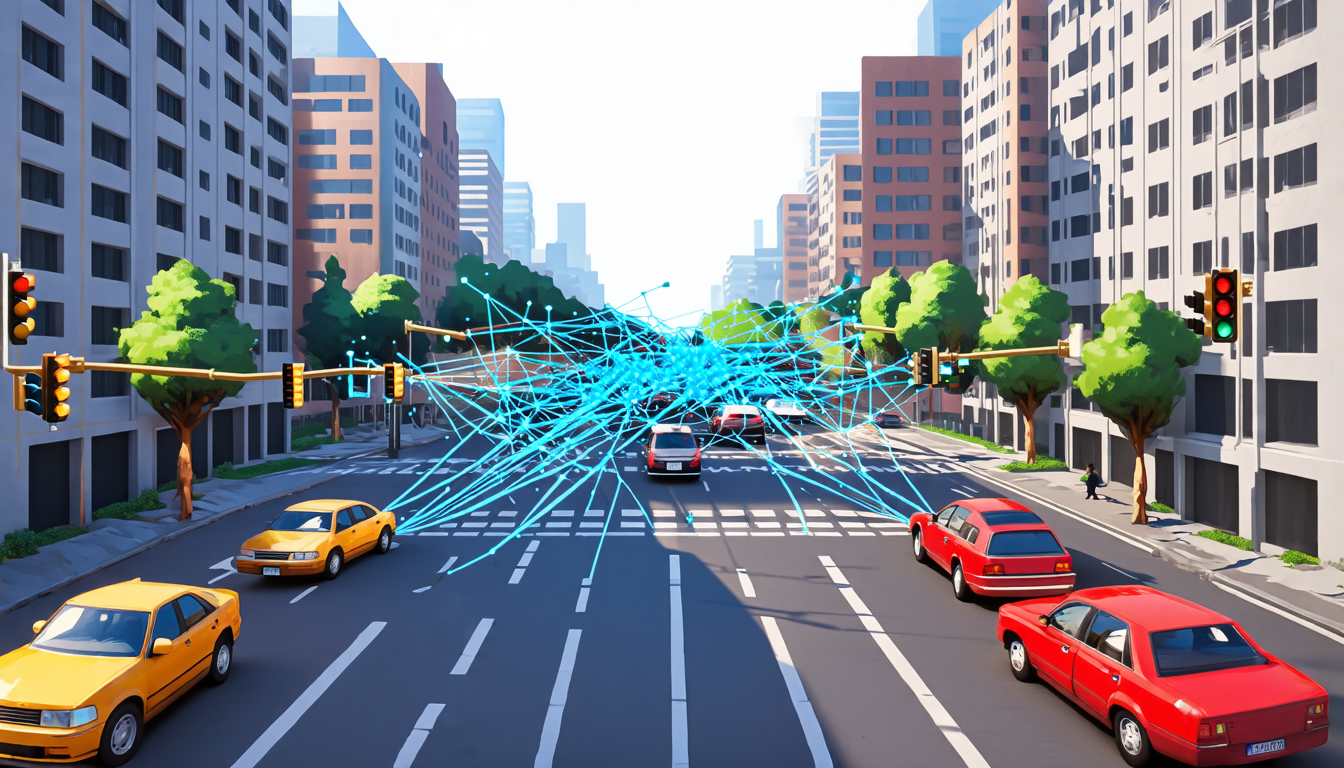
One example of how REINC could be used is in predicting traffic flow. By analyzing traffic patterns and identifying relationships between different roads and intersections, REINC could help city planners optimize traffic light timing and reduce congestion. Similarly, in social media platforms, REINC could be used to identify influential users or detect early signs of online harassment.
Cite this article: “Unlocking Efficient Graph Neural Networks with REINC”, The Science Archive, 2025.
Data Analysis, Graph Neural Networks, Reinc, Artificial Intelligence, Complex Networks, Social Media, Traffic Patterns, Machine Learning, Large-Scale Graphs, Distributed Training Strategy





