

Friday 14 March 2025
A team of researchers has made a significant breakthrough in developing a new approach to ensure the safety and performance of complex systems, such as autonomous vehicles and robotic manipulators.
The traditional way of ensuring safety in these systems is by designing them to avoid obstacles and follow predetermined rules. However, this approach can be inflexible and may not account for unexpected events or changes in the environment.
To address this challenge, the researchers have developed a new method that combines control barrier functions with reinforcement learning. Control barrier functions are mathematical tools used to ensure that a system stays within safe boundaries, while reinforcement learning is a machine learning technique that allows an agent to learn from its experiences and improve its performance over time.
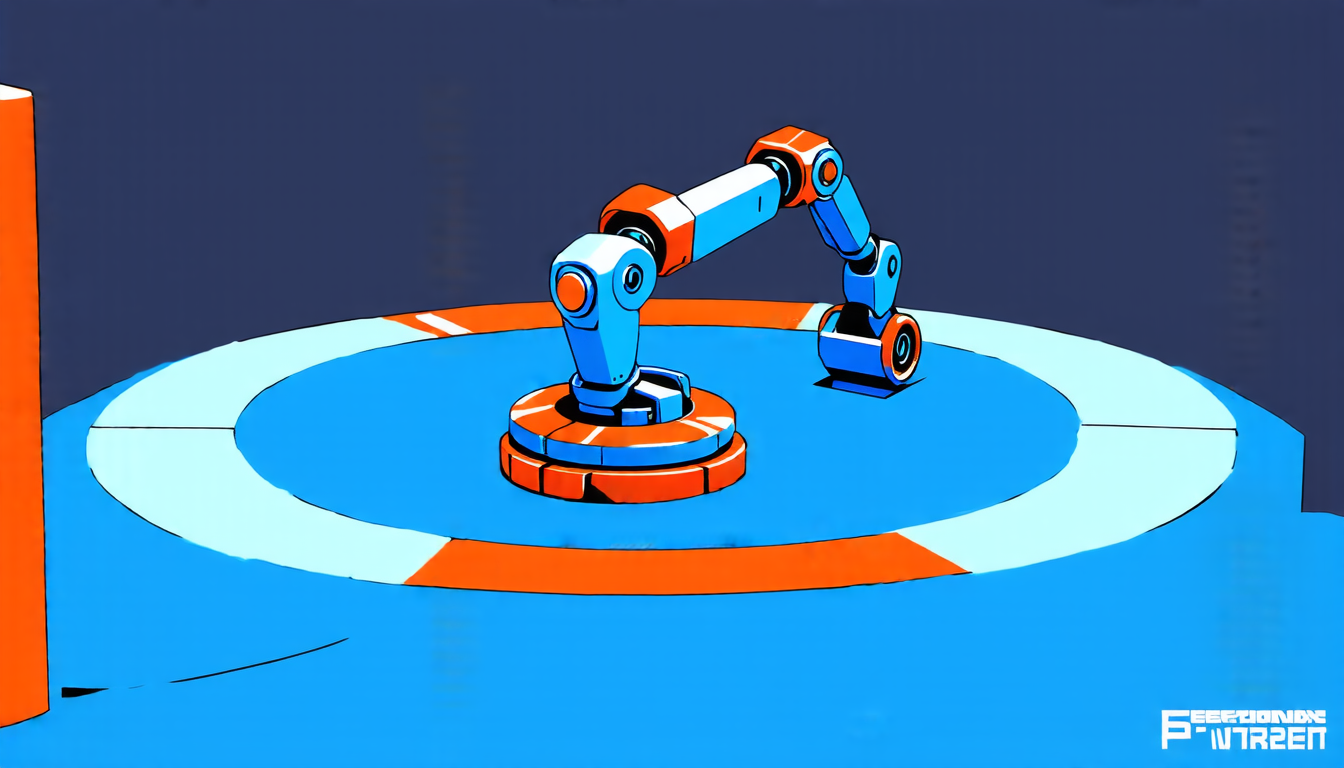
The new approach uses a high-order reciprocal control barrier function, which can handle complex constraints and disturbances more effectively than traditional control barrier functions. The researchers have tested their method on several systems, including a mobile robot and a robotic arm, and found that it significantly improves the safety and performance of these systems.
One of the key advantages of this approach is its ability to adapt to changing circumstances. For example, if an obstacle suddenly appears in the path of an autonomous vehicle, the system can adjust its trajectory on the fly to avoid the obstacle while still ensuring its safety.
The researchers believe that their method has the potential to be used in a wide range of applications, from robotics and autonomous vehicles to medical devices and power grids. By enabling these systems to adapt to changing circumstances and learn from their experiences, the new approach can help to improve their performance and ensure their safety.
In addition to its practical applications, the research also sheds light on the fundamental principles of control theory and machine learning. The study demonstrates that it is possible to combine control barrier functions with reinforcement learning in a way that improves the overall performance of the system, and provides new insights into how these techniques can be used together.
Overall, the new approach has significant implications for the development of complex systems and could have a major impact on a wide range of fields. By enabling these systems to adapt and learn, it has the potential to improve their safety, performance, and efficiency, and could ultimately lead to breakthroughs in areas such as robotics, autonomous vehicles, and medical devices.
Cite this article: “Adaptive Safety and Performance in Complex Systems Through Control Barrier Functions and Reinforcement Learning”, The Science Archive, 2025.
Control Barrier Functions, Reinforcement Learning, Complex Systems, Safety, Performance, Autonomous Vehicles, Robotic Manipulators, Machine Learning, Control Theory, Robotics





