

Saturday 15 March 2025
The development of large language models has reached new heights, and researchers are working tirelessly to ensure that these AI systems can safely interact with humans. One approach is to train reward models that can adapt to different scenarios and make decisions that align with human preferences.
Reward models are trained using a dataset of annotated responses, where each response is labeled as safe or not safe based on its content. The model learns to identify patterns in the data and assign rewards to responses that are deemed safe. This approach has shown promising results, but it’s limited by the quality and diversity of the training data.
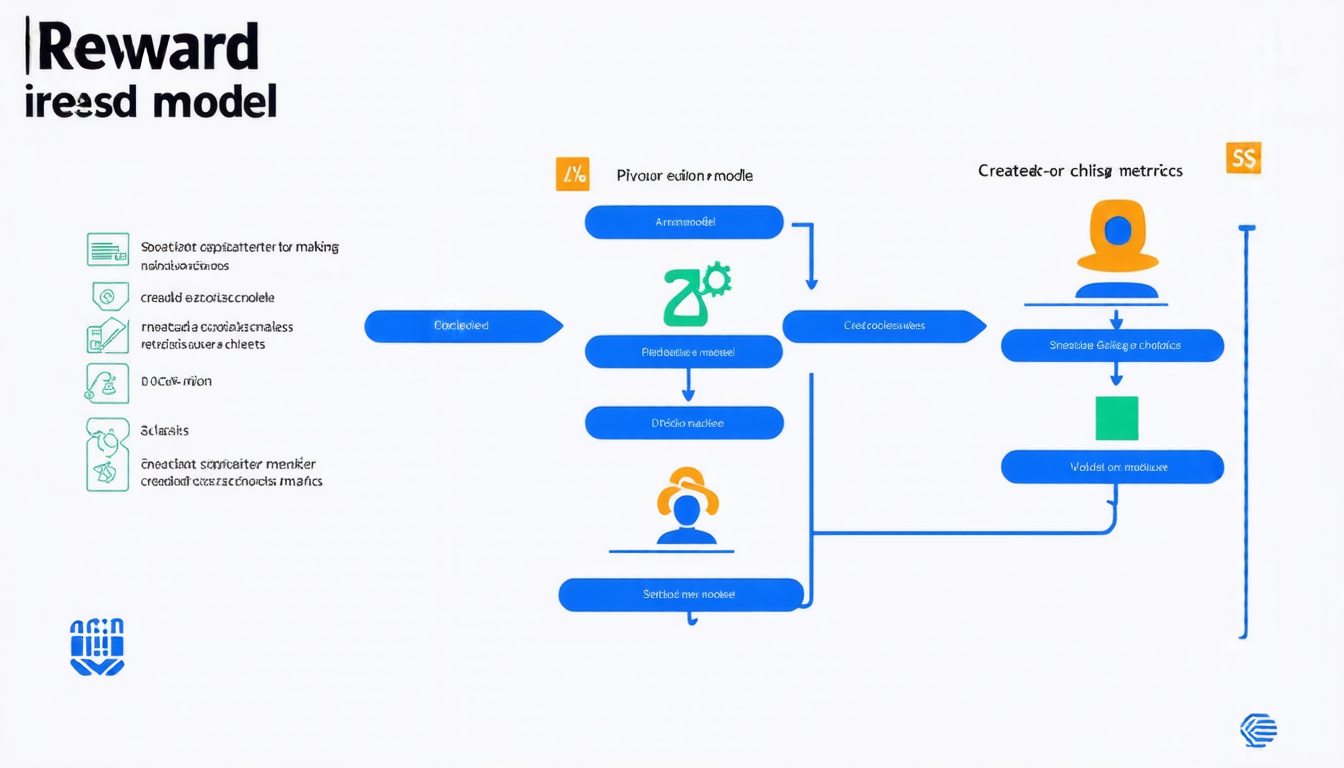
To overcome this limitation, researchers have developed a new method that uses multiple targeted metrics or rules to evaluate responses. These rules can be used to fine-tune the reward model and ensure that it makes decisions that are not only safe but also relevant to the conversation topic.
The team behind this research has created a dynamic method that adaptively selects the most important rules for each response pair. This approach is based on the maximum discrepancy across paired responses, which helps to maximize the mutual information between the rule-based annotations and the underlying true preferences.
To test their approach, the researchers trained an 8B reward model using this adaptive labeling dataset and evaluated its performance using RewardBench. The results show that their model outperforms larger models in terms of safety performance, achieving the highest score on the leaderboard.
The team also explored various hyperparameters to optimize their approach, including the number of rules used for data annotation, the regularization parameter γ, and the training hyper-parameters such as learning rate and epoch. They found that these parameters have a significant impact on the model’s performance and require careful tuning.
In addition to safety, the reward models were also tested on other tasks in RewardBench, including chatting, reasoning, and hard conversations. The results show that their model is competitive with other state-of-the-art models in terms of overall performance, demonstrating its potential for real-world applications.
The development of reward models that can adapt to different scenarios is a crucial step towards creating safe and responsible AI systems. By leveraging multiple targeted metrics or rules, this approach has shown promising results in ensuring that language models make decisions that align with human preferences. As the field continues to evolve, it’s likely that we’ll see even more innovative solutions emerge, paving the way for safer and more effective AI interactions.
Cite this article: “Adaptive Reward Models for Safe and Responsible AI Interactions”, The Science Archive, 2025.
Language Models, Reward Models, Safety Performance, Adaptive Labeling, Maximum Discrepancy, Mutual Information, Hyperparameters, Regularization Parameter, Learning Rate, Epoch, Rewardbench, Ai Systems, Human Preferences, Language Generation, Conversational Ai, Decision-Making,





