

Saturday 15 March 2025
A new approach to graph neural networks has been developed, which tackles a long-standing issue plaguing these powerful machine learning tools: over-smoothing.
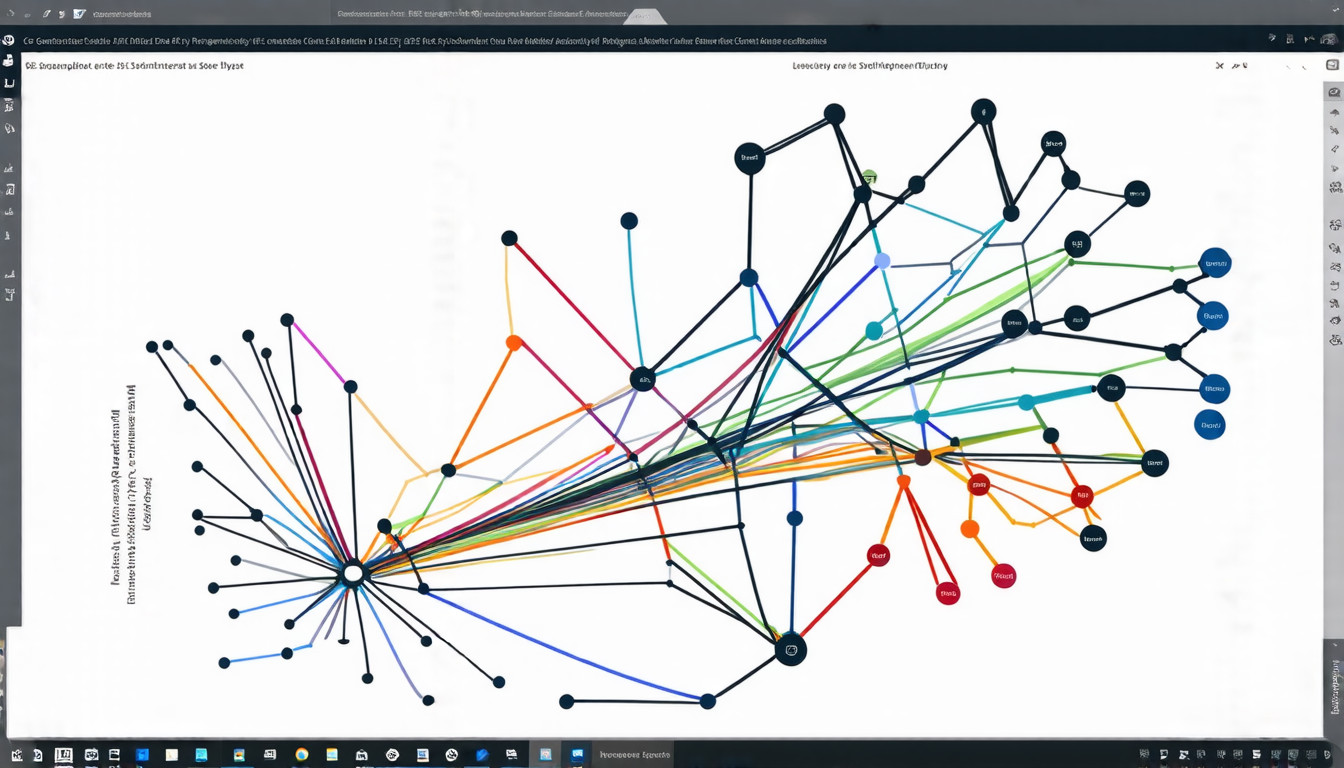
Graph neural networks are designed to analyze complex data structures known as graphs, where nodes represent entities and edges connect them. These models have achieved impressive results in applications such as social network analysis and recommender systems. However, they often struggle with a problem called over-smoothing, where all node representations converge to a single value, making it difficult to distinguish between different nodes.
The new approach, dubbed MbaGCN, addresses this issue by introducing a novel architecture that incorporates a selective state space model. This allows the model to adaptively aggregate neighborhood information, providing greater flexibility and scalability for deep graph neural networks.
To test the effectiveness of MbaGCN, researchers conducted experiments on six benchmark datasets, including citation networks, web graphs, and actor networks. The results showed that MbaGCN outperformed traditional graph neural network architectures in terms of classification accuracy, especially when dealing with deeper models.
One of the key advantages of MbaGCN is its ability to mitigate over-smoothing without sacrificing model performance. This is achieved through a clever design that balances the aggregation of neighborhood information and the selection of important nodes. By doing so, MbaGCN can learn more nuanced representations of graph structures, leading to better results in node classification tasks.
In addition to improving performance, MbaGCN also exhibits improved scalability compared to traditional graph neural networks. This is because the model’s parameter count increases linearly with the number of layers, making it easier to train and deploy on large-scale datasets.
The potential applications of MbaGCN are vast, from social network analysis to recommender systems and biological network analysis. By providing a more accurate and scalable approach to graph neural networks, researchers hope that MbaGCN will enable breakthroughs in these areas and beyond.
In the future, researchers plan to further optimize MbaGCN to reduce its computational requirements and improve its performance on even larger datasets. With its promising results and potential applications, MbaGCN is an exciting development in the field of machine learning.
Cite this article: “Mitigating Over-Smoothing in Graph Neural Networks with MbaGCN”, The Science Archive, 2025.
Graph Neural Networks, Over-Smoothing, Mbagcn, Selective State Space Model, Node Classification, Scalability, Deep Learning, Machine Learning, Graph Structures, Neighborhood Information





