

Saturday 15 March 2025
Scientists have made a significant breakthrough in understanding the behavior of superconducting materials, which could lead to the development of more efficient and powerful electronic devices.
Superconductors are materials that can conduct electricity with zero resistance, meaning they can carry electrical current without losing any energy. This property makes them incredibly useful for applications such as high-speed data transmission, medical imaging, and even levitating trains.
However, superconductors often exhibit a phenomenon known as the Josephson diode effect (JDE), which causes their behavior to be non-reciprocal. In other words, the way they conduct electricity changes depending on the direction of the current flow. This can make it difficult to design and optimize electronic devices that rely on these materials.
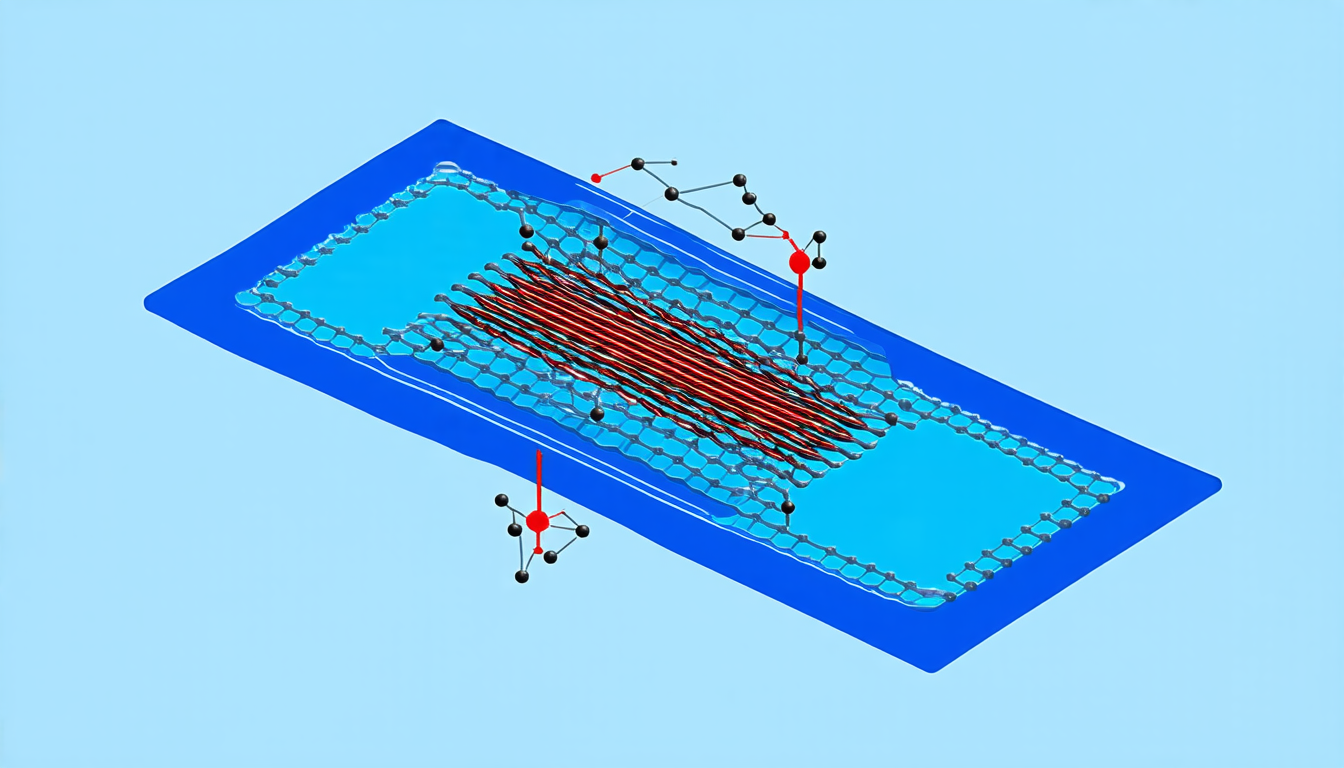
Recently, researchers have been studying a type of superconductor called InAs nanosheets, which are extremely thin sheets of indium arsenide. These sheets are promising candidates for future electronic devices due to their unique properties and potential for scalability.
In a new study, scientists from Beijing Academy of Quantum Information Sciences and Peking University have successfully observed the JDE in InAs nanosheet-based Josephson junctions. By applying an in-plane magnetic field, they were able to detect non-reciprocal switching currents and retrapping currents.
The researchers found that the strength of the JDE depends on the angle between the in-plane magnetic field and the bias current. This means that by carefully controlling these variables, scientists may be able to tune the behavior of the superconductor to optimize its performance for specific applications.
One of the most exciting aspects of this research is the potential to control the JDE using an electrostatic gate. This could allow scientists to manipulate the behavior of the superconductor in real-time, opening up new possibilities for advanced electronic devices and sensors.
The study also highlights the importance of understanding the interplay between spin-orbit interaction (SOI) and Zeeman energy in these materials. SOI is a phenomenon where the motion of electrons affects their spin, while Zeeman energy is related to the strength of an external magnetic field.
By studying the JDE in InAs nanosheets, scientists can gain insights into the underlying mechanisms that drive this behavior. This knowledge could be used to develop new superconducting materials and devices that are more efficient and powerful.
The research has significant implications for the development of advanced electronic devices, including high-speed data transmission systems, medical imaging equipment, and even quantum computers.
Cite this article: “Unlocking the Secrets of Superconductors: New Breakthrough in Understanding Josephson Diode Effect”, The Science Archive, 2025.
Superconductors, Josephson Diode Effect, Inas Nanosheets, Quantum Information Sciences, Peking University, Magnetic Fields, Spin-Orbit Interaction, Zeeman Energy, Electronic Devices, Advanced Materials.





