

Saturday 15 March 2025
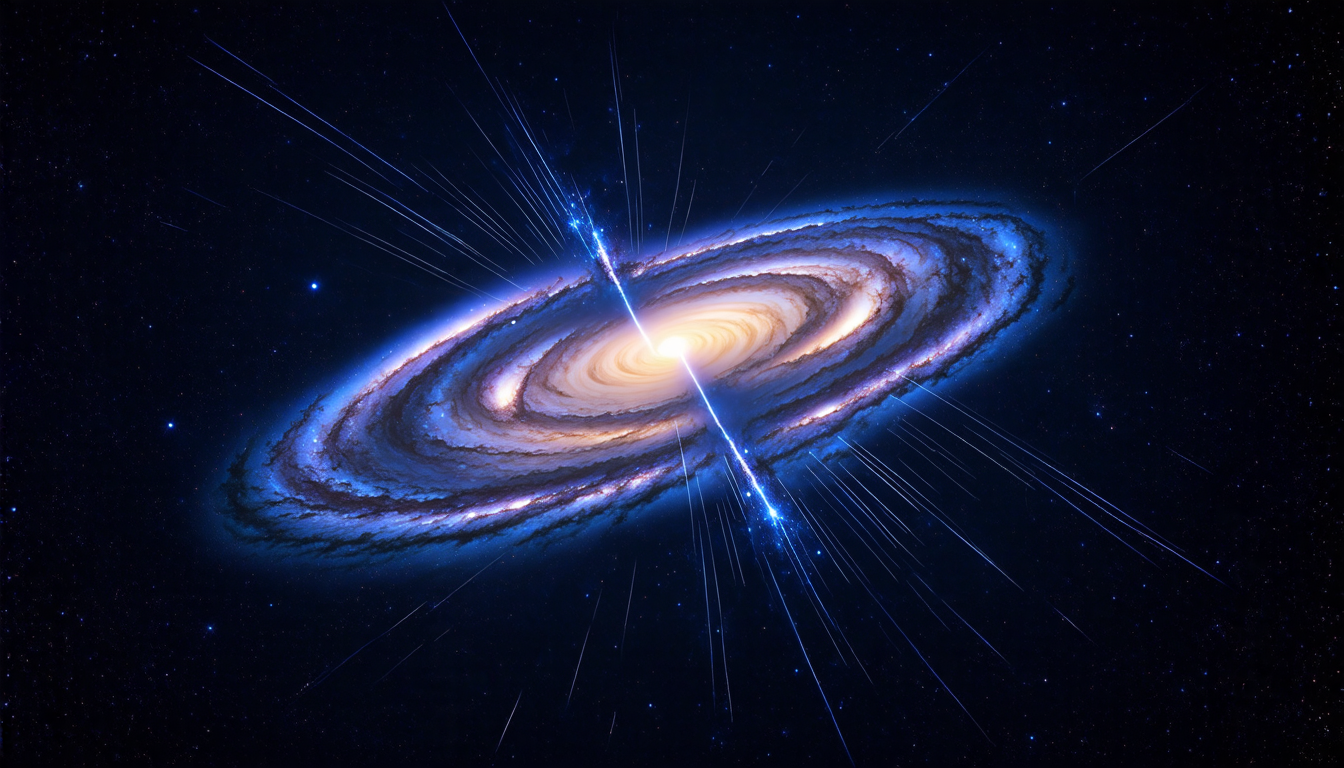
A team of astronomers has been studying fast radio bursts, or FRBs, which are brief and intense pulses of energy that originate from distant galaxies. These events were first discovered in 2007, but scientists have only recently begun to understand their characteristics and potential uses for understanding the universe.
One of the most exciting things about FRBs is that they can be used as a tool for studying the universe’s structure and evolution. By analyzing the bursts, astronomers can learn more about the galaxies where they originate, including their distances from us and the types of stars that are present. This information can help scientists better understand how the universe has evolved over time.
FRBs are also interesting because they have no known explanation for their origins. Some theories suggest that they could be caused by supernovae explosions or the merger of two neutron stars, but these explanations do not fully account for all observed FRB characteristics. The study of FRBs is an active area of research, with scientists working to understand the bursts’ properties and potential uses.
In this paper, researchers used a new method called hierarchical Bayesian inference to analyze a large collection of FRBs detected by the Canadian Hydrogen Intensity Mapping Experiment (CHIME). By applying this method, they were able to infer the population characteristics of the FRBs and draw conclusions about their origins.
The study found that the current sample of FRBs does not trace the history of star formation in the universe. This suggests that FRBs may be more closely related to other astrophysical phenomena, such as supernovae or neutron star mergers, than previously thought. The researchers also found that there is evidence for a time delay between the formation of stars and the occurrence of FRBs.
The findings from this study have significant implications for our understanding of FRBs and their potential uses. By analyzing more FRB data, scientists may be able to learn even more about these enigmatic events and potentially use them as tools for studying the universe.
Cite this article: “Unraveling the Mysteries of Fast Radio Bursts: New Insights from Hierarchical Bayesian Inference”, The Science Archive, 2025.
Fast Radio Bursts, Frbs, Astronomy, Universe, Structure, Evolution, Galactic Distance, Star Formation, Supernovae, Neutron Stars





