

Saturday 15 March 2025
The quest for a more comprehensive and accurate way to understand complex knowledge graphs has led researchers down a winding path of experimentation and innovation. Recently, a team of scientists proposed a novel approach that leverages the power of Transformer-based models to integrate multimodal information and relational data.
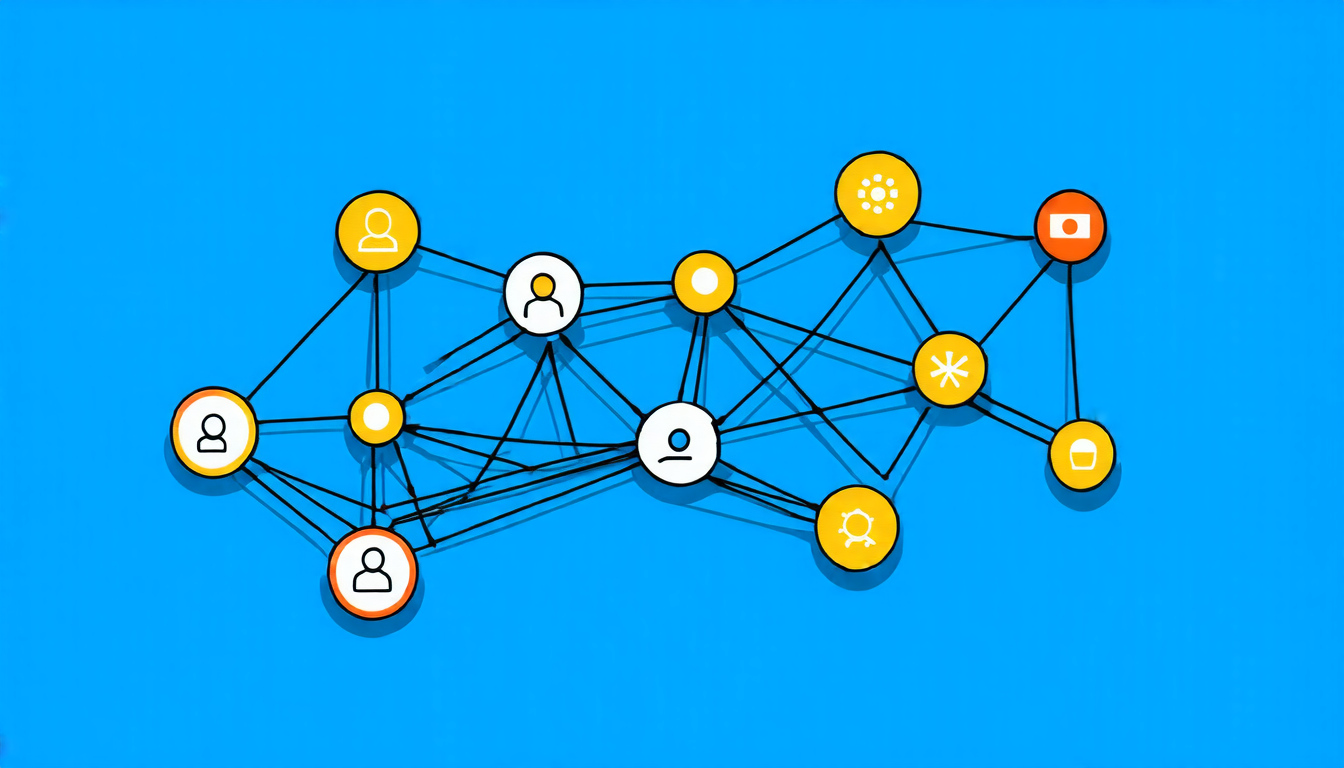
Knowledge graphs are intricate structures that represent real-world entities and their relationships. They have become increasingly important in various fields, such as artificial intelligence, natural language processing, and decision-making systems. However, these graphs can be incomplete, noisy, or even sparse, making it challenging for machines to accurately reason about the underlying relationships.
To address this issue, researchers have developed a range of techniques that focus on learning entity representations from large-scale datasets. These approaches typically rely on traditional knowledge graph embedding (KGE) models, which are designed to capture the complex relational patterns within these graphs. However, KGE models often struggle with multimodal data, where entities and relations are represented using different modalities such as text, images, or audio.
Enter Transformer-based models, which have revolutionized the field of natural language processing by enabling machines to process sequential data in a more efficient and accurate manner. By applying these models to knowledge graph completion tasks, researchers aim to harness their ability to capture long-range dependencies and contextual relationships within multimodal data.
The proposed approach, dubbed MMKG-T5, combines link-aware multimodal contexts with entity-centric descriptions and relation-specific contexts to generate high-quality predictions for missing links in knowledge graphs. This framework leverages the strengths of both KGE models and Transformer-based architectures to create a more comprehensive understanding of complex relationships within these graphs.
One of the key benefits of MMKG-T5 is its ability to adapt to diverse datasets, including those with sparse or noisy multimodal data. By incorporating link-aware filtering mechanisms, the model can effectively prioritize relevant information and mitigate the impact of noise on prediction accuracy.
Experimental results demonstrate that MMKG-T5 outperforms traditional KGE models on various benchmarks, including Facebook’s FB15k-237 dataset and the Medical Knowledge Graph (MKG) datasets. These findings suggest that the proposed approach can effectively integrate multimodal data to improve knowledge graph completion performance.
The implications of this research are far-reaching, with potential applications in areas such as artificial intelligence, natural language processing, and decision-making systems. By enabling machines to better understand complex relationships within knowledge graphs, MMKG-T5 has the potential to drive innovation in a wide range of fields.
Cite this article: “Transforming Knowledge Graphs: A Novel Approach to Multimodal Integration and Completion”, The Science Archive, 2025.
Knowledge Graphs, Multimodal Data, Transformer Models, Kge Models, Natural Language Processing, Artificial Intelligence, Decision-Making Systems, Entity Representations, Relation-Specific Contexts, Link-Aware Filtering Mechanisms





