

Saturday 15 March 2025
Researchers have made a significant discovery in the field of materials science, revealing new phases of grain boundaries that could significantly impact our understanding of how metals behave.
Grain boundaries are the interfaces between different crystalline structures within a material, and they play a crucial role in determining its properties. However, despite their importance, much remains unknown about these complex regions.
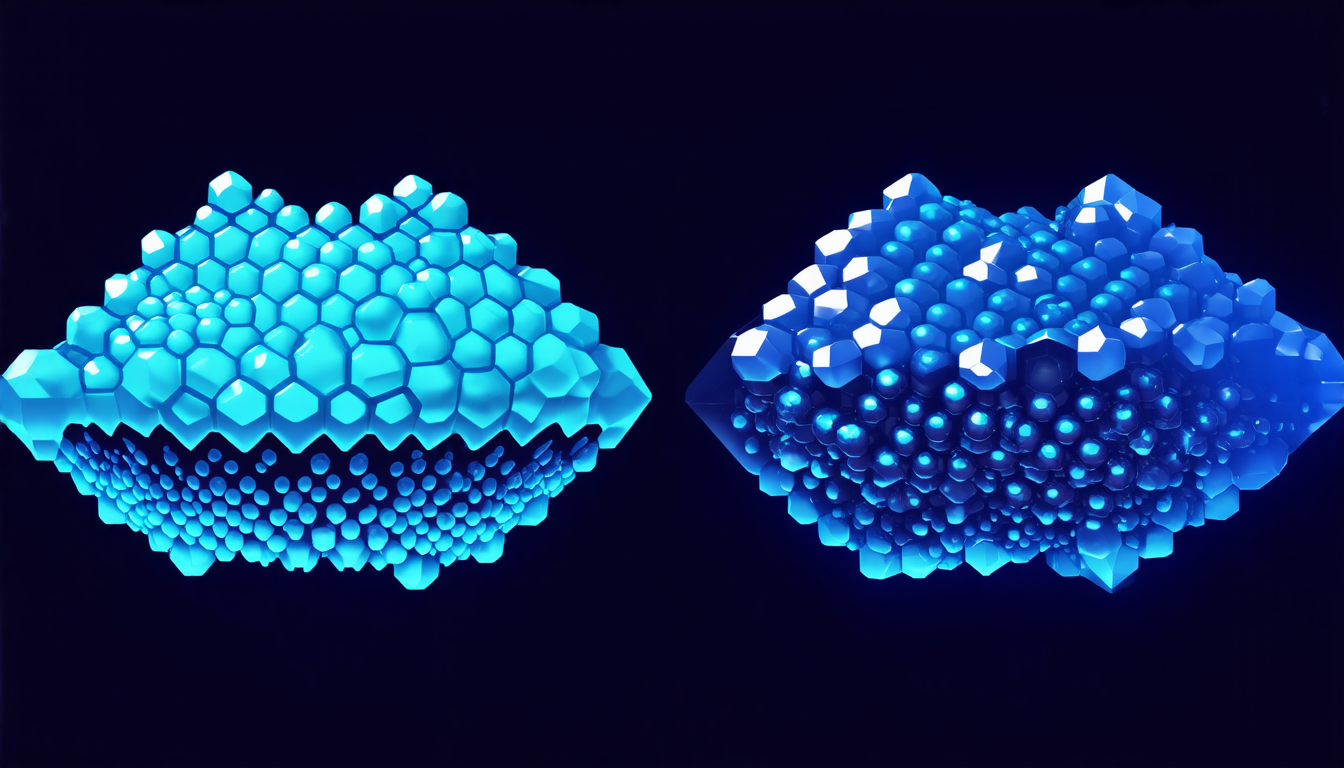
In a recent study, scientists used advanced computational methods to investigate the structure and behavior of grain boundaries in refractory metals such as niobium, tantalum, molybdenum, and tungsten. They discovered that certain grain boundaries exhibit quasi-aperiodic phases, which are structures that repeat at different scales but lack a repeating pattern.
These findings have important implications for our understanding of how metals behave. Quasi-aperiodic phases can affect the mechanical properties of materials, such as their strength and toughness, by altering the way atoms arrange themselves at the grain boundary.
The researchers used a combination of computational methods, including density functional theory (DFT) calculations and molecular dynamics simulations, to study the behavior of grain boundaries. They found that certain grain boundaries exhibited quasi-aperiodic phases, which were stable over long periods of time.
To validate their findings, the scientists also performed phase-contrast image simulations using high-resolution transmission electron microscopy (HRTEM). These simulations allowed them to visualize the grain boundary structures and compare them with experimental observations.
The discovery of quasi-aperiodic phases in grain boundaries has significant implications for the development of new materials with improved properties. For example, it could lead to the creation of stronger, more durable metals that are better suited for use in high-stress applications such as aerospace engineering.
The study also highlights the importance of advanced computational methods in materials science research. By using powerful computers to simulate complex systems, scientists can gain insights into the behavior of materials at the atomic scale and make predictions about their properties.
Overall, this research has significant implications for our understanding of grain boundaries and how they affect the properties of metals. It could lead to the development of new materials with improved properties and highlights the importance of advanced computational methods in materials science research.
Cite this article: “Unveiling the Complexities of Grain Boundaries: A New Era in Materials Science”, The Science Archive, 2025.
Materials Science, Grain Boundaries, Refractory Metals, Quasi-Aperiodic Phases, Density Functional Theory, Molecular Dynamics Simulations, Phase-Contrast Image Simulations, High-Resolution Transmission Electron Microscopy, Computational Methods, Materials Properties.





