

Saturday 15 March 2025
Researchers have made a significant breakthrough in the field of personalized federated learning, a technique that enables machine learning models to be trained on decentralized data without compromising privacy or security. The new approach combines personalized learning with control systems to optimize model performance and adaptability.
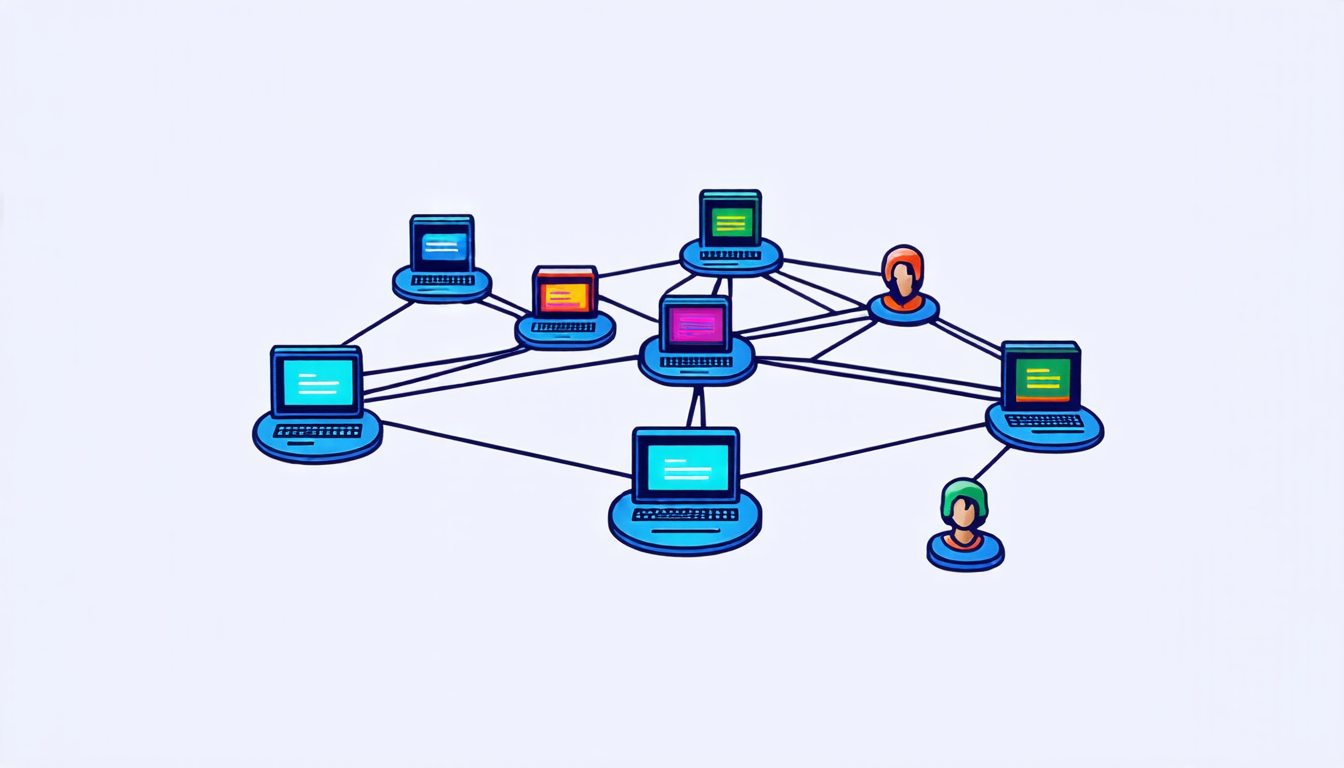
Federated learning allows multiple devices or servers to collaborate on training a single machine learning model, without sharing their individual datasets. This is particularly useful in situations where data is distributed across different locations, such as medical research institutions or financial organizations. However, traditional federated learning methods can struggle with non-independent and identically distributed (non-IID) data, where each device’s dataset has unique characteristics.
To address this issue, researchers have developed a personalized approach that tailors the global model to individual devices’ data distributions. This is achieved by incorporating control systems into the learning process, which dynamically adjust parameters in response to feedback from the network. The result is a more accurate and robust model that can adapt to diverse data environments.
The new framework consists of three key components: local model training, parameter aggregation, and personalization adjustment. Each device trains its own model on its local dataset using a loss function, which defines the objective of the learning process. The global model is then aggregated by combining the updated parameters from each device, weighted according to their data size or quality.
To personalize the model for each device, the researchers employed a novel approach that adjusts the global model parameters based on the device’s local data characteristics. This ensures that the model better fits the unique distribution of each device’s dataset, leading to improved accuracy and relevance.
The simulation results demonstrated significant improvements in model performance compared to traditional federated learning methods. The personalized approach achieved higher accuracy and faster convergence rates, even with non-IID data distributions. Moreover, the control systems enabled adaptive learning rates that adjusted to the changing network conditions, ensuring stability and efficiency throughout the training process.
This breakthrough has important implications for various applications, including medical research, financial analysis, and IoT devices. By enabling personalized machine learning models to be trained on decentralized data, researchers can unlock new insights and improve decision-making processes. The integration of control systems also provides a robust framework for handling diverse network conditions and dynamic changes in data distribution.
Overall, the combination of personalized federated learning and control systems represents a major step forward in the field of machine learning.
Cite this article: “Personalized Federated Learning with Control Systems: A Breakthrough in Machine Learning”, The Science Archive, 2025.
Machine Learning, Personalized Federated Learning, Control Systems, Decentralized Data, Non-Iid Data, Model Performance, Adaptive Learning Rates, Iot Devices, Medical Research, Financial Analysis





