

Saturday 15 March 2025
Scientists have made a significant breakthrough in understanding the behavior of wireless channels, particularly those used for high-speed railway communication systems. These channels are crucial for ensuring reliable and efficient data transfer between trains and stations, but they can be notoriously difficult to model due to their complex and dynamic nature.
Researchers have been working on developing more accurate channel models that take into account the unique characteristics of railway environments. One of the biggest challenges is capturing the non-stationarity of these channels, which refers to their tendency to change rapidly over time. This can occur due to a variety of factors, including the movement of trains and surrounding objects, as well as changes in weather conditions.
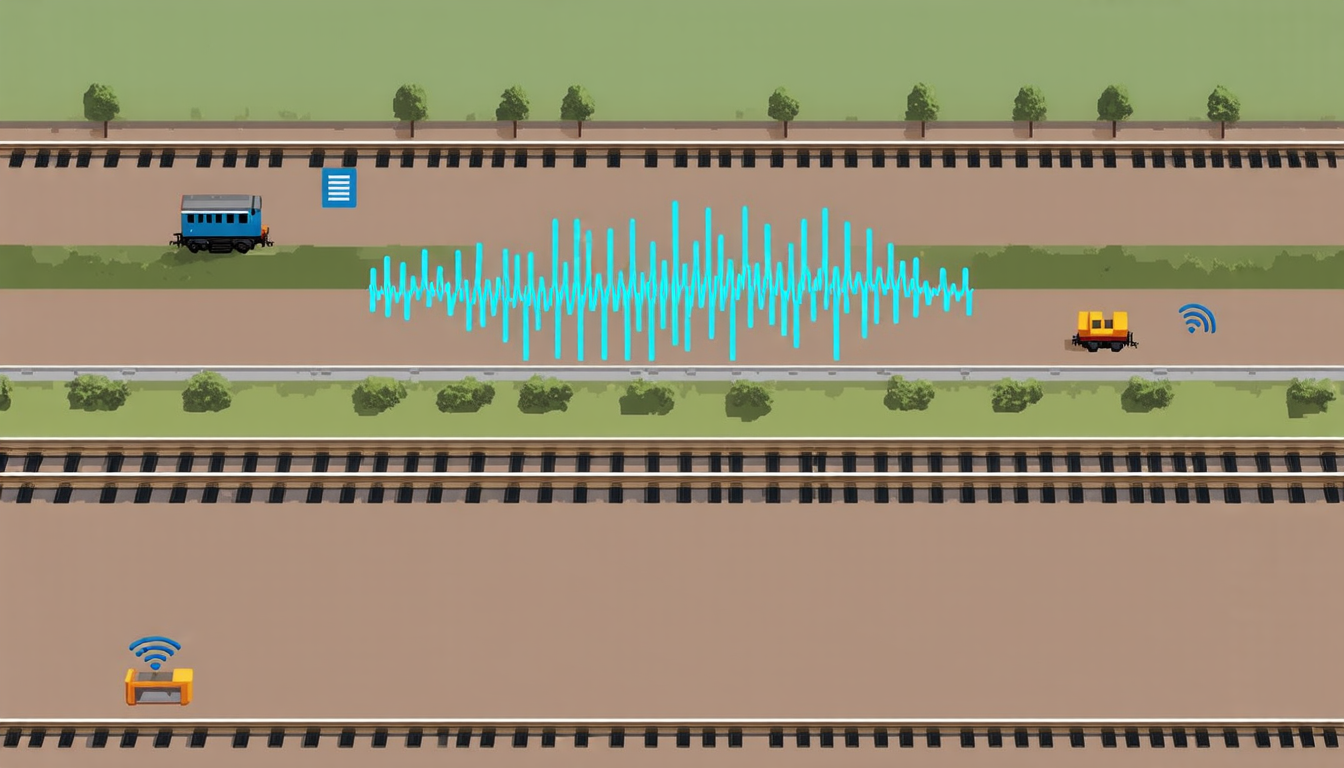
To tackle this problem, scientists have developed a new type of channel model that uses a Markov chain to describe the behavior of multipath components (MPCs). MPCs are small-scale signal reflections that can cause significant interference and distortion in wireless signals. The new model uses a combination of statistical distributions and transition probabilities to simulate the creation and destruction of MPCs, allowing for more accurate predictions of channel behavior.
The researchers tested their new model using data collected from a high-speed railway test track. They found that it was able to accurately predict the behavior of the channel over time, even in scenarios where traditional models would struggle. This could have significant implications for the development of future wireless communication systems, particularly those designed for use in challenging environments like railways.
One of the key advantages of this new model is its ability to capture the complex interactions between MPCs and the surrounding environment. By taking into account factors such as the movement of trains and objects, as well as changes in weather conditions, the model can provide a more realistic representation of channel behavior.
This could be particularly important for applications like autonomous rail transportation systems, where accurate communication is critical to ensuring safe and efficient operation. The new model could also be used to improve the performance of existing wireless communication systems, such as those used for passenger information displays or train control systems.
Overall, this research represents an important step forward in our understanding of wireless channel behavior, particularly in challenging environments like high-speed railways. By developing more accurate models of these channels, scientists can help ensure that future communication systems are better equipped to handle the demands of modern transportation networks.
Cite this article: “New Channel Model Offers Accurate Predictions of Wireless Behavior in High-Speed Railway Environments”, The Science Archive, 2025.
Wireless Channels, High-Speed Railways, Communication Systems, Channel Modeling, Non-Stationarity, Markov Chain, Multipath Components, Statistical Distributions, Transition Probabilities, Autonomous Rail Transportation.





