

Saturday 15 March 2025
Researchers have made a significant breakthrough in understanding how language models, like those used in chatbots and virtual assistants, process and generate human language. By analyzing the internal workings of these models, scientists have uncovered new insights into how they detokenize words, or break them down into their individual parts.
Language models are designed to recognize patterns in language and use that information to generate text or respond to user input. However, they often struggle with understanding the nuances of human communication, such as context and word order. This is because they rely on mathematical formulas to process language, rather than actual human understanding.
In their study, researchers focused on the first layer of a popular language model, GPT-2, which is responsible for detokenizing words. They found that this layer uses two main mechanisms: attention weights and layer normalization.
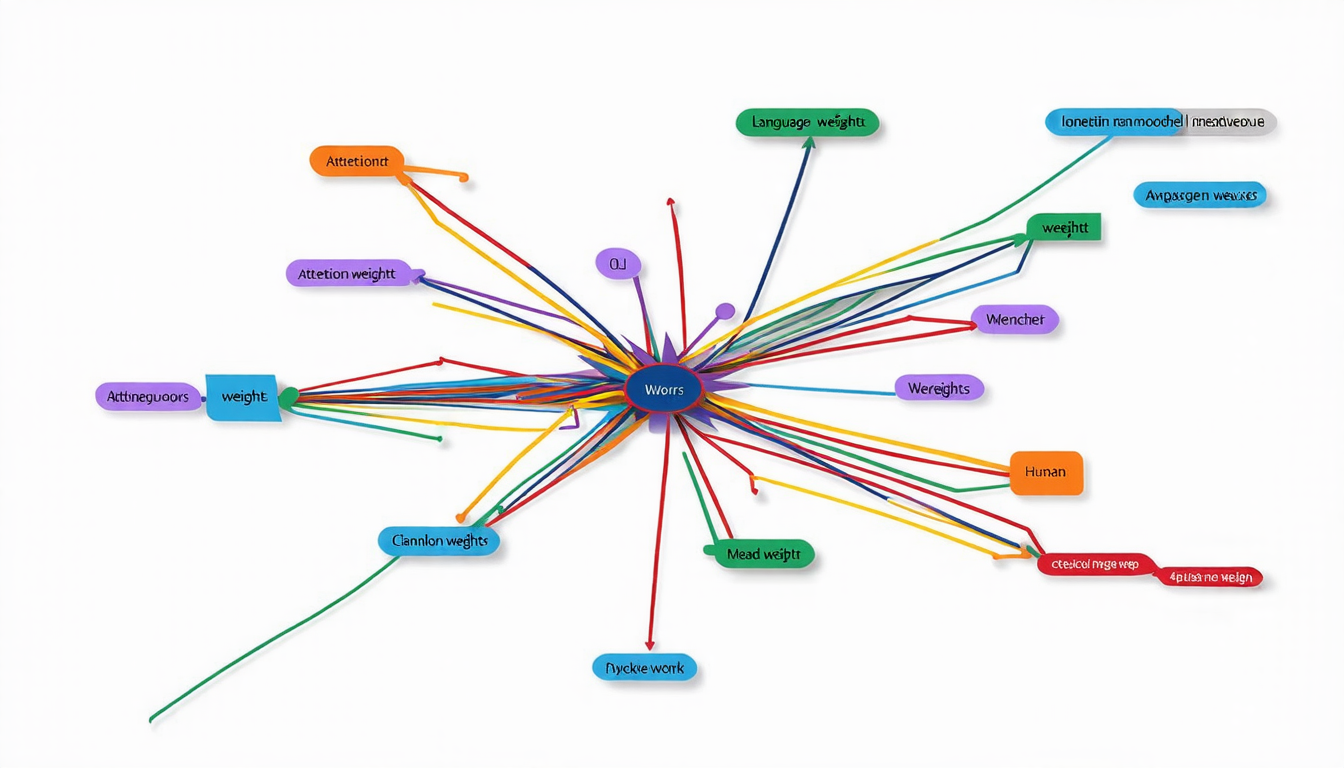
Attention weights determine how important each word is in relation to others in the sentence. This helps the model understand which words are most relevant to the context and adjust its output accordingly. Layer normalization, on the other hand, helps to stabilize the model’s internal calculations by adjusting the scale of its inputs and outputs.
By analyzing these mechanisms, researchers discovered that the first layer of GPT-2 is not just processing individual words, but also trying to understand the relationships between them. This is a crucial step in detokenization, as it allows the model to break down complex sentences into their component parts.
The study also found that the attention weights are influenced by both the word’s frequency and its position within the sentence. This means that more common words tend to receive more attention, while less frequent words may be overlooked. Additionally, words that appear earlier in a sentence tend to have a greater impact on the model’s output than those that come later.
The researchers used visualizations to illustrate these findings, creating heatmaps and scatter plots to show how the attention weights and layer normalization interact with each other. These graphics provide a unique window into the inner workings of language models, allowing us to better understand how they process and generate human language.
This research has significant implications for the development of more advanced language models. By improving our understanding of detokenization, scientists can create models that are better equipped to handle complex linguistic tasks, such as natural language processing and machine translation.
In addition, this study highlights the importance of exploring the internal workings of language models. By examining these mechanisms in detail, researchers can identify areas for improvement and develop new techniques for building more accurate and effective models.
Cite this article: “Decoding Language Models: New Insights into Detokenization Mechanisms”, The Science Archive, 2025.
Language Models, Detokenization, Gpt-2, Attention Weights, Layer Normalization, Natural Language Processing, Machine Translation, Language Generation, Neural Networks, Text Analysis





