

Saturday 15 March 2025
For decades, mathematicians have been fascinated by a peculiar identity that connects two seemingly unrelated areas of mathematics: partition theory and divisor functions. The identity, known as Uchimura’s connection, has been the subject of intense study, with many researchers attempting to generalize it and uncover its underlying secrets.
Recently, a team of mathematicians made a significant breakthrough in understanding this identity. By applying advanced mathematical techniques, they were able to derive a new expression for the identity that sheds light on its deeper structure. This new expression has far-reaching implications for our understanding of partition theory and divisor functions.
At its core, Uchimura’s connection involves two fundamental concepts: partitions and divisors. Partitions refer to ways of breaking down a number into smaller parts, while divisors are numbers that divide another number evenly. For example, the number 6 can be partitioned into 2+2+2 or 3+3, while its divisors are 1, 2, 3, and 6.
The connection between partitions and divisors was first discovered by a Japanese mathematician named Kiyoshi Uchimura in the early 1980s. He showed that the number of ways to partition a given number is related to the number of divisors it has. Specifically, he found that the generating function for the number of partitions of a number is equal to the product of the generating functions for its divisors.
Since Uchimura’s initial discovery, many researchers have attempted to generalize this identity and uncover its underlying secrets. One important generalization was made by Andrews, Crippa, and Simon in the 1990s, who showed that the identity holds not just for individual numbers but also for sets of numbers.
The recent breakthrough by the team of mathematicians builds upon these earlier discoveries. By applying advanced mathematical techniques, they were able to derive a new expression for Uchimura’s connection that reveals its deeper structure. This new expression shows that the identity is closely related to another fundamental concept in mathematics: random graphs.
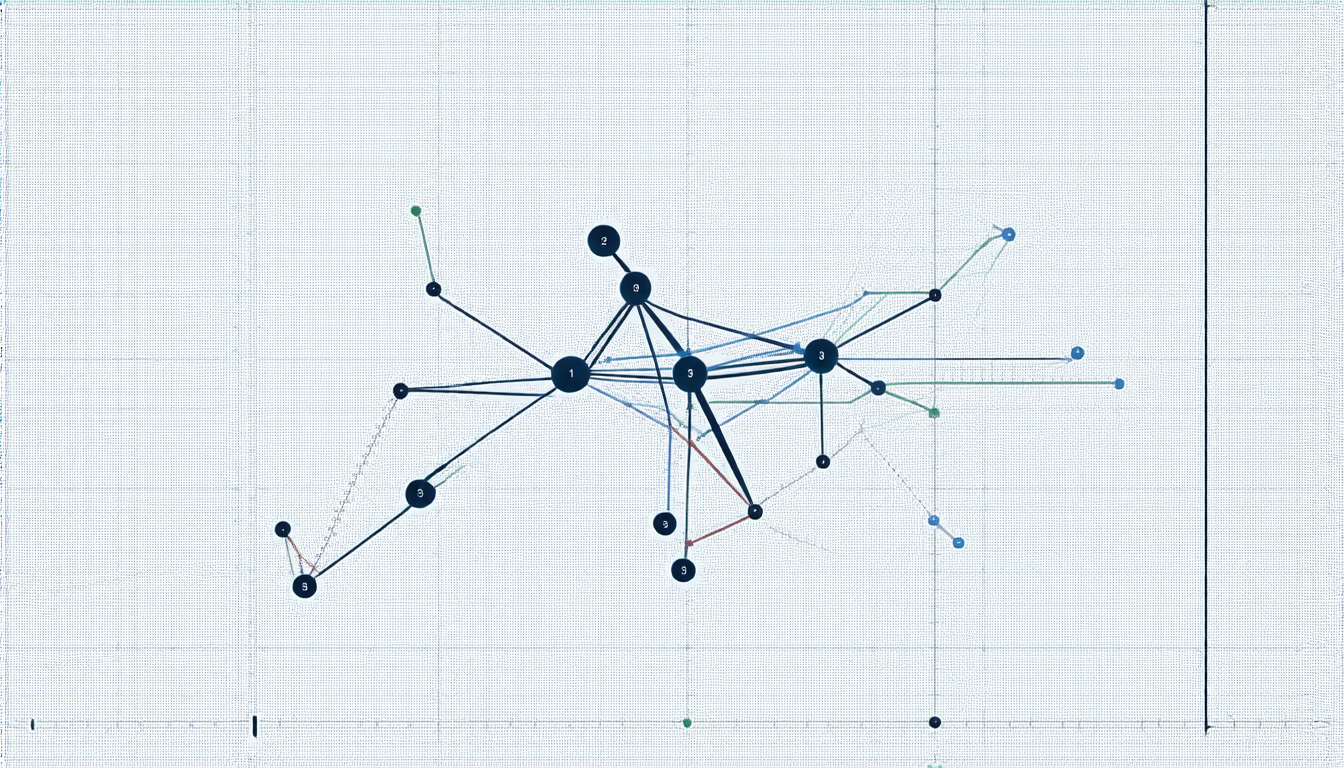
Random graphs are networks of nodes and edges that are generated randomly according to certain rules. The team’s discovery shows that the generating function for the number of partitions of a given number is equal to the expected value of a certain random graph. This provides new insights into the underlying structure of Uchimura’s connection and has important implications for our understanding of partition theory and divisor functions.
Cite this article: “Unlocking the Secrets of Uchimuras Connection: A Breakthrough in Partition Theory and Divisor Functions”, The Science Archive, 2025.
Partition Theory, Divisor Functions, Uchimura’S Connection, Generating Functions, Number Theory, Combinatorics, Random Graphs, Mathematical Identities, Algebraic Expressions, Arithmetic Functions





